Djibouti’s democracy takes another knock as ageing president engineers yet another term
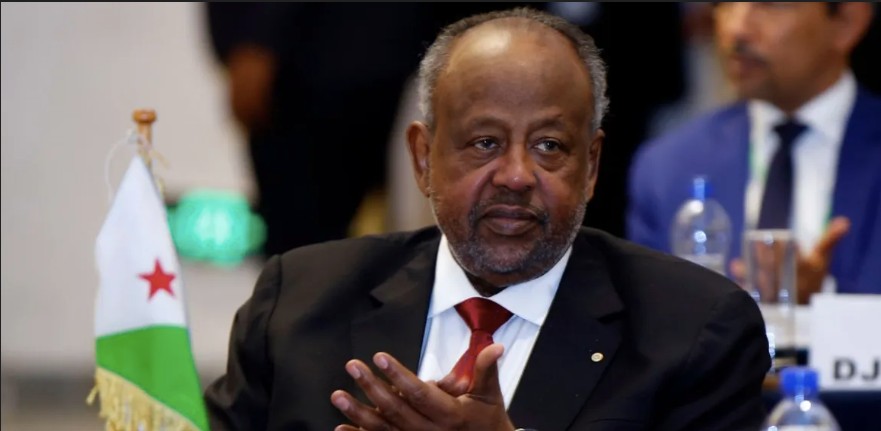
Opposition coalitions such as the Union for Democratic Change (UAD) and the Union for Democratic Movements (UMD) face significant constraints.
Federico Donelli, University of Trieste
More To Read
- South Sudan and Somalia eye group stage in FIFA Arab Cup 2025 qualifiers
- Djibouti parliament scraps presidential age limit, clearing path for Ismail Omar Guelleh’s sixth term
- IGAD reaffirms support for Somali-led peace efforts at Arta Peace Conference 25th anniversary
- South Sudan, Djibouti, Ethiopia and Uganda seal deal on Horn of Africa transport corridor
- Djibouti MPs vote to lift presidential age limit, strengthening Ismail’s hold on power
- Eastern Africa Standby Force launches maritime exercise in Djibouti
Djibouti’s president, Ismaïl Omar Guelleh, pushed through constitutional changes removing presidential age limits in October 2025. The changes enable him to remain in power beyond 2026. He has already ruled for 26 years and is a shoo-in at elections in April 2026. Guelleh leads a country on the Horn of Africa where the Red Sea meets the Indian Ocean – one of the world’s most strategically important locations. Federico Donelli, who has studied Djibouti’s political landscape, unpacks the dynamics that have kept him in power.
Who is Ismaïl Omar Guelleh and what is his governance style?
Ismaïl Omar Guelleh, commonly known as IOG, has been the president of Djibouti since 1999. He succeeded the country’s first president, Hassan Gouled Aptidon, whom he served as chief of staff for more than two decades.
Now aged 77, Guelleh is one of the longest-serving leaders in East Africa.
He belongs to the majority Issa-Somali ethnic group, which has monopolised power since the country gained independence from France in 1977. Djibouti’s population is largely composed of two main groups – the Issa-Somali and the Afar. This demographic mirrors the context in the Afar regional state of neighbouring Ethiopia. It’s mirrored even more closely in the de facto state of Somaliland due to clan and family ties.
Consequently, political dynamics in Djibouti frequently intertwine with developments in these neighbouring states. This is particularly true when it comes to security, cross-border mobility and clan-based networks.
In theory, Djibouti is a presidential republic with a multiparty system. In practice, however, political authority remains highly centralised, leaving little room for genuine political competition.
The ruling Popular Rally for Progress (RPP) party dominates parliament, holding 45 of the 65 seats. The broader pro-presidential coalition, the Union for the Presidential Majority (UPM), controls 58 seats in total, consolidating the executive’s influence over the legislative arena.
Opposition coalitions such as the Union for Democratic Change (UAD) and the Union for Democratic Movements (UMD) face significant constraints. They have occasionally boycotted elections. There have been five presidential elections and five legislative elections since 1999.
International organisations frequently highlight restrictions on the media and public dissent, with the majority of outlets being state-controlled.
Guelleh also owes his longevity to a close-knit network of officials, family members and political allies who occupy key roles in government and business. The coalition around him is not always entirely harmonious. Subtle rivalries have emerged among political figures and members of his inner circle from time to time. But these dynamics do not pose a political threat.
What accounts for his longevity?
Guelleh’s tenure can be attributed to a combination of institutional changes, geopolitical factors and elite dynamics.
One such element is constitutional reform. Over the years, Djibouti’s parliament has eroded key democratic safeguards of the 1992 constitution.
First came the removal of presidential term limits in 2010. These changes enabled Guelleh to stand for re-election and reduced presidential terms from six to five years.
The November 2025 parliamentary vote to abolish the presidential age limit followed this pattern. This eliminated the last formal restriction on his eligibility for office come April 2026.
A second factor is Djibouti’s strategic importance. Located at the entrance to the Bab el-Mandeb Strait, a vital shipping lane connecting the Red Sea and the Indian Ocean, the country is home to several foreign military bases. Represented here are the US, France, China, Japan and Italy. For many international partners, the stability of the Djibouti government has been viewed as a source of predictability in a volatile region.
Consequently, there has been limited external pressure for political reform. In turn, this has reinforced the stability of the current leadership.
Thirdly, the cohesion of the ruling elite has played a central role in domestic politics. A network of influential figures, including members of the president’s family, long-standing advisers, and economic figures, has formed around Guelleh’s leadership. This group controls key state institutions and sectors of the economy, providing strong incentives to maintain leadership continuity.
Djibouti’s economy relies primarily on port and logistics services, particularly its international port, which serves regional trade, as well as on the revenues generated from hosting multiple foreign military bases.
At the same time, the absence of an openly designated successor has sparked quiet competition within this circle. The prospect of a post-Guelleh era has, in recent years, encouraged various individuals to seek to increase their influence. This has ranged from family members to senior advisers and political figures.
Emerging rivalries do not openly challenge the president’s authority. Nevertheless, they do illustrate the complex internal dynamics that underpin the current political order.
What has he achieved; what does he promise?
Over more than two decades in office, Guelleh has presided over a period of relative stability in Djibouti. While neighbouring Somalia and Ethiopia have experienced ongoing insecurity and internal conflict, Djibouti has remained comparatively insulated.
The government frequently cites this stability as one of the defining features of his tenure.
Djibouti has also developed its position as a strategic hub. The presence of multiple foreign military bases, alongside port and logistics facilities, has generated significant state revenue.
Since 2016, Chinese investment and management have increasingly shaped the country’s main port infrastructure, further integrating Djibouti into global commercial networks. These factors have raised the country’s profile in international trade and security arrangements.
In addition, Djibouti has played a part in regional diplomacy. It is an important member of the Intergovernmental Authority on Development (IGAD). This is the regional organisation mandated to address conflicts rooted in resources, political competition and identity. Djibouti’s most recent engagement includes participation in the attempts to mediate the conflict in Sudan.
The government has also highlighted certain institutional reforms as markers of progress. An example is the abolition of the death penalty in 2010.
However, structural challenges remain significant. Djibouti has a very young population. Issues such as unemployment, high living costs and limited political participation persist.
What does the age-limit vote tell us about Djibouti’s politics?
The decision was adopted without public debate and with no dissenting votes among the 65 lawmakers present. This reflects the extent to which the National Assembly aligns with the executive.
The vote also highlights the central role of elite consensus in Djibouti’s political system. Key figures within the ruling coalition, including representatives from the Issa and co-opted Afar elites, supported the reform. For these groups, maintaining leadership continuity is often seen as a means of preserving access to economic and political resources. This is preferred to uncertainties associated with a change in leadership.
Bypassing a popular vote on the constitutional provision limits the opportunity to see the true levels of support or opposition. This has the effect of particularly excluding younger citizens who have only ever known one president.
Overall, the vote shows that constitutional provisions can be modified when they hinder leadership continuity. This reinforces a model in which formal rules adapt to political needs rather than constrain them. It also highlights the importance of elite cohesion in maintaining the current political order.
As the 2026 presidential election approaches, the government’s dominant narrative remains one of continuity, supported by those who view stability as essential to protecting national and regional interests.

The Conversation
Federico Donelli, Associate Professor of International Relations, University of Trieste
This article is republished from The Conversation under a Creative Commons license. Read the original article.
Top Stories Today