Labour Ministry warns KUPPET over ‘illegal’ election plans using suspended amendments
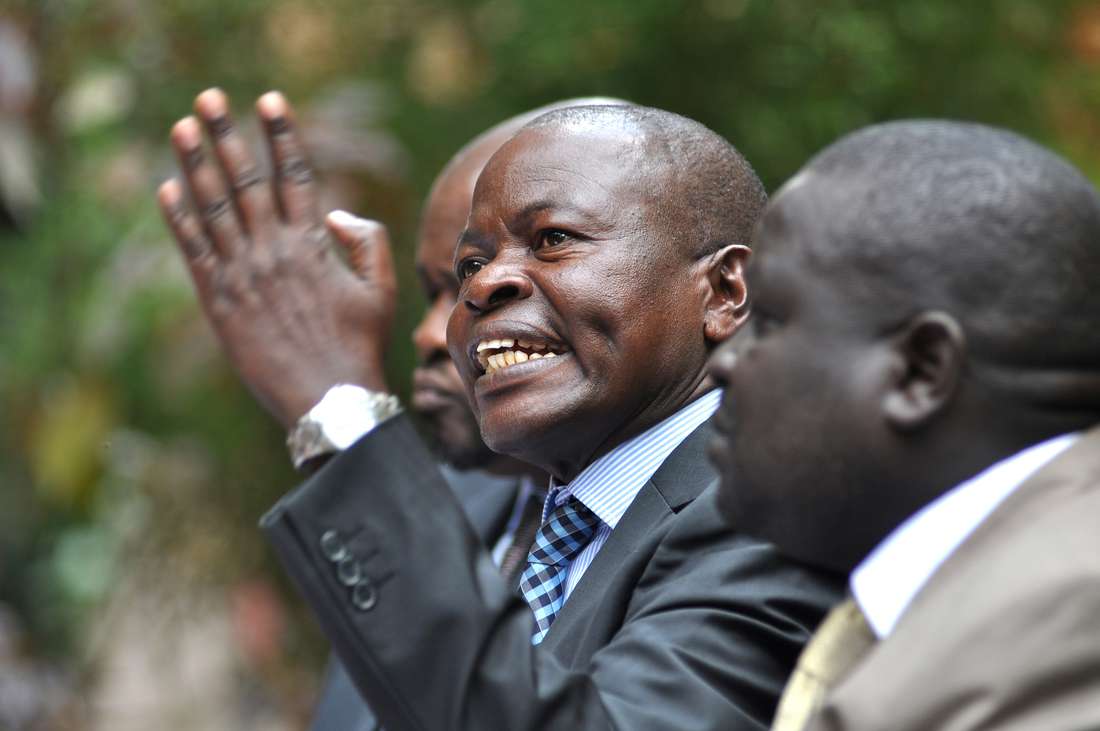
The warning follows multiple complaints from teachers, who argue that the proposed election framework favours incumbents and violates the court’s stay order.
The Ministry of Labour has warned the Kenya Union of Post-Primary Education Teachers (KUPPET) over its plans to start the 2026 election cycle using constitutional amendments that are currently suspended by the courts, terming the move as illegal and premature.
The warning follows multiple complaints from teachers, who argue that the proposed election framework favours incumbents and violates the court’s stay order.
More To Read
- Teachers to stay in same schools after promotions under new TSC policy
- TSC announces recruitment of 9,159 teachers nationwide
- KUPPET flags stalled promotions, internship contracts for teachers
- John Okoth Ogutu’s killing in Tanzania exposes grim reality for jobless Kenyan teachers
- KUPPET calls for urgent evacuation of 150 Kenyan teacher trainees stranded in Tanzania
- Litein High School teachers demand transfer over safety fears, mistreatment
In a letter dated December 4 (Ref: TU/136/5/12), Acting Registrar of Trade Unions Ann Kanake said her office had received a surge of petitions questioning the legality of election notices issued in November.
The amendments in question were passed early in 2025 and immediately triggered controversy, with sections of the membership arguing they were adopted without adequate participation and would skew the upcoming election in favour of current office holders.
Despite the court order suspending the amended constitution, the union is accused of pushing forward with preparations anchored on the same changes, a move now expected to intensify internal strife and potentially lead to fresh legal battles. Among the issues flagged is the union’s decision to enforce nomination fees that were part of the suspended amendments.
“It is a matter of very serious concern that the union has therefore decided to peg the nomination fees for elective positions on the new constitution, despite there being an order barring the same,” Kanake wrote in a letter.
“This order effectively bars Kuppet from relying on or giving effect to any provisions contained in the suspended amendments for purposes of conducting its election processes.”
She termed KUPPET’s notice as “irregular, unlawful and in direct conflict with both the court order and the registrar’s circular”.
The circular, issued on September 25, instructed all unions not to apply amended constitutions that had been suspended by court orders unless judges issued further directions.
However, in a response dated December 5, 2025, KUPPET, through its lawyers Triple A Advocates, insists it has not violated the law. The union argues that the stay orders issued in March 2025 have already lapsed.
The lawyers said the initial stay was granted on March 25 without a return date. Although Justice Nduma later reinstated the interim orders, they were only extended up to October 16.
“At the subsequent court attendance on October 16, 2025, the stay orders were not reinstated, effectively leaving a gap,” the union argues.
They maintain that temporary court orders automatically lapse upon expiry unless expressly extended.
“Since no extension was sought or granted beyond October 16, 2025, the effect of the conservatory stay order automatically ceased on that date. There is currently no court order restraining KUPPET from proceeding with the election cycle,” the lawyers said.
Kuppet further accuses the registrar of overstepping her mandate by issuing directives on a matter still pending before the Employment and Labour Relations Court, insisting it is “legally free to continue its administrative processes” for the 2026 elections.
The contested amendments propose a broader leadership structure, including new roles such as an Assistant National Secretary for Gender, Junior Secondary School (JSS) representatives, and additional trustees. The union argues that introducing these positions will advance inclusivity and improve representation across evolving education sectors.
Another contentious proposal seeks to raise the retirement age for the Secretary General from 60 to 65 years. While top officials defend the change as necessary for retaining seasoned leadership, critics argue it is designed to keep current office holders in power for longer.
The amendments also increase nomination fees for elective positions, a measure opponents say is discriminatory and locks out ordinary members, undermining fair competition. Additional proposals include the introduction of regional councils and a pro-rata delegate system meant to balance voting strength across branches.
Top Stories Today