Kenya’s electricity demand hits all-time high of 2,439 MW, straining power generation capacity
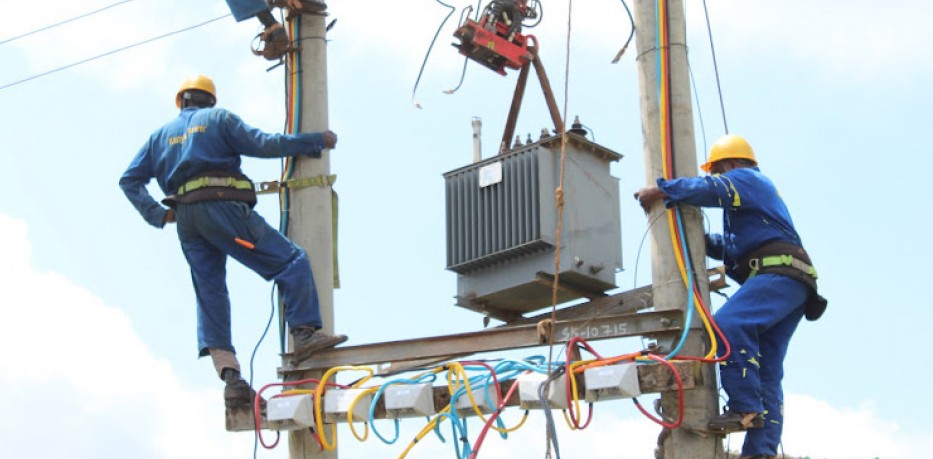
Kenya Power said the 2,439.06 megawatts (MW) peak recorded on December 4, 2025, marks the highest power demand in Kenya’s history, highlighting the urgent need for additional generation.
Demand for electricity in Kenya has hit new record highs, driven by a surge in domestic and commercial consumption that continues to place pressure on the country’s already stretched power generation capacity.
Kenya Power said the 2,439.06 megawatts (MW) peak recorded on December 4, 2025, marks the highest power demand in Kenya’s history, highlighting the urgent need for additional generation.
More To Read
- State agencies, counties owe Kenya Power Sh4.67 billion in unpaid bills - Auditor General
- Kenya Power ends manual applications, new connection requests exclusively via website
- Over 16,000 in the dark as Kenya Power struggles to procure essential meters, transformers
- 122 electrocuted as illegal connections, encroachment rise - Kenya Power
- County governments owe Kenya Power Sh5.67 billion in unpaid electricity bills - report
- Kenya Power rolls out digital meter reading system to boost billing accuracy
The latest record surpasses the previous peak of 2,418.77 MW recorded on November 18, 2025, reflecting continued growth in electricity usage by both commercial and domestic consumers. Kenya Power noted that the rise in demand has been supported by investment in stabilising the National Grid and the completion of key projects that reinforce supply and ensure sustained electricity sales.
The utility’s Managing Director and CEO, Joseph Siror, said the increase in connections, industrial growth, and system efficiency has all contributed to higher electricity consumption.
“We are glad to see this energy demand growing owing to the increased domestic and commercial activities in the country. If you look at the year ended June 2025, industrial customers accounted for more than half of our unit sales, underscoring Kenya Power’s central role in powering industry and economic growth. What we need to focus on now is the generation bit to help in securing our reserve margins,” Siror said.
In the year ended June 2025, 401,848 new customers were connected to the grid, contributing 203 gigawatt-hours (GWh) in new electricity sales. System losses reduced from 23.16 per cent to 21.21 per cent, achieved through interventions such as accelerated smart meter rollouts, replacement of faulty meters, targeted feeder upgrades and improved energy accounting. Reliability also improved, with the System Average Interruption Duration Index (SAIDI) dropping from 120.6 hours to 113 hours and the System Average Interruption Frequency Index (SAIFI) improving from 47.00 to 44.07.
Electricity demand is expected to grow further as Kenya Power implements connectivity projects nationwide and digitises electricity connection applications to enhance operational efficiency and customer experience.
The surge in consumption follows a trend observed in November, when a peak of 2,418.77 MW was recorded, putting further pressure on Kenya’s generation capacity. Peak demand in Kenya typically occurs between 6:00 pm and 10:00 pm, and with generating capacity lagging behind consumption growth, reliance on imports and thermal power has increased.
Kenya Electricity Generating Company (KenGen) Chairman Alfred Agoi said the rising electricity demand reflects the country’s expanding industrial base and economy.
“Kenya’s electricity demand has reached the highest levels in our nation’s history of 2,418.77 MW recorded on November 18, 2025, reflecting a rapidly expanding industrial base, the growth of digital infrastructure and a vibrant, forward-moving economy,” Agoi said during KenGen’s 73rd Annual General Meeting in Nairobi on Thursday.
President William Ruto recently noted that power agencies have had to ration supply during peak evening hours because generation has struggled to keep pace with demand.
Energy Principal Secretary Alex Wachira said several new power plants nearing completion will add 133 MW to the grid by the end of next year. These include: Olkaria I rehabilitation by KenGen, expected to add 63 MW by September 2026, Orpower 22 and Globleq geothermal plants at Menengai, each contributing 35 MW, scheduled for commissioning by March 2026.
“We have Olkaria 1, which will start commissioning tests next year in June and by September 2026, we should have 63 MW in. Orpower 22 will start commissioning tests on December 20, and by March 2026, we should have 35 MW and another 35 MW from Globeleg… giving us about 133 MW coming to the grid next year,” Wachira said.
He also announced plans to build a Battery Energy Storage System (BESS) with a capacity of 250–300 megawatt-hours (MWh) within the next 16 months.
“That should be able to come in the next 16 months,” he said, adding that the system would store geothermal power generated during off-peak hours to supply the evening peak.
“This will ensure that we have enough power to push us in the evening peak hours.”
The BESS project will be implemented through a Public-Private Partnership, with KenGen also planning its own long-term battery storage to meet the grid’s demand of over 1,000 MWh.
“We are looking at deploying BESS plant using private sector capital, about 250 MWh, and KenGen will also put up another battery energy storage because the grid needs in excess of 1,000 MWh storage,” the PS said.
Additional projects in the pipeline include KenGen’s 42.5 MW solar plant at Seven Forks Dam, expected to be operational by 2027, and an extra 200 MW supply from Ethiopia.
“All these will give us about 400 to 500 MW that will be able to sustain our grid in the interim before we bring more renewable resources, including geothermal at Paka and Silali fields, as well as wind power from Marsabit,” Wachira said.
The sector’s expansion follows a seven-year freeze on new agreements between Kenya Power and independent power producers, which was lifted last month.
During KenGen’s AGM, shareholders approved a dividend of Sh0.90 per share for the year ending June 2025, up from Sh0.65 the previous year. The increase reflects a 54 per cent rise in profit after tax to Sh10.48 billion, supported by cost reductions, diversified revenue and improved foreign exchange positions.
Top Stories Today