IEBC warns low voter registration, apathy could undermine future elections

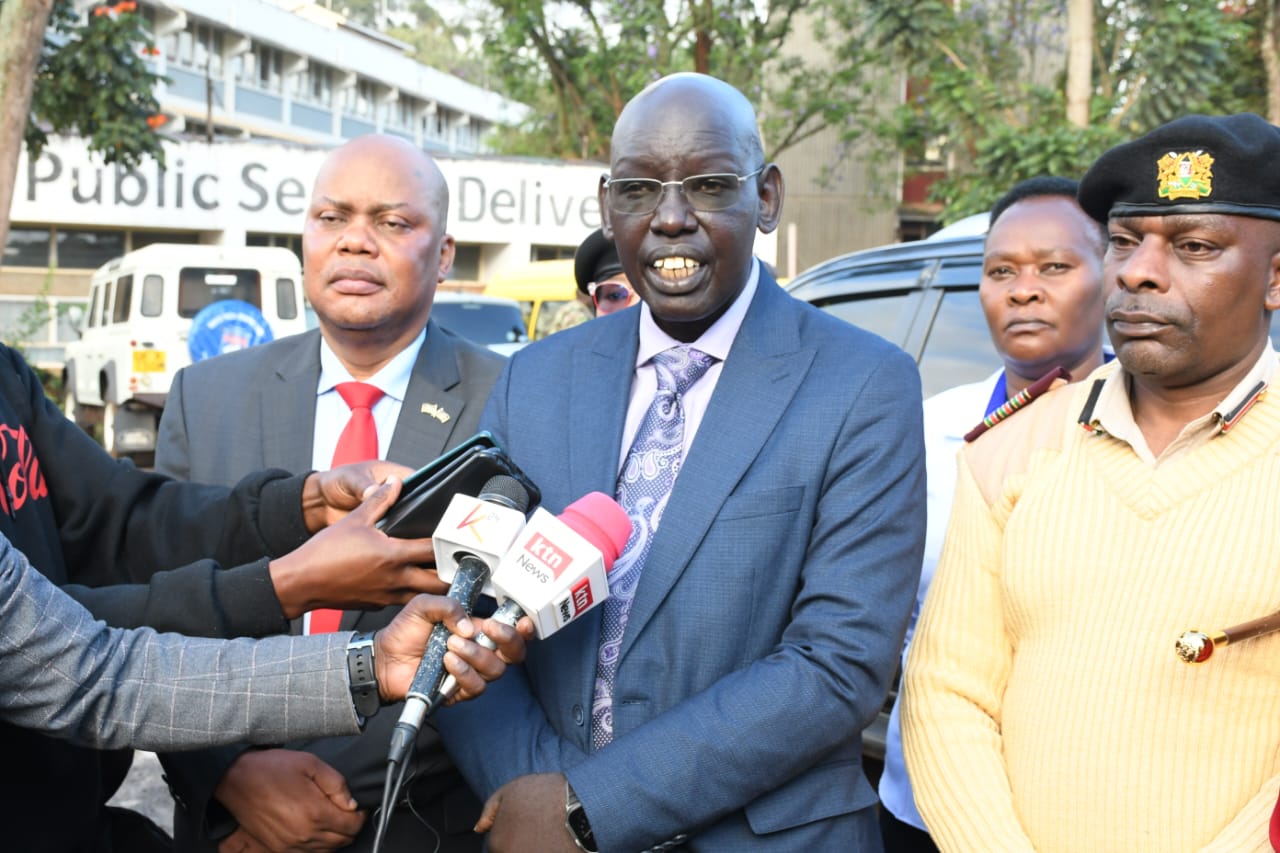
IEBC Chief Electoral Officer Marjan Hussein Marjan said the apathy, combined with logistical challenges, threatens the conduct of democratic, free, and fair elections and called for coordinated efforts to address these issues.
The Independent Electoral and Boundaries Commission (IEBC) has raised alarms over the low involvement of young Kenyans in recent voter registration and last week’s by-elections.
The concerns came to light during a post-election conference on Tuesday, where youth representatives and IEBC Commissioners clashed over who bears the responsibility for the declining participation.
More To Read
- IEBC warns boundary review may spark community, religious and class tensions
- Court to hear petition challenging eligibility of Embu North MP Leo Wa Muthende
- Voters challenge Mbeere North MP Wamuthende’s victory over electoral name discrepancy
- IEBC blames police officers for by-election violence, maintains poll largely successful
- Why voter registration in by‑election zones will resume after 28 days
- IEBC gazettes Mbeere North’s MP-elect Wamuthende and other by-election winners
Although young voters formed the bulk of the 2022 voter register, many were absent at the November 27 polls.
IEBC Vice Chairperson Fahima Araphat blamed the youth for staying away, while Commissioner Prof Francis Aduol called their turnout “pathetic”, noting that the majority of voters were older, particularly women. The discussion quickly turned tense, highlighting a growing disconnect between the Commission and young voters.
Youth advocates pointed to the IEBC’s outdated communication methods as a major factor. Tabitha Oluoch from Siasa Place urged the Commission to modernise its outreach, noting that it has only 1,000 followers on TikTok and produces “rigid” content that does not appeal to young people.
Commissioners, however, argued that youth engagement is a shared responsibility.
Prof Aduol questioned why older Commissioners should be expected to lead efforts on youth platforms, pointing out that Kenyans over 60 make up just 5 per cent of the population.
Fidel Ongoya, representing the youth, responded firmly, insisting the Commission should take the concerns seriously: “This is our future.”
IEBC Chairperson Erastus Ethekon sought to ease tensions, promising that the Commission will intensify efforts to register more young voters ahead of the mass registration drive for the 2027 General Election.
Adding to the concerns, IEBC Chief Electoral Officer Marjan Hussein Marjan on Monday warned that voter apathy could undermine the election process.
He said the apathy, combined with logistical challenges, threatens the conduct of democratic, free, and fair elections and called for coordinated efforts to address these issues.
“Voter apathy, logistical challenges, misinformation, and isolated security incidents remind us that electoral management is a continuous learning process,” he said.
He added, “Addressing these issues requires adaptive strategies, robust stakeholder coordination, and proactive communication to ensure that every voter has access to a credible and safe voting experience.”
Marjan was speaking on Monday morning at a Nairobi hotel during a stakeholders’ gathering, reflecting on the recent by-elections conducted across the country.
The November 27 by-elections involved 22 electoral areas in various counties and wards, including Baringo, Mbeere North, Kasipul, Ugunja, Banissa, Malava, Magarini, Kariobangi North, Fafi, Lake Zone, and Narok Town. No elections were held in Tembelio and Metkei Wards due to unopposed candidates.
“While each election presented unique circumstances, collectively they offered a comprehensive picture of IEBC’s operational preparedness, technological deployment, and stakeholder engagement strategies,” he said.
Since the continuous voter registration started on September 29, the IEBC has added 148,315 new voters by December 5, averaging around 2,000 new registrations daily. In the same period, 40,772 voters transferred their polling stations, while 493 updated their personal details.
The Commission aims to register an additional 6 million voters by 2027, a goal heavily dependent on engaging the youth, who make up roughly 70 per cent of potential voters.
Top Stories Today