KNCHR raises alarm as over 100 femicide cases recorded in three months
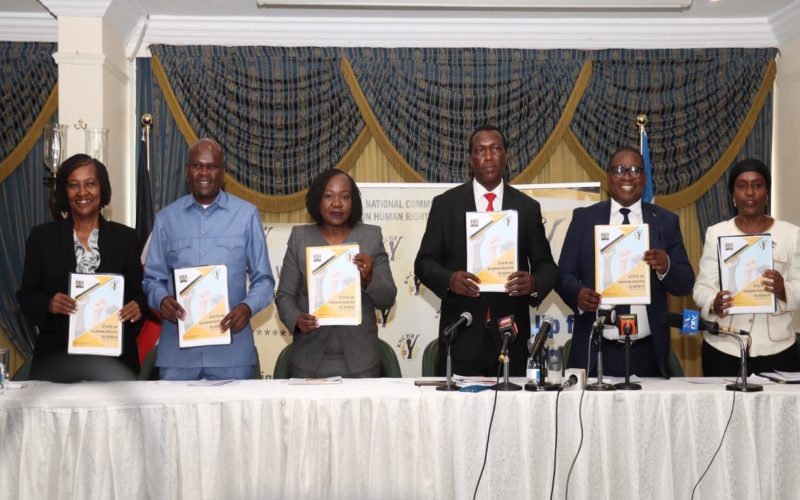
KNCHR says many survivors and affected families are still struggling with incomplete investigations and slow progress on reported cases.
A new alert by the Kenya National Commission on Human Rights (KNCHR) shows that the first quarter of 2025 was marked by a worrying wave of attacks on women and girls, with more than 100 femicide cases reported nationwide.
KNCHR says the number reflects a growing threat that continues to overwhelm families and expose weaknesses in how the country responds to violence.
More To Read
- 16 days of activism: Strengthening protection against gender-based violence
- Violence against women and children is deeply connected. Three ways to break the patterns
- Man charged with schoolgirl’s murder shocks court, seeks plea deal
- By-elections: KNCHR warns of rising tension as voting kicks off in 24 contested areas
- ‘Everyone should vote freely’: KNCHR warns against intimidation and bribery in by-elections
- Why a woman is killed every 10 minutes; the rising wave of global femicide
The rise in killings prompted President William Ruto to form a Technical Working Group on Gender-Based Violence through Gazette Notice No. 109, but the group’s findings remain unreleased.
The Commission says this silence has left many questions unanswered as families wait for clearer action from the State.
According to the rights body, the killings have shown how unsafe life has become for many women, noting that cases are reported across the country with similar patterns of brutality.
“These killings speak to a dangerous environment for women and girls,” the commission said on Tuesday while launching the report. “The sheer number of cases within such a short period underscores the gravity of the crisis.”
One of the commissioners warned that the country is now dealing with “a monster that is gripping our nation,” adding that girls continue to face heavy challenges.
“The issue of the girl child has been a major challenge because they do not have the same rights,” the commissioner said.
“They have been exposed to early marriage and femicide, among other abuses, and the relevant agencies should protect the girl child in the rural and urban areas.”
The Chairperson, Claris Ogangah, pointed to the wider social issues behind the violence, including a lack of support for young people.
“There are so many instances where youths are idle, and they resort to crime,” she noted.
“We need to protect our girls and boys, who we have neglected over the years. We need to strike a balance to strengthen both genders. We need to find a way of safeguarding them through our education system.”
KNCHR says many survivors and affected families are still struggling with incomplete investigations and slow progress on reported cases.
“Femicide is not just a crime; it is a human rights violation,” she added. “The State must demonstrate that women’s lives matter by responding decisively.”
The Commission is calling on the National Police Service (NPS) to act with urgency and ensure that those behind the attacks are arrested and prosecuted without delay.
“We cannot continue losing women and girls to senseless violence,” she said. “Justice delayed is justice denied, and every unresolved case emboldens the next perpetrator.”
In its broader review of the past year, the Commission recorded 57 deaths tied to violations of the right to life between December 2024 and December 2025.
It says most of these deaths occurred during the civic unrest seen between June and July, calling the period “an affront to Article 26 of the Constitution”.
In January, Ruto appointed the 35-member team to tackle the rising cases of GBV and femicide.
According to a Gazette notice issued on January 10, Ruto had appointed former Deputy Chief Justice Nancy Baraza as the chairperson of the committee.
Other members include Law Society of Kenya (LSK) President Faith Odhiambo and crime and investigative journalist Franklin Wallah.
Also appointed were Linah Jebii Kilimo, former Member of Parliament for Marakwet East and former Assistant Minister for Cooperative Development and Marketing, and Dr Sam Thenya, founder of the Nairobi Women's Hospital.
Ruto, at the time, cited the increasing cases of GBV and femicide, which continue to cause immense physical, emotional, and economic harm to individuals, families, and communities.
The committee is tasked with assessing, reviewing, and recommending measures to strengthen Kenya’s institutional, legal, and policy responses to GBV and femicide.
Its mandate includes identifying trends, hotspots, and causes contributing to GBV and femicide through community engagements and proposing amendments to strengthen laws and enforcement mechanisms.
The group is also tasked with examining gaps in resource allocation, operational effectiveness, and training levels within institutions managing GBV-related cases.
Top Stories Today