Health budget gets Sh3.15 billion boost for referral hospitals, maternal care

The new allocations come a week after President William Ruto launched the Every Woman Every Newborn Everywhere (EWENE) Acceleration Plan 2026-2028, aimed at reducing preventable maternal and newborn deaths.
Kenya’s health budget has received a fresh boost, with billions added to strengthen hospitals that handle complex medical cases and maternal care.
The increase is part of a wider plan to improve service delivery and reduce preventable deaths among mothers and newborns, with referral hospitals and maternal health programmes receiving the largest share of the new funding.
According to the Budget and Appropriations Committee report, funding for National Referral and Specialised Services rose from Sh74.24 billion to Sh76.31 billion, making it the biggest beneficiary within the health sector. Reproductive, maternal, newborn, child, and adolescent health (RMNCAH) also recorded a strong increase, moving from Sh18.44 billion to Sh19.52 billion.
More To Read
- Health, education, housing biggest winners as MPs approve 2026/27 budget estimates
- Kiharu MP Ndindi Nyoro says fuel relief gap can be covered with spending cuts
- Ndindi Nyoro pushes for higher county allocation, stronger devolution support
- Kenya’s digital projects face delays as ICT Ministry reports Sh9.3 billion shortfall
- Proposed budget for Kenya’s 2026/27 financial year
- Treasury doubles vaccine budget to Sh4.6 billion amid stockout fears
The State Department for Medical Services, which oversees referral hospitals, curative care and RMNCAH programmes, increased from Sh132.97 billion to Sh134.65 billion, reflecting a Sh1.68 billion rise. The State Department for Public Health and Professional Standards also went up by Sh247 million, with its allocation rising from Sh42.56 billion.
Combined, the two departments now stand at Sh177.46 billion, marking a total increase of Sh1.93 billion in the new financial year.
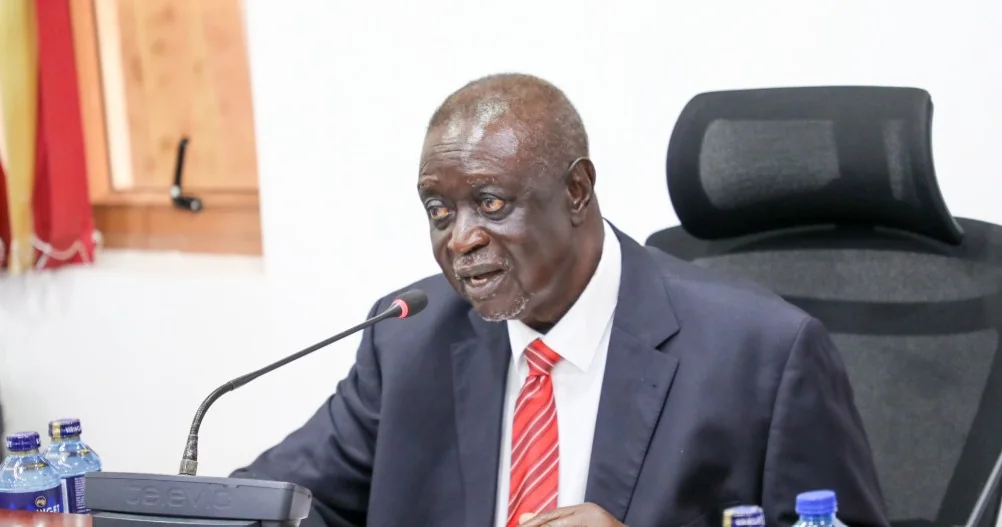
National Assembly Departmental Committee on Health Chairperson, Dr James Nyikal, said the funding will strengthen key health systems, including policy implementation and support to counties.
Latest Stories
- NASA unveils Artemis III crew as agency accelerates preparations for historic return to the Moon
- 𝐄𝐚𝐬𝐭𝐥𝐞𝐢𝐠𝐡 𝐕𝐨𝐢𝐜𝐞 𝐚𝐭 𝐍𝐢𝐧𝐞 - Nanyuki paralysed as protesters clash with police over Ebola quarantine site
- Sudanese air defences intercept drones over Khartoum, explosions reported in capital
- Türkiye appoints Selin Ozaydin as new ambassador to Kenya as Ankara expands African footprint
"The health sector's allocation for the 2026/27 financial year will enable the implementation of health policy and regulations, the management of national referral health facilities, and the provision of technical assistance to counties," Nyikal said.
The new allocations come a week after President William Ruto launched the Every Woman Every Newborn Everywhere (EWENE) Acceleration Plan 2026-2028, aimed at reducing preventable maternal and newborn deaths.
During the launch, President Ruto said maternal deaths should be treated as a national concern rather than just a health statistic.
"No nation can truly call itself progressive when women continue to lose their lives while giving birth. Every maternal death is a profound tragedy, especially since the vast majority of these deaths are preventable," he said.
Health Cabinet Secretary Aden Duale said the plan marks a shift towards implementation and measurable results.
"Together, EWENE and the Maternal and Newborn Health Rapid Results Initiative signal a shift from commitment to execution, from intention to results. What gets measured gets done, and what gets done saves lives," Duale said.
The EWENE initiative aims to cut preventable maternal and newborn deaths by 15 per cent within six months through a Rapid Results Initiative running until November 2026. It also targets a reduction of maternal mortality to 140 deaths per 100,000 live births by 2028.
The plan is supported by Sh7.5 billion in domestic financing, including Sh4 billion through the Social Health Authority to cover insurance for pregnant women, Sh1 billion allocated to the Kenya Medical Supplies Authority for maternal and newborn commodities, and Sh2.5 billion for family planning supplies.
It also includes recruitment and deployment of 5,000 nurses and midwives across the country, alongside distribution of modern medical equipment to 25 counties with the highest burden of maternal and newborn deaths.
Despite these efforts, maternal and newborn deaths remain high. Kenya records about 15 maternal deaths and 92 newborn deaths daily from preventable causes.
The maternal mortality ratio currently stands at 355 deaths per 100,000 live births, a figure that has remained largely unchanged over the last decade. Postpartum haemorrhage continues to be the leading cause of maternal deaths, even as the government works toward reducing the ratio to 70 deaths per 100,000 live births.
Top Stories Today









































Comments
Sign in with Google to comment, reply, and like comments.
Continue with Google