The US is prioritising intelligence, surveillance, training, logistics, and technology and other specialised capabilities assistance over large troop deployments in its bid to help African partners confront terrorism, secure key maritime routes, and create conducive conditions for economic development, AFRICOM has said.
The move outlines the Command's evolving approach to engagement on the continent, with a greater emphasis on supporting African-led security efforts.
Commander General Dagvin Anderson said the posture makes the US play a supporting role by providing capabilities that African partners may lack while making room for lasting solutions to come from African countries themselves.
Citing instability in the Horn of Africa, terrorism in Somalia and Nigeria, as well as threats to global shipping through the Red Sea, he added that the shift allows for broader cooperation, especially on threats that can have effects beyond a single country, such as groups like ISIS that operate across multiple regions.
“And so ISIS or Daesh is an international terrorist organisation that has affiliates across the continent, including in the Middle East. That is something that our global intelligence can help inform and help local forces address the affiliate of ISIS or Daesh that’s there locally, but understanding how that plays into the larger network and how an operation in Nigeria can actually help or have an impact on the terrorist threat in Somalia or in Mozambique or in other places,” General Anderson said.
“And so that’s something that we can bring from the United States to help with that understanding and also help synthesise that for action. But ultimately, it’s going to have to be working with the partners,” he added.
He cited the gains made in the fight against ISIS in Puntland, Somalia, and Nigeria as examples of how the strategy is helping counter terror threats on the continent while also disrupting global ISIS networks.
“We have been engaged very closely with the partner forces in Somalia, particularly in northern Somalia, where we have been able to work with them and push ISIS leadership into a very small area where they’re restricted to living in caves, they have limited mobility, their logistics are impacted, and limited ability to communicate. And that’s where the leadership of the global ISIS network is,” he said.
The success was attributed to counteroffensive operations and multiple air strikes on the ISIS strongholds in the Bari region of Puntland State.
Regarding other parts of Somalia, where Al-Shabaab has been active, General Anderson said the Command has been able to work very closely with the partner forces to provide intelligence, surveillance, and overhead support, including some of these strikes.
This year alone, the Command has launched 69 strikes in collaboration with Somali forces; of these, six were conducted last month.
“So there is some part of the activity of the terrorists that is still there, but it’s also that the partners have been enabled to be more active, which then creates opportunities that allow us to continue to build momentum against these threats. But ultimately, that has to be a Somali solution and a regional solution to that problem,” he said.
On the crisis in Sudan, he reiterated that it remains one of the worst humanitarian disasters on the planet but said that "ultimately that’s going to have to be resolved between the parties that are in conflict and the parties that are engaged in that."
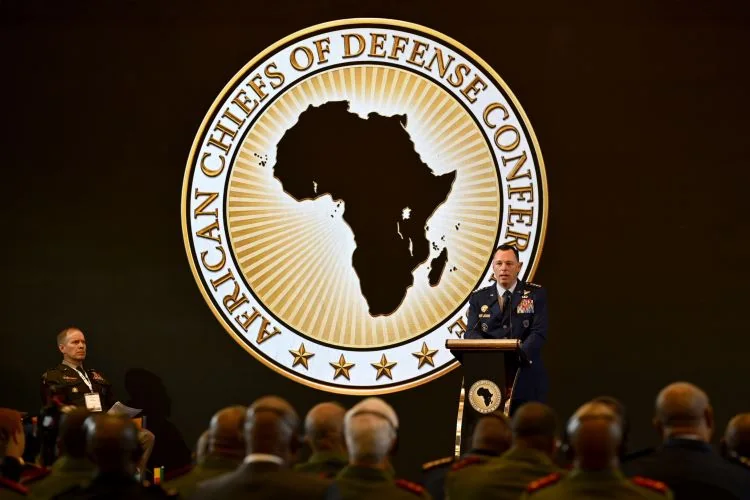
The general gave his remarks during a virtual media briefing held following the conclusion of the 2026 African Chiefs of Defence Conference (ACHOD), held in Angola under the theme ‘Leveraging our strengths, advancing regional security for enduring prosperity.’
The conference was attended by 35 states, as well as representatives from the US and Brazilian forces, and addressed the intersection of economics and security, the lingering challenge of misinformation, and regional security threats.































Comments
Sign in with Google to comment, reply, and like comments.
Continue with Google