"Will a robot be performing my surgery?" It is one of the first questions many patients ask when they hear about robotic surgery.
Images from science fiction often come to mind, like a machine making life-and-death decisions in an operating room while doctors watch from the sidelines. The reality is far less dramatic, but far more remarkable.
Inside the operating theatre, every decision is still made by a surgeon. Every cut, every movement, and every critical judgement remains under human control.
The robot does not think, diagnose, or operate on its own. Instead, it acts as an extension of the surgeon's hands, providing unmatched precision, stability, and visualisation that are difficult to achieve with conventional surgery alone.
And as Kenya embraces robotic-assisted surgery, doctors say the technology is opening a new chapter in healthcare, one that promises safer operations, faster recovery and better outcomes for patients.
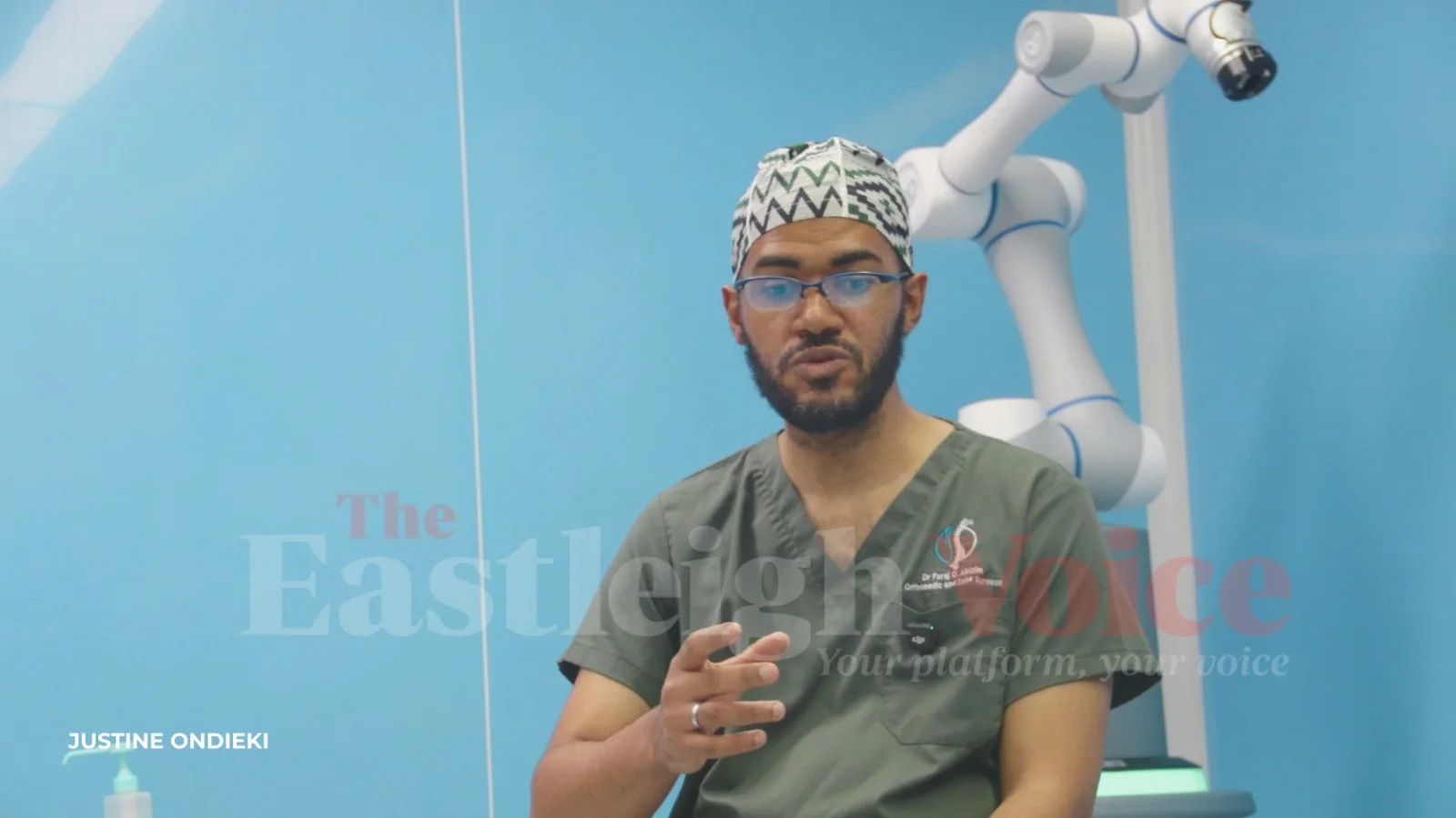
According to Dr Faraj Alkizim, Head of Robotics, Joint Replacement and Spine Surgery at Metropolitan Hospital, who has been at the forefront of introducing robotic-assisted knee replacement surgery in Kenya and East Africa, one of the biggest misconceptions about the technology is that the robot performs the surgery.
"The technology is more accurately described as robotic-assisted surgery, not robotic surgery. The robot is powered by artificial intelligence, but it is assisting the surgeon. It is not performing the surgery. The surgeon operates from beginning to end, just as we have done for many years. The difference is that robotics and artificial intelligence allow us to perform that surgery better," he says.
Rather than replacing medical professionals, robotic technology enhances their skills by offering clearer vision, greater precision, and real-time guidance during complex procedures.
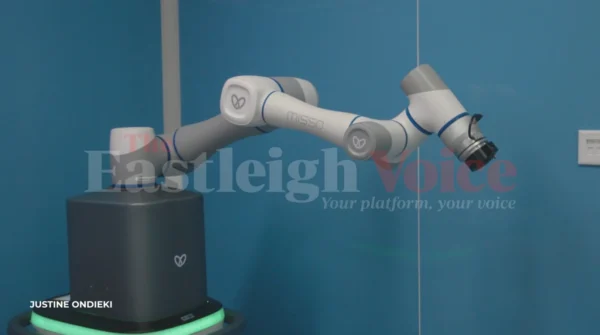 The robotic-assisted surgical system in operation. (Photo: Justine Ondieki)
"It is an additional tool that helps us improve the quality of surgery. The surgeon remains fully in control throughout the procedure," Dr Faraj explains.
One of the greatest advantages of robotic-assisted surgery happens long before a patient enters the operating theatre.
In conventional surgery, doctors rely on X-rays, CT scans, and experience to plan an operation. While these methods have served patients well for decades, surgeons often encounter unexpected findings once the procedure begins.
Using artificial intelligence (AI) and advanced computer software, surgeons can create a virtual model of a patient's anatomy and rehearse the operation before making a single incision.
"With robotics, we actually perform the surgery before the surgery. We simulate the procedure on a computer, allowing us to study every step, anticipate challenges, and predict the likely outcome before the patient enters the operating room," Dr Faraj says.
This level of preparation reduces uncertainty and helps surgeons make better-informed decisions during the actual operation. For patients undergoing joint replacement surgery, even the smallest error can affect mobility, comfort, and the lifespan of an implant.
Traditional surgery depends largely on a surgeon's experience, eyesight, and handheld instruments to align bones and position implants correctly.
Robotic assistance takes accuracy to another level.
"The robotic arm enables us to work with sub-millimetre precision and sub-degree accuracy," says Dr Faraj. "It allows us to measure every movement during surgery, ensuring the cuts are made exactly where they should be."
The robotic arm does not move independently. Instead, it follows boundaries set by the surgeon and provides feedback throughout the operation, helping prevent unnecessary damage to healthy tissues.
This precision is particularly important in orthopaedic procedures, where the correct placement of implants can determine how well a patient walks years after surgery.
 Healthcare workers prepare the robotic-assisted surgical system before a procedure at Metropolitan Hospital. (Photo: Justine Ondieki)
While the technology offers advantages for surgeons, patients stand to benefit even more.
Because robotic-assisted surgery allows doctors to avoid unnecessary injury to muscles, ligaments, and surrounding tissues, recovery is often faster than with conventional procedures.
"Patients generally experience less pain after surgery because the robot allows us to avoid touching tissues that do not need to be disturbed," Dr Faraj explains.
Research from countries where robotic surgery has been widely adopted has shown that patients often experience:
Less postoperative pain
Reduced blood loss
Smaller surgical incisions
Lower risk of complications
Shorter hospital stays
Faster rehabilitation
Earlier return to normal activities
"Patients are walking sooner, recovering faster, and reporting greater satisfaction after surgery," he says.
So far, Dr Faraj has recorded encouraging results at Metropolitan Hospital with robotic-assisted knee replacement surgery in Kenya.
Some patients have been able to stand and walk on the very same day as their operation, an important milestone that highlights the technology's potential to speed up recovery and improve quality of life.
The growing success has fuelled demand, with an increasing number of patients seeking the procedure.
Dr Faraj says many are joining waiting lists for the surgery, which is covered under the Social Health Authority (SHA), making the advanced treatment more accessible to eligible patients.
For elderly patients requiring knee or hip replacement, these benefits can significantly improve quality of life while reducing healthcare costs associated with prolonged hospital stays.
Perhaps one of the most remarkable benefits is predictability. Before robotic-assisted surgery, doctors often evaluated the success of an operation only after postoperative X-rays were taken.
Now, the expected outcome can largely be predicted before surgery even begins.
"What we see during computer simulation is almost exactly what we see after surgery," says Dr Faraj. "This predictability gives both surgeons and patients greater confidence."
As AI becomes increasingly integrated into healthcare, many people worry that machines could eventually replace doctors.
Dr Faraj dismisses that concern. "Artificial intelligence cannot perform surgery," he says. "It facilitates surgery by providing information, planning tools, and guidance, but the surgeon makes every decision."
Even if unexpected technical problems occur, including power failures, patients remain protected.
"Our robotic system has backup power that allows ongoing surgery to be completed safely. If necessary, the surgeon can immediately continue using conventional surgical techniques."
For years, many Kenyans travelled abroad seeking advanced robotic procedures, spending millions of shillings on treatment, flights, accommodation, and medical expenses.
 A computer workstation displaying real-time data and surgical planning for the robotic-assisted procedure. (Photo: Justine Ondieki)
The arrival of robotic-assisted surgery locally could change that.
"We want patients to access this technology without leaving Kenya," says Dr Faraj. "When patients travel abroad, they spend money not only on treatment but also on transport, accommodation, and time away from work. Having this technology locally saves families both time and money."
He says Kenya's growing investment in advanced medical technology demonstrates that the country's healthcare system is keeping pace with international standards.
"Robotics may be new in Kenya, but it is certainly not new globally. Many countries have safely used robotic-assisted surgery for years."
Despite its benefits, many patients remain anxious about robotic surgery.
Doctors believe much of this fear stems from a misunderstanding of how the technology works.
"When I explain robotic surgery to patients, I tell them that this machine simply helps me perform my work more accurately," Dr Faraj says. "I could still perform the operation without it, but I believe using robotic assistance gives my patients the best possible outcome."
Before surgery, patients receive detailed explanations about how the technology works and provide informed consent.
"No patient arrives in theatre without knowing that robotic assistance will be used," he says.
Although robotic surgery offers enormous promise, expanding access across Kenya will not be easy.
The technology requires significant investment in specialised equipment, maintenance, and training.
Currently, only a limited number of Kenyan surgeons have received formal training in robotic-assisted procedures.
"We need to begin training the next generation of surgeons in robotic technology because artificial intelligence is here to stay," says Dr Faraj.
Medical schools and teaching hospitals will need to incorporate robotic surgery into specialist training if Kenya hopes to meet growing demand.
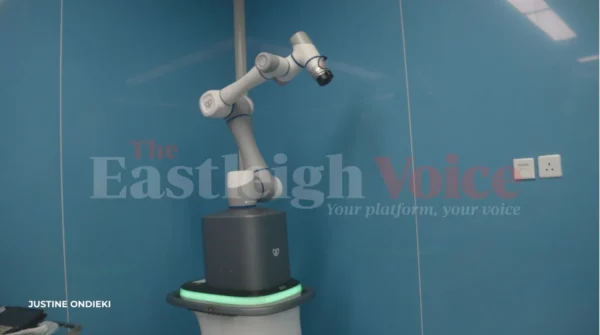 Robotic-assisted surgery equipment. (Photo: Justine Ondieki)
"We must help people understand that this is robotic-assisted surgery. The surgeon remains fully responsible for every aspect of the operation."
As healthcare embraces digital innovation, robotic-assisted surgery represents far more than a technological upgrade. It reflects a broader shift towards safer, smarter and more personalised patient care.
The operating theatre of the future will not be staffed by robots working independently. Instead, it will be a place where highly skilled surgeons use increasingly sophisticated technology to improve precision, reduce complications, and deliver better outcomes.
For patients, that could mean fewer days in hospital, less pain, quicker recovery, and renewed confidence that they are receiving world-class treatment close to home.
"The robot is not replacing the surgeon," Dr Faraj says. "It is simply helping us become better surgeons."
As medical technology continues to advance, many specialised procedures that once forced Kenyans to seek treatment abroad are now available within the country. From robotic-assisted joint replacement surgery to other complex interventions, Kenyan hospitals are increasingly offering world-class care.
Around the world, the need for knee replacement surgery is growing as more people develop osteoarthritis, a degenerative joint disease that causes persistent pain, stiffness, and difficulty walking.
The World Health Organisation (WHO) estimates that more than 528 million people are living with osteoarthritis globally, with the knee being the most commonly affected joint, impacting approximately 365 million people.
Researchers also estimate that about 654 million adults aged 40 years and above are living with knee osteoarthritis, while nearly 87 million new cases are diagnosed each year.


















































Comments
Sign in with Google to comment, reply, and like comments.
Continue with Google