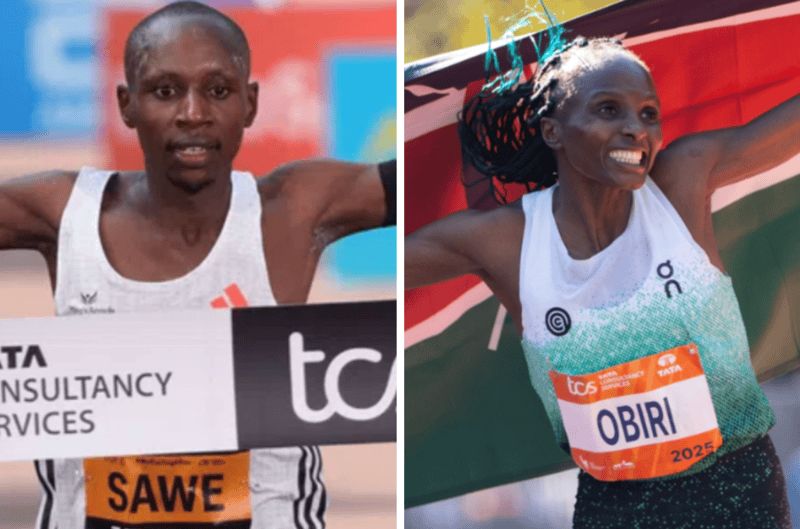
At the 2026 London Marathon, 31-year-old Sabastian Sawe, a former maize farmer from Kenya’s Rift Valley, made history by becoming the first athlete to break the two-hour barrier in the official race, clocking 1:59:30.
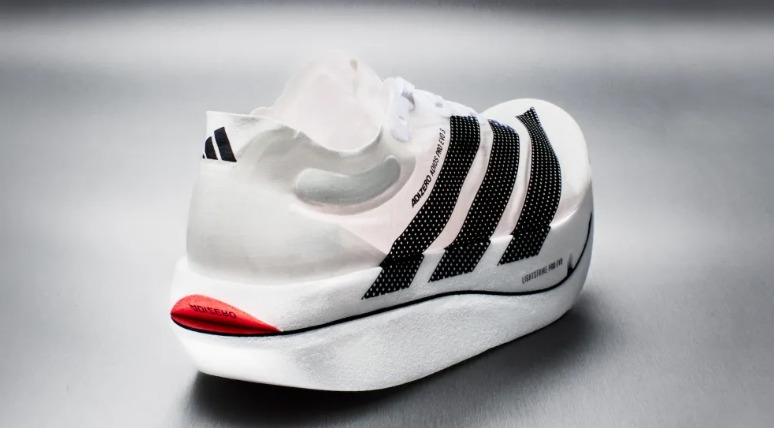
But beyond the record, attention quickly turned to what he was wearing—the radically redesigned Adidas Adizero Adios Pro Evo 3.
Sawe was not alone in rewriting the record books.
Ethiopia’s Yomif Kejelcha, making his marathon debut, finished just seconds behind him in one of the fastest races ever recorded. In the women’s race, Tigist Assefa also delivered a standout performance, setting a new women-only world record. Notably, all three athletes wore the same shoe—Adidas’ latest elite racing model.
A three-year engineering project behind a 97-gram shoe
According to Adidas, the Adizero Adios Pro Evo 3 is the result of about three years of development, involving multiple prototype cycles tested in laboratories in Germany and high-altitude training environments across Kenya and Ethiopia.
Engineers worked closely with elite athletes, refining the shoe “down to the nanogram level” with one goal: extreme weight reduction without compromising propulsion, stability, or energy return.
The result is not just an upgrade, but a complete redesign of Adidas’ elite marathon platform.
From carbon plates to EnergyRim technology
Previous “super shoes” relied on rigid carbon fibre plates under the forefoot to enhance propulsion.
The Pro Evo 3 replaces this with a carbon-infused EnergyRim system that runs along the perimeter of the midsole. This allows the runner’s foot to sit more directly on the foam, while stability and stiffness are maintained around the edges rather than beneath the foot.
This marks a shift from internal plate structures to perimeter-based support.
Lightstrike Pro Evo foam and extreme weight reduction
At the core of the shoe is an upgraded Lightstrike Pro Evo foam, which Adidas says is up to 50% lighter than previous versions while improving running economy by about 1.6%.
Combined with a stripped-back engineered mesh upper and minimal Continental rubber outsole zones, the shoe weighs just about 97 grams—lighter than a medium-sized mango.
This makes it one of the lightest elite marathon racing shoes ever produced, pushing the limits of performance footwear design.
Inside the design philosophy
The upper is inspired by ultra-light kitesurfing sail materials, offering structure while remaining almost translucent. It is highly breathable, allowing airflow to keep the foot cool over long distances.
It also features controlled flexibility, adapting to the natural movement of the foot without stretching like fabric, ensuring a secure and stable fit while minimising weight.
The outsole replaces full rubber coverage with strategically placed Continental traction zones to improve grip and durability.
The design focused on three core priorities:
• Midsole foam density and rebound efficiency
• Carbon placement and perimeter stability
• Ultra-light upper construction and airflow optimisation
Each component was refined through repeated testing with elite athletes over several marathon seasons.
How it feels underfoot: “Like an F1 tyre at speed”
Analysts and testers, including those from Runner’s World, Meta Endurance, and Run Testers, describe the ride as similar to a Formula 1 tyre under controlled load—soft on impact but stable at high speeds.
The shoe features a high-stack platform, with 39mm at the heel and 36mm at the forefoot, providing maximum cushioning for long-distance running while maintaining responsiveness.
It also features a low heel-to-toe drop of 3mm, which encourages a forward-leaning running position for enhanced speed and efficiency.
Instead of traditional carbon rods, the carbon-infused EnergyRim runs along the perimeter, allowing the foam to compress deeply and rebound quickly. This creates a springy, propulsive feel, especially at race pace, giving runners a strong forward push with each stride.
Overall, the combination of cushioning, low drop, perimeter carbon support and ultra-light foam produces a ride that feels both soft and fast.
Why the white colour matters
The predominantly white colourway is not just aesthetic—it serves several functional purposes:
• Reduced weight due to minimal pigment and coating
• Better heat reflection, helping stabilise performance
• A prototype-like identity, signalling race-focused engineering
• Improved visibility of design features during broadcasts
In elite racing, even colour is part of performance optimisation.
Market impact and competitive shift
Adidas’ success in London has strengthened its position in the elite marathon shoe market, long dominated by Nike’s Vaporfly and Alphafly models.
By equipping both the men’s and women’s record-breaking performances in the same race, Adidas achieved a major performance and marketing milestone.
The Adizero Adios Pro Evo 3 was released in a highly limited drop ahead of the London Marathon, priced at about $500 (roughly Sh65,000). A wider release is expected later in the season, though availability will remain limited due to its complexity and elite positioning.
Athletes, performance and shared innovation
All three headline performers—Sawe, Kejelcha and Assefa—competed in the same model.
Sawe credited the shoe for its lightness and stability during his record-breaking run, while Kejelcha’s debut and Assefa’s record reinforced its impact across both men’s and women’s competition.
This reflects a growing trend in elite athletics, where performance differences are increasingly shaped by execution rather than exclusive equipment.
Regulation and the limits of innovation
World Athletics rules cap stack height at 40mm and limit shoes to a single carbon plate system. Even so, manufacturers continue to innovate within these boundaries, pushing material science and design to new extremes.
Officials acknowledge that technology is evolving faster than regulations can fully keep pace.
Beyond the shoes: marginal gains
While footwear has transformed marathon performance, it is only one part of a broader system of marginal gains.
Modern success also depends on:
• Advanced carbohydrate fuelling strategies
• Hydration and energy absorption systems
• High-altitude training adaptations
In Sawe’s case, structured nutrition plans helped sustain energy over the full 42.2km—roughly the distance from Nairobi CBD to Thika town along Thika Road.
The Adidas Adizero Adios Pro Evo 3 signals a new era in marathon running, where weight is measured in grams, gains in fractions of a percent, and victories in seconds.
But as London showed, even with cutting-edge engineering, the human element remains decisive. In today’s marathon racing, history is not just run—it is engineered, refined, and pushed to the edge of what is physically possible.
















































Comments
Sign in with Google to comment, reply, and like comments.
Continue with Google