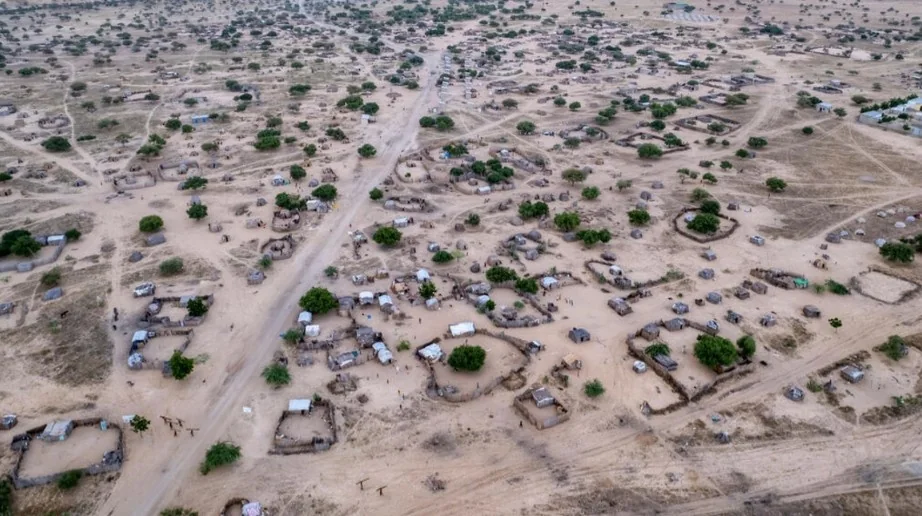
More than 77,500 people have been displaced across the Lake Chad Basin since January 2026 as violence intensifies across Nigeria, Niger, Chad and Cameroon, the UN Refugee Agency (UNHCR) said on Friday, warning that worsening insecurity is eroding fragile stabilisation gains in the region.
According to UNHCR, the security situation in the region has deteriorated sharply, with incidents of violence rising by about 80 per cent between January 2024 and April 2026.
Similarly, nearly 1,800 attacks and more than 5,700 deaths were recorded between September 2025 and May 2026 alone, reflecting what the agency described as a deepening protection crisis across the basin.
The violence remains most severe in Nigeria’s Borno State, where armed group attacks, military operations and insecurity along major routes continue to displace communities and restrict humanitarian access.
“The ripple effects extend beyond the northeast, as displacement, insecurity and competition over scarce resources increasingly spill into other regions, including the northwest and the so-called middle belt, deepening fragilities,” UNHCR said.
In Niger, more than 16,000 Nigerians have crossed into the country’s Diffa region this year following renewed attacks in the northeast, where authorities and aid agencies are struggling to meet rising needs among new arrivals.
Similarly, in Cameroon’s Far North, persistent attacks and abductions have continued to force families from their homes, while in Chad’s Lac Province, repeated violence and military operations have displaced tens of thousands and prompted emergency security measures.
“Recurrent attacks and military operations have displaced some 60,000 people; a state of emergency was declared in May following an attack on military installations,” UNHCR said.
According to UNHCR, civilians are increasingly bearing the brunt of the violence, with repeated displacement eroding already fragile support systems.
Protection risks are also rising, particularly for women and children, as access to basic services, education and safe shelter continues to deteriorate.
“Single-parent households, older people and those with disabilities also face heightened risks as repeated displacement erodes already limited support networks,” the UN agency said.
Further, UNHCR warned that response efforts are falling behind rising needs, adding that it requires $29 million to sustain operations and life-saving assistance in the region through 2026.
“Without timely and flexible support, protection gaps will widen, displacement will continue to spread across borders, and the risk of a more entrenched regional crisis will increase,” UNHCR said.
“The trajectory remains deeply concerning, but it is still reversible with sustained support.” now.








































Comments
Sign in with Google to comment, reply, and like comments.
Continue with Google