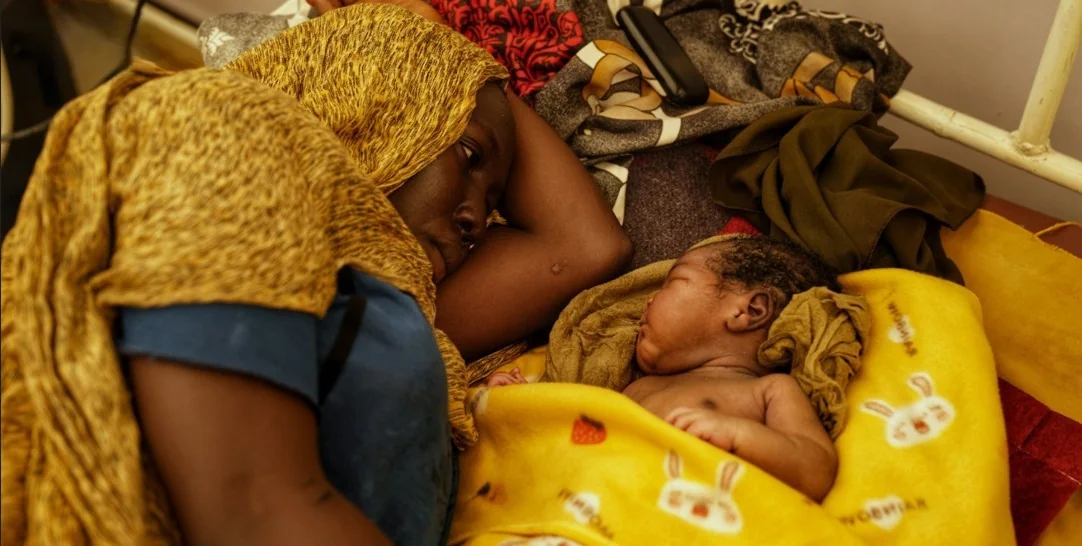
Shrinking donor funding has sharply reduced humanitarian operations and support at Um Rakuba refugee camp in eastern Sudan and surrounding communities, leaving thousands of Ethiopian refugees and vulnerable Sudanese families with diminishing access to healthcare, food, clean water, protection and other essential services, Médecins Sans Frontières (MSF) has warned.
Located in El-Gedaref State, Um Rakuba refugee camp was established in November 2020 by the UN refugee agency (UNHCR) and the Sudanese government to accommodate Ethiopians fleeing the conflict in the Tigray region. The camp currently hosts about 17,000 refugees, most of them women and children.
MSF said the camp was initially supported by dozens of humanitarian agencies, particularly at the height of the Ethiopian refugee response in 2021, when around 35 national and international organisations operated in and around the camp. Today, fewer than 10 remain.
“Many relied heavily on UNHCR funding. As donor budgets to the humanitarian sector shrank, services followed suit,” the organisation said.
According to MSF, the effects of the funding cuts are evident across every sector, with community leaders regularly reporting worsening access to primary healthcare, protection services, water and sanitation, food assistance and education.
“Our health promotion teams consistently hear concerns about the decline in essential services. Communities continue to place strong trust in MSF, but they are asking for greater advocacy to address growing gaps. Local organisations supporting women and children often lack the resources to meet increasing needs,” says Zelie Antier, MSF project coordinator of the camp hospital.
Beyond healthcare, MSF said protection referral pathways for refugees have also weakened, particularly for women, children and unaccompanied minors.
“The absence of humanitarian organisations is leaving communities with fewer options at a time when needs continue to grow. Water and sanitation shortfalls affect both the community and our hospital. Refugees report reductions in food assistance, while treatment interruptions at primary healthcare facilities are leading to more severe medical complications by the time patients reach MSF.
cuts are driving a humanitarian deterioration with no sign that aid will be scaled up despite repeated warnings,” she adds.
The organisation said the crisis has become so severe that the word "severe" has become the norm across Sudan, where shortages of necessities continue to worsen in many areas.
MSF has been operating in Um Rakuba since the camp was established in 2020, supporting its hospital and providing emergency medical care.
When Sudan's civil war broke out in 2023, the hospital's role expanded significantly beyond serving refugees.
“Today, about 80 per cent of consultations are for people in Sudanese host communities, drawn from a surrounding population of around 100,000 people,” it says, warning that local crises should not have to reach near-catastrophic levels before they attract attention and emergency funding.
The organisation warned that although Um Rakuba has not yet reached catastrophic levels, the warning signs are already evident.
“Um Rakuba refugee camp in eastern Sudan has not yet reached a catastrophic threshold. But many of the warning signs are already there,” it cautions.
Although El-Gedaref State is not on the frontlines of Sudan's conflict, it has borne much of the war's humanitarian burden.
MSF said that in 2024, more than one million Sudanese were displaced from heavily affected areas such as Khartoum, Sennar and Al Jazirah, placing enormous strain on the state's already overstretched services, including its healthcare system, which has also had to contend with cholera outbreaks.
“Sudan was once called the food basket of the area. Yet every day, we were treating children with severe acute malnutrition. I have never seen this level of despair in my career,” Dr Tanya Hajj Hassan, an MSF paediatrician who visited El-Gedaref nearly a year ago, recalls having driven through fertile green fields on her way to the hospital.
Food assistance has continued to decline, with refugees now receiving about four kilograms of wheat per person each month, falling to around 2.5 kilograms in some months. Before Sudan's war erupted in April 2023, refugees received about 14 kilograms per person monthly.
MSF remains the only provider of secondary healthcare and comprehensive services for survivors of sexual and gender-based violence in the camp.
The organisation said access to HIV, tuberculosis (TB) and neglected tropical disease treatment remains severely limited, while recurring outbreaks of cholera, measles, malaria and meningitis continue to threaten vulnerable communities.
“Across sectors from healthcare and protection to water, sanitation, food, and education, people are telling us they feel increasingly abandoned. Without increased funding and a stronger humanitarian presence, people will continue to face preventable suffering. MSF alone cannot meet these needs,” says Mohamed Ahmed, MSF head of mission.
MSF said it has repeatedly warned humanitarian organisations and UN agencies about the worsening living conditions and declining essential services in and around Um Rakuba camp, but a clear plan to scale up assistance has yet to materialise.
“Our appeal to donors and humanitarian organisations is to match words with action. Communities cannot survive on promises. We need stronger protection services, restored primary healthcare, and greater investment in essential services. Refugees must not be forgotten within the broader Sudan crisis,” Ahmed adds.




















Comments
Sign in with Google to comment, reply, and like comments.
Continue with Google