When Sporting Kansas City lifted the 2013 Major League Soccer (MLS) Cup after defeating Real Salt Lake in one of the most dramatic finals in the league's history, one Kenyan stood at the heart of the celebrations.
Lawrence Olum had just played 112 gruelling minutes after replacing an injured teammate, helping Sporting Kansas City secure the title and becoming the first—and still the only—Kenyan to win the MLS Cup.
Despite the historic achievement, it remains one of the least celebrated milestones in Kenyan football.
While players such as Victor Wanyama starred in the English Premier League and Michael Olunga established himself as one of Asia's top strikers, Olum quietly built an impressive career in the United States, earning a reputation as one of MLS's dependable midfielders over more than a decade.
Today, however, the former Harambee Stars midfielder speaks less about trophies and more about family, coaching and creating opportunities for the next generation. Having returned home to Nairobi, he says every visit reminds him that Kenya remains his anchor.
"There is always something special about coming home," he said during an interview with The Eastleigh Voice. "Everything feels familiar. You are surrounded by people who understand you, who share your culture, and that feeling is difficult to explain. It is one of the reasons I keep coming back."
Away from football, Olum says fatherhood has transformed his outlook on life.
Becoming a parent, he explains, is something no one can truly prepare for, with each day bringing new lessons. Even so, football continues to define much of who he is.
From Nairobi to America
Olum's journey to becoming one of Kenya's most successful football exports was anything but conventional.
Rather than progressing through elite academies, he honed his talent on Nairobi's dusty pitches before joining Pipeline, never imagining the sport would eventually take him across the Atlantic.
His breakthrough came through a football scholarship to Missouri Baptist University.
Looking back, Olum says the scholarship itself was only the beginning.
"The scholarship itself wasn't what made the difference," he reflected. "Many people receive scholarships. What mattered was what I did with that opportunity. Once I got there, I wanted to learn every day because I knew I was experiencing something we didn't have back home."
His determination helped him climb steadily through American football, beginning with Portland Timbers before spells at Minnesota Thunder, Austin Aztex and Orlando City SC.
Each move strengthened his reputation as a disciplined and intelligent defensive midfielder.
Making Kenyan history
That consistency earned him a move to Sporting Kansas City in September 2011.
Across two spells with the club between 2011 and 2016, Olum made more than 100 appearances, but his defining moment came in the 2013 MLS Cup final.
After replacing the injured Oriol Rosell early in the match, he remained on the pitch for 112 minutes before Sporting Kansas City triumphed in a dramatic penalty shootout.
Only years later did he fully appreciate the significance of that achievement.
"Looking back now, it was an incredible achievement because so many professional athletes never get the chance to win anything," he said. "Winning the MLS Cup means much more to me today than it did then because I understand how difficult it is."
More than a decade later, no other Kenyan has matched the feat.
"As things stand, I'm still the only Kenyan to win it," Olum noted. "But what gives me the greatest pride isn't that record itself. It's knowing that young players can now look at it and believe it is possible. Before, nobody could point to a Kenyan who had done it. Now there is proof."
For Olum, inspiring others matters more than holding a record.
"You cannot convince someone that something can be achieved if nobody has ever achieved it," he explained. "Now, if a young Kenyan wants to play in America and dreams of winning the MLS Cup, they know someone from where they come from has already done it."
Representing Kenya
Olum's career also took him to Malaysia, where he joined Kedah FA in late 2014 and helped the club win the 2015 Malaysia Premier League before returning to Sporting Kansas City the following year.
Internationally, he earned four caps for Harambee Stars, making his competitive debut against Comoros during Kenya's 2015 Africa Cup of Nations qualifiers in May 2014. He later featured against Lesotho before making his final appearance against Zambia in September 2015.
Although injuries and competition limited his international career, representing Kenya remains one of his proudest achievements.
"There is something special about wearing your country's colours," he said. "No one can ever take that away from you."
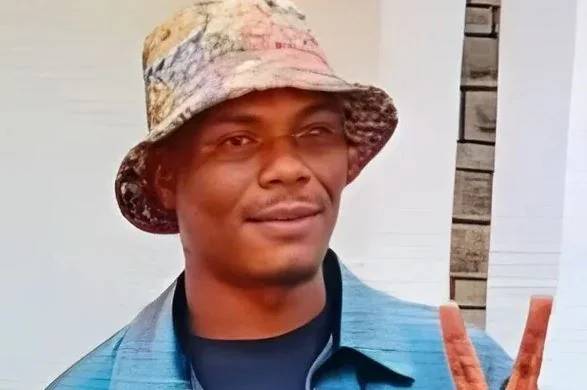
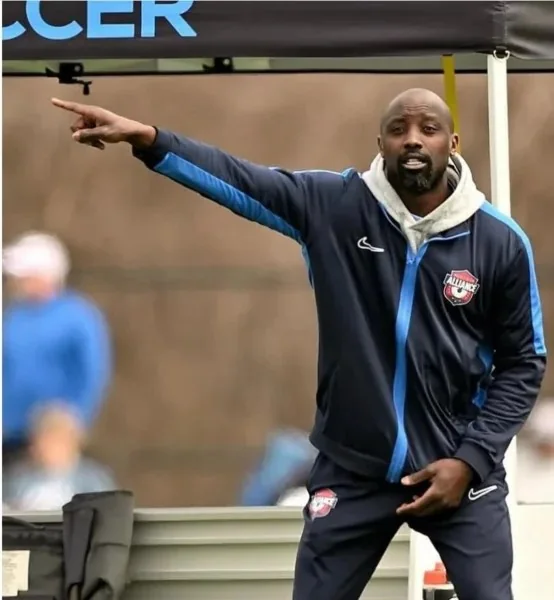 Lawrence Olum in his new role. (Photo: Lawrence Olum Media Team)
Looking ahead to AFCON 2027
Having spent nearly two decades in American football, Olum believes East Africa is approaching a defining moment.
With Kenya, Uganda and Tanzania set to co-host the 2027 Africa Cup of Nations, he sees an opportunity to transform football across the region.
He believes the tournament will expose local players to world-class stars such as Achraf Hakimi, Mohamed Salah and Sadio Mané while inspiring a new generation.
"When those players come here, young footballers will finally see what world-class football really looks like," he said. "That kind of exposure changes people because they begin believing they can reach those levels too."
For Olum, the tournament's most enduring legacy should be improved infrastructure.
"When you have the chance to play in a stadium holding sixty thousand people, it changes your ambitions," he explained. "Many footballers spend their entire lives playing before a few hundred spectators. Experiencing football on that scale motivates you to dream bigger."
Building the next generation
Retirement has only strengthened Olum's connection to football.
He now coaches Metro Alliance FC in the United States while leading programmes that connect Kenyan footballers with opportunities abroad. One initiative focuses on helping girls from Kenyan diaspora communities pursue football while strengthening links between Kenya and the United States.
He believes such partnerships are essential given the differences in sporting infrastructure between the two countries.
"We're trying to build a bridge between Kenya and the United States," he explained. "There are so many second-generation Kenyan children abroad who want to represent Kenya. We want them to feel connected to their roots while also creating opportunities for players back home."
He also runs a sports development organisation in Kenya that uses football to promote education and youth development.
For Olum, coaching, mentorship and community work now define the second chapter of his life.
"Most footballers retire in their mid-thirties," he said. "That's really when your second career begins."
Away from football, he enjoys reggae music, travelling, spending time with family and occasionally DJing, although he admits he still cannot resist joining a casual football match whenever the opportunity arises.
Lawrence Olum's story is about far more than becoming the first Kenyan to win the MLS Cup. It is a story of perseverance, seizing unexpected opportunities and proving that a young footballer from Nairobi could succeed on one of the biggest stages in American football.
Today, his greatest ambition is no longer adding to his own achievements, but ensuring more Kenyan footballers have the chance to follow in his footsteps.























Comments
Sign in with Google to comment, reply, and like comments.
Continue with Google