The Kenya Association of Music Producers (KAMP) has been stripped of its operating licence for three months following a regulatory review that found governance, financial and licensing failures.
According to the Kenya Copyright Board (KECOBO), the decision was reached after establishing that KAMP had not complied with key obligations under a consent agreement signed in June last year with the Performing and Audio-Visual Rights Society of Kenya (PAVRISK), which were meant to harmonise licensing operations.
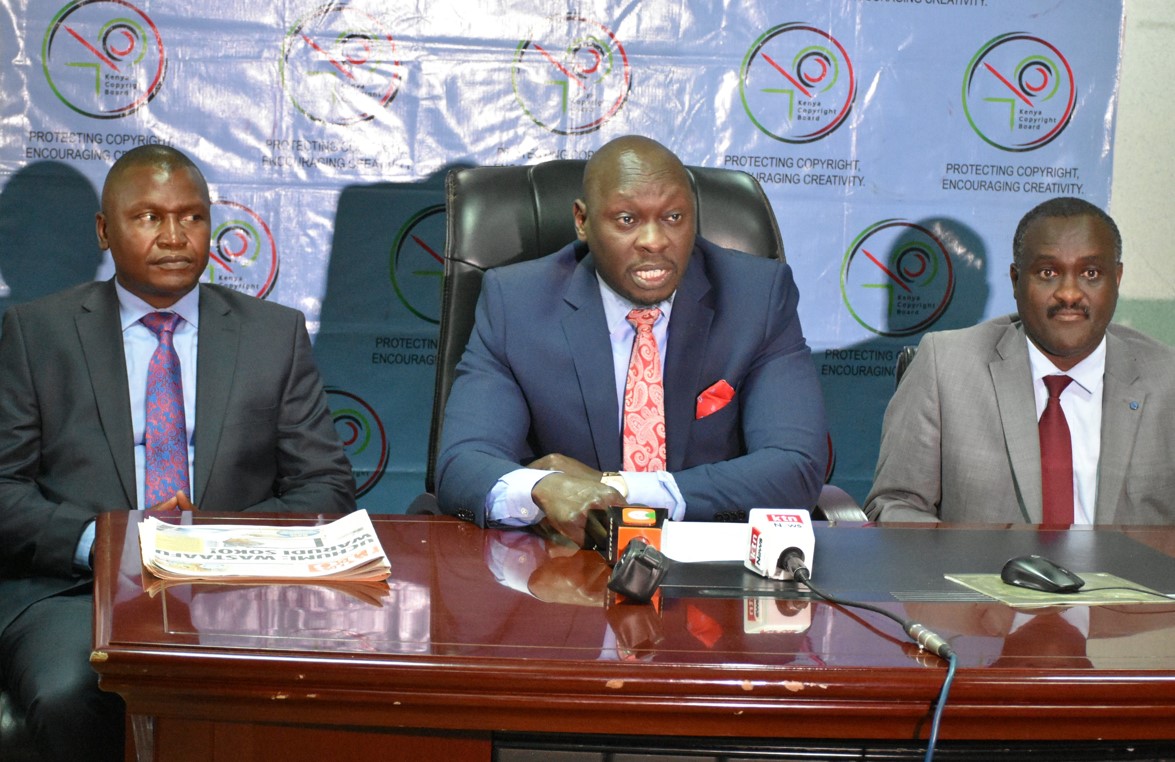
KECOBO Chair Joshua Kutuny said the suspension takes effect from July 1, 2026 and will run for 90 days.
“Despite being afforded sufficient opportunity to comply, KAMP has neither implemented nor demonstrated meaningful compliance with the undertakings contained in the consent,” Kutuny said.
The Board also raised concerns over the misuse of royalty funds. It noted that KAMP had distributable royalties amounting to Sh5.5 million, which was spent on non-core activities, contrary to the statutory obligation imposed on a licensed Collective Management Organisation (CMO).
“The Board established that distributable royalty funds amounting to Sh5,514,559.16 were expended on non-core activities, contrary to the statutory obligations imposed on a licensed Collective
Management Organisation (CMO),” reads the notice.
KECOBO further said KAMP failed to observe the required 70:30 royalty distribution principle, leading to improper retention and spending of funds that should have gone to rights holders.
Kutuny added that it ignored lawful directives issued by the regulator and failed to fully implement the June 2025 consent meant to improve governance and restore order in the sector.
He also cited persistent non-compliance with statutory directives, saying KAMP repeatedly failed to follow instructions issued under the Copyright Act and related regulations despite several reminders and engagements.
The regulator further found that KAMP issued licences below approved tariffs set out in gazetted rates, a move that led to under-collection of royalties and created unfair conditions within the sector.
KECOBO also raised concern over heavy use of litigation, saying the organisation channelled significant royalty funds into court cases, which reduced money available for distribution and delayed payments to creators.
Corporate governance failures were also highlighted, including directors remaining in office beyond their allowed terms and failure to conduct timely elections as required under the law.
The board further said KAMP’s royalty distribution system lacked transparency, citing the absence of verifiable usage data and incomplete records needed to confirm fairness in payments.
It also noted that KAMP proceeded with its June 2026 royalty distribution without informing KECOBO, denying the regulator its oversight role.
Following the suspension, KECOBO directed KAMP to immediately halt all activities reserved for a collective management organisation, including licensing, tariff negotiations, royalty collection and issuance of invoices or licences.
KAMP has also been ordered to submit a detailed compliance and corrective action plan, provide full access to financial and governance records, and cooperate fully with audits, inspections and investigations.
The board must also conduct fresh elections, refund and account for misused funds, including Sh5,514,559.16, and submit full documentation of its June 2026 royalty distribution process.
KECOBO further directed the organisation to align its licensing framework with gazetted tariffs, develop a financial system that follows the 70:30 distribution rule, and publish a public apology while withdrawing any content deemed misleading or disrespectful to the regulator.
The regulator also ordered the development of a conflict of interest policy requiring full disclosure by all officials and strict rules on participation in decision-making processes.
During the suspension period, PAVRISK will collect royalties on behalf of rights holders under KAMP’s mandate. KECOBO said all collected funds must be held in a separate trust account and shall not be distributed until further notice.
KECOBO said it will review KAMP’s status after the 90 days, and reinstatement will only be considered once full compliance with legal, governance and financial requirements is demonstrated.
“The Board shall review KAMP's regulatory status upon expiry of the suspension period or such time as it may deem appropriate. No reinstatement of the operating license shall be considered unless KECOBO is satisfied that KAMP has fully remedied all governance, financial, licensing, compliance and regulatory deficiencies identified by the Board and has demonstrated full compliance with the Copyright Act, the Copyright (Collective Management) Regulations, license conditions and all lawful directives issued by KECOBO,” reads the notice.



































Comments
Sign in with Google to comment, reply, and like comments.
Continue with Google