Global humanitarian aid falls to decade low as donor funding shrinks
Global humanitarian aid falls to decade low as donor funding shrinks

Listen

Read this story aloud

Listen to the clean text version of this article.

Ready
3 min listen
Audio reading is not supported on this browser.

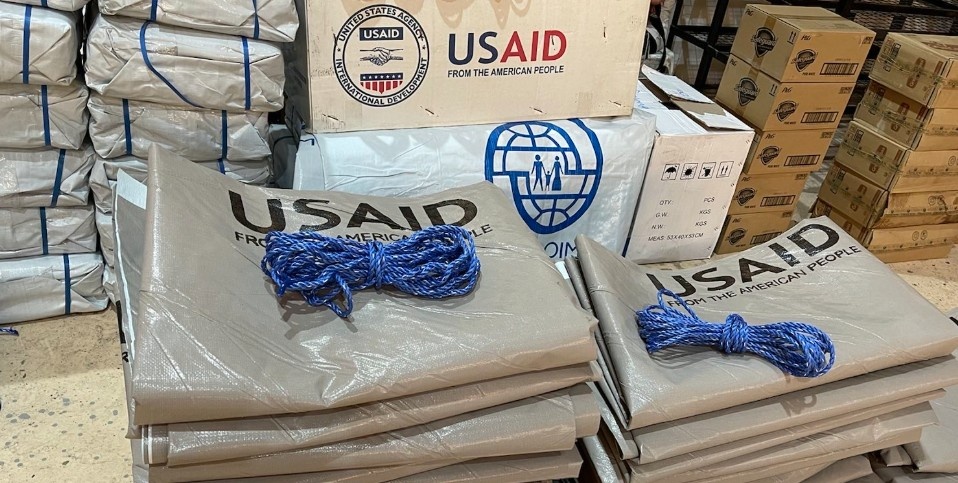
It attributes the contraction to a more than $8 billion (Sh1.04 trillion) reduction in a single year, 2025, driven largely by deep cuts from the United States following the closure of the USAID programme and broader reductions in development spending by Western donors, including Germany.

International humanitarian assistance has fallen to its lowest level in a decade after a steep contraction in donor funding, the latest Global Humanitarian Assistance Report has shown.
According to the findings, the sector has shrunk by nearly a third since 2023 as major economies scale back support amid shifting global priorities.
Notably, total humanitarian funding dropped by 20 per cent in 2025 alone, pushing global assistance down to $33.3 billion (Sh4.31 trillion), marking the third consecutive year of decline and the sharpest fall on record.
“2025 was the worst year in recent history for the humanitarian system. Budget cuts affected development and humanitarian programmes alike, with devastating impacts for people receiving assistance that relied on a stable but insufficient system,” reads the report.
It attributes the contraction to a more than $8 billion (Sh1.04 trillion) reduction in a single year, 2025, driven largely by deep cuts from the United States following the closure of the USAID programme and broader reductions in development spending by Western donors, including Germany.
Advertisement
The decline comes on top of nearly $6 billion (Sh777.4 billion) in cuts in 2024, leaving the global humanitarian system about 30 per cent smaller than it was in 2023.
This is despite rising global needs driven by conflict, climate shocks and displacement.
At the same time, the number of people requiring humanitarian assistance has more than doubled over the past decade, rising from 141 million in 2017 to about 300 million by the end of 2025, intensifying pressure on an already constrained funding system.
Private donations have also declined for a third consecutive year, falling to $6.8 billion (Sh880.8 billion), down from $7.3 billion (Sh945.9 billion) in 2024, as post-Ukraine war giving levels continue to normalise.
“Despite some donors signalling that they will prioritise humanitarian spending in their budgets, there is limited evidence that humanitarian spending is always being prioritised over wider development spending.”
The report further notes a shifting donor landscape, with Gulf states such as the United Arab Emirates and Saudi Arabia emerging as the fourth and fifth largest contributors, while traditional Western donors now account for less than half of total humanitarian funding.
Looking ahead to 2026, the report warns of continued contraction, though at a slower pace, as the system potentially approaches a new lower equilibrium, raising concerns over whether global humanitarian financing has entered a prolonged “humanitarian recession.”
Advertisement

Comments

0
Loading comments...

Trending

Latest Stories

Popular Stories This Week