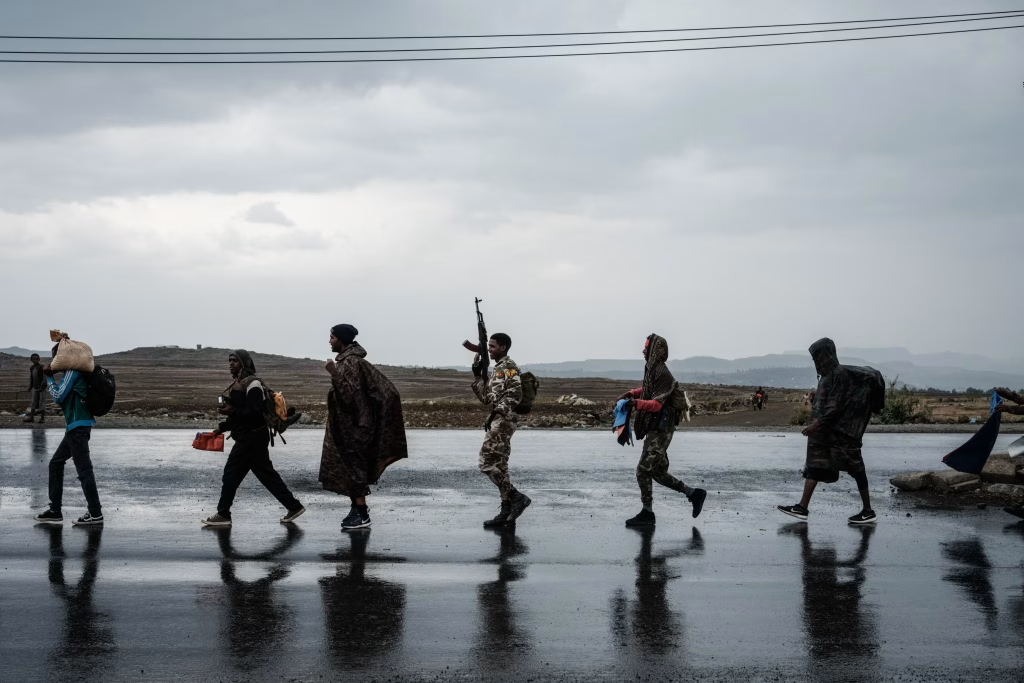
Human Rights Watch (HRW) has urged authorities in Ethiopia’s Tigray region to withdraw a draft proclamation that would introduce compulsory military mobilisation and impose penalties on individuals and media outlets accused of undermining recruitment efforts, warning that the measure risks enabling serious abuses and further shrinking civic space in the post-war region.
The rights group said the law would effectively compel civilians into military service while criminalising refusal to comply, assistance in avoiding recruitment, and expression perceived as discouraging mobilisation. It also warned that provisions targeting media reporting could be used to silence criticism under broad and vague security justifications.
“Tigrayans are still reeling from a devastating two-year conflict and its aftermath,” said Laetitia Bader, deputy Africa director at Human Rights Watch. “Authorities in the region should not respond to ongoing political tensions by forcing civilians into military service while simultaneously punishing criticism of such forced conscription.”
HRW’s Bader further said the draft raises serious human rights concerns, arguing it “would grant sweeping powers to compel civilians into military service and punish those who refuse or speak out,” and urged authorities to ensure that any security-related measures comply with Ethiopia’s human rights obligations.
The organisation also cautioned that criminalising reporting or commentary deemed to undermine recruitment could have a chilling effect on freedom of expression and media activity in a region still recovering from years of armed conflict and political fragmentation.
The Tigray security and mobilisation proclamation emerged amid renewed political and security uncertainty in the region over disputes in the implementation of the 2022 Pretoria peace agreement.
According to reporting by Addis Standard, the law circulated publicly in June 2026 and was prepared as part of efforts to formalise a legal framework for wartime or emergency mobilisation.
The proclamation establishes compulsory military mobilisation for eligible civilians during periods declared by regional authorities. It introduces penalties for those who evade recruitment, desert service, or assist others in avoiding conscription.
Beyond individual liability, the draft also extends enforcement to institutions, including media organisations. It criminalises speech and reporting considered to “discourage,” “mislead,” or otherwise undermine recruitment or mobilisation efforts, with provisions allowing fines, suspension, or other sanctions against media outlets deemed in violation.
The law further outlines a wide range of wartime offences, including sabotage, unauthorised disclosure of security-related information, collaboration with opposing forces, and actions interpreted as threats to the constitutional order or territorial integrity of Tigray. Some of these offences carry severe penalties, including long-term imprisonment and, in the most serious cases, capital punishment.
Rights observers say the broad wording of the provisions risks enabling arbitrary enforcement and could significantly expand state authority over civilian life, particularly in relation to speech and media activity.
HRW has urged Tigray authorities to withdraw or substantially revise the draft in line with international human rights standards, stressing that security measures must not come at the expense of fundamental freedoms.

























Comments
Sign in with Google to comment, reply, and like comments.
Continue with Google