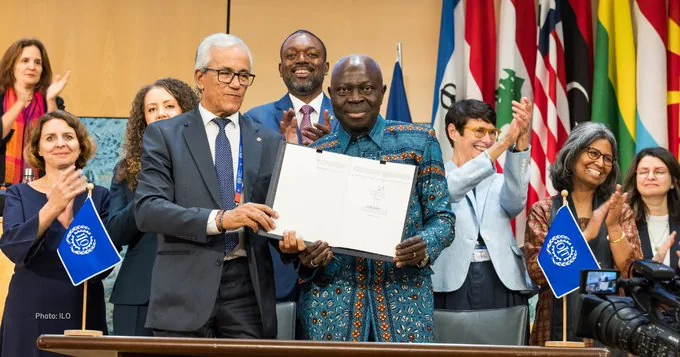
Content creators and other digital platform workers are set to gain stronger protections and clearer labour rights under a new global framework adopted by the International Labour Organisation (ILO).
The new Convention on Decent Work in the Platform Economy is expected to benefit millions of creators earning income through digital platforms.
This is by guaranteeing fundamental rights such as fair pay, safe working conditions, protection from unfair deactivation and stronger safeguards over data privacy and algorithmic decision-making.
For creators in countries such as Kenya, once the convention is ratified domestically, the agreement could provide a legal foundation for improved earnings transparency, protection against arbitrary account suspension, and access to collective bargaining mechanisms previously reserved for traditional employment structures.
The convention, adopted at the 114th International Labour Conference in Geneva, extends core labour protections to platform workers regardless of their employment classification, addressing long-standing gaps in regulation within the fast-growing digital economy.
The framework calls on member states to ensure that platform workers enjoy fundamental rights at work, including freedom of association, protection from discrimination, and access to a safe and healthy working environment.
It also introduces safeguards on the use of automated systems, requiring transparency in algorithm-driven decisions and providing workers with avenues to challenge unfair outcomes.
This provision is particularly relevant to content creators whose income and visibility are often shaped by platform algorithms.
The convention further encourages governments to extend fair remuneration standards to all workers, including those outside traditional employment relationships, while also addressing issues such as protection from violence and harassment and stronger privacy protections for personal and performance data.
In his remarks, ILO Director-General Gilbert F. Houngbo underscored the importance of the agreement.
“We were conscious that the eyes and ears of millions of workers and digital labour platforms were upon us. They were waiting for the results of these intensive days of deliberation,” Houngbo said.
“We could not disappoint them, and you showed once again that the ILO remains capable of shaping the present and future of work.”































Comments
Sign in with Google to comment, reply, and like comments.
Continue with Google