Kenya is expanding its Kaptagat Integrated Conservation Programme to other major forest ecosystems, including the Mau Forest Complex and the Cherangany Hills, as part of efforts to scale up community-driven forest restoration initiatives.
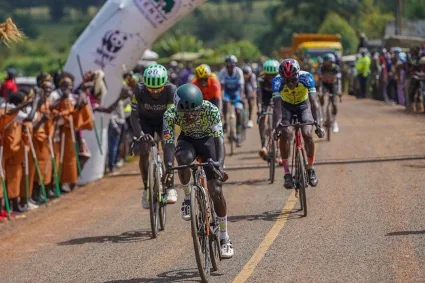
The programme, launched a decade ago under the stewardship of National Treasury Principal Secretary (PS) Dr Chris Kiptoo, combines environmental conservation with community participation and is anchored on a model that links forest rehabilitation with income-generating and public engagement activities, including the Kaptagat Cycling Challenge.
The cycling event is used as a platform to support restoration work, with participation fees contributing to conservation activities and riders taking part in tree-planting efforts under Kenya’s wider 15 Billion Trees Campaign.
Past editions have attracted elite regional cyclists, with winners across categories highlighting both the competitiveness of the race and its environmental focus.
“This race is not only a challenge for me, but it is a race for impact, to remember the Kaptagat Forest and to plant trees for the environment,” said 2025 Elite women’s winner Monica Jelimo.
According to Kenya Forest Service (KFS) Chief Conservator of Forests Alex Lemarkoko, the initiative goes beyond sport, describing it as a combined investment in environmental restoration and the sports economy.
“The Kaptagat Cycling Challenge is much more than a sporting event. It is a win for nature, for people and the sports economy,” he said.
He added that proceeds from the event help support forest restoration while participants contribute directly to tree planting.
The programme has also incorporated para-cycling to promote inclusivity in sport, with organisers saying the event continues to grow as a platform for both environmental awareness and athletic participation across different groups.
“Having a tree planted with my name is an opportunity to show that I was here and achieved something. Even if the impact seems small today, it will make a big difference in the future and for future generations,” said Fabian Kongo, a tandem bike pilot.

































Comments
Sign in with Google to comment, reply, and like comments.
Continue with Google