For generations, Egypt's World Cup story has been defined by missed opportunities. Seven-time African champions, yet unable to translate their continental dominance onto football's biggest stage.
That narrative finally changed in Dallas as the Pharaohs defeated Australia 4-2 on penalties after a 1-1 draw to reach the FIFA World Cup Round of 16 for the first time in their history.
The victory marked several historic milestones for Egypt. It was their first-ever World Cup knockout victory, their first progression to the Round of 16, and the first time the nation's most successful football team has won a knockout match at the global showpiece.
Head coach Hossam Hassan also became the first manager to guide Egypt beyond the opening knockout round at a FIFA World Cup.
The result continued what has become a landmark tournament for African football, with Egypt becoming the second African nation to secure a place in the Round of 16 and reinforcing the continent's strongest-ever showing at the World Cup.
Few would have predicted such a run considering Egypt arrived at the tournament carrying an unwanted record. Before the 2026 edition, the Pharaohs had never won a World Cup match despite previous appearances in 1934, 1990 and 2018. Now, they have rewritten their history, scoring six goals in this tournament alone more than they managed across all their previous World Cup campaigns combined.
Their latest triumph came after surviving one of the competition's most dramatic knockout encounters.
Australia began brightly and nearly took the lead inside five minutes when Cristian Volpato unleashed a powerful strike from distance that clipped the top of the crossbar.
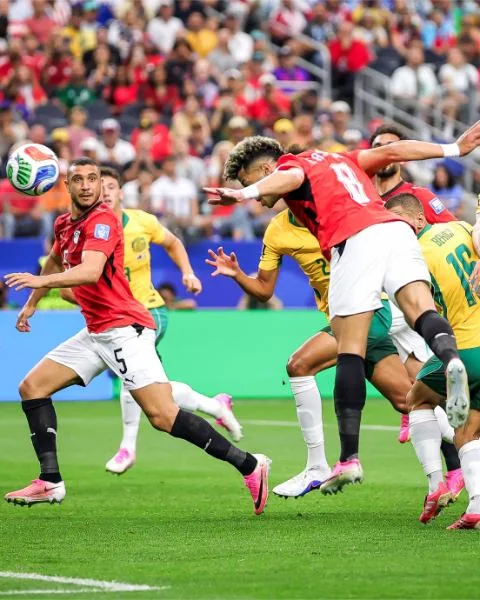 Photo shows Egypt vs Australia in action. (Photo: FIFA)
Instead, it was Egypt who struck first against the run of play. Karim Hafez delivered an inviting cross from the right in the 13th minute and Emam Ashour ghosted into space to power home his second goal of the tournament beyond Patrick Beach, giving the Pharaohs a dream start in their first World Cup knockout appearance since 1934.
The Socceroos responded with relentless pressure but struggled to find a breakthrough. Aziz Behich squandered their clearest first-half opportunity after a set-piece fell kindly inside the penalty area, while Egypt goalkeeper Mostafa Shobeir stood firm whenever called upon.
Egypt almost doubled their advantage seconds after the restart. Omar Marmoush found himself clean through on goal but dragged his effort agonisingly wide, a miss that would prove costly.
Australia eventually found their equaliser in unusual circumstances. Aiden O'Neill's dangerous free-kick was inadvertently turned into his own net by Mohamed Hany, whose unfortunate intervention levelled the contest.
The goal also entered the record books, becoming the tournament's 13th own goal, the most ever scored in a single FIFA World Cup, surpassing the previous record of 12 set in 2018.
For Hany personally, it was another unwanted milestone as he became only the second player in World Cup history to score two own goals in a single tournament.
Despite the setback, Egypt refused to buckle.
Mohamed Salah, making his return after concerns over a hamstring injury, inspired the Pharaohs during the closing stages. Deep into stoppage time, his pinpoint delivery found Ramy Rabia, whose thunderous header seemed destined for the net before Patrick Beach produced a sensational one-handed save to keep Australia alive.
Beach's heroics continued into extra time, while Harry Souttar made a crucial goal-line block to deny Haissem Hassan after another incisive Salah pass.
The Australian goalkeeper's display capped an outstanding individual tournament. Beach prevented an estimated 2.65 goals based on expected goals on target (xGOT), the best return of any goalkeeper at the 2026 FIFA World Cup despite Australia's elimination.
With neither side able to find a winner after 120 minutes, the contest was settled from the penalty spot.
Australia made a bold tactical decision by introducing veteran goalkeeper Mathew Ryan in the 119th minute, specifically for the shootout. The gamble failed spectacularly.
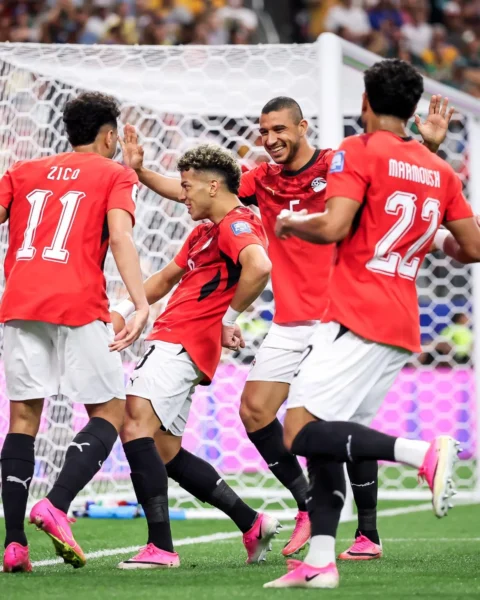 Photo shows the Pharaohs of Egypt celebrating. (Photo: FIFA)
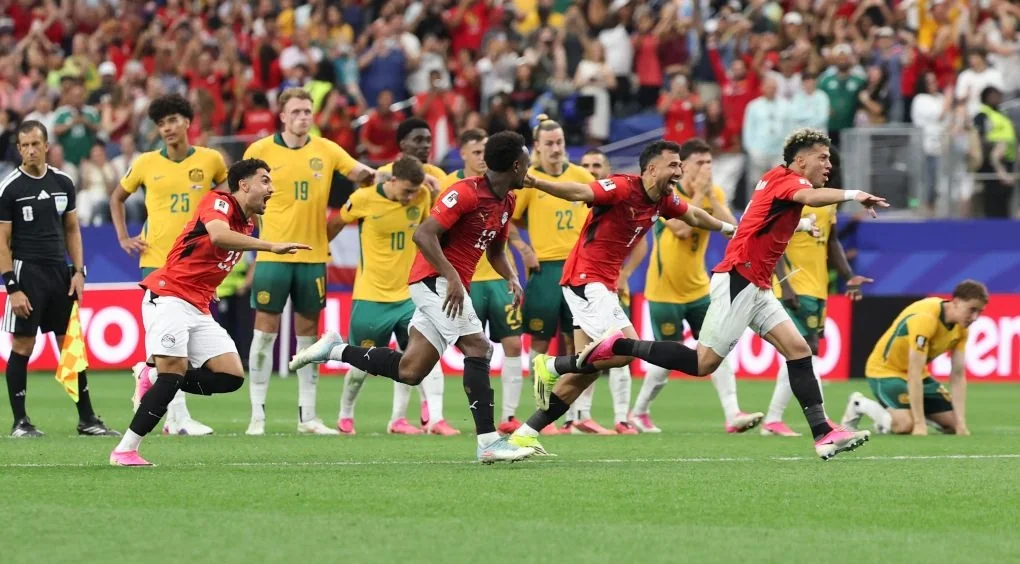
Egypt converted all four of their spot-kicks with remarkable composure. Salah set the tone with an audacious Panenka before Zizo, Mostafa Mohamed and defender Hossam Abdelmaguid all found the net.
Harry Souttar and Lucas Herrington both failed to convert for Australia, allowing Abdelmaguid to fire home the decisive penalty and spark emotional celebrations among the Egyptian players and supporters.
After the match, Salah revealed the thinking behind his fearless opening penalty.
"It's history. I told the boys before the game that this is the biggest stage you can play on. Enjoy it and don't let the pressure get to you."
Explaining his Panenka, the captain added:
"If somebody was going to do it, it would be me. I am more experienced than others, and I wanted to give them confidence. I decided at the last minute."
His leadership proved invaluable throughout a night when Egypt relied on collective determination as much as individual brilliance, particularly with their talisman not yet fully fit.
For Australia, the defeat ended an otherwise encouraging campaign. Having fought back from behind to force extra time, the Socceroos were left to reflect on fine margins after Volpato struck the bar, Beach produced a string of world-class saves, and Ryan's late introduction for the shootout failed to deliver the desired outcome.
For Egypt, however, the night represented the end of decades of frustration.
Long regarded as African football's greatest underachievers on the global stage despite their seven Africa Cup of Nations titles, the Pharaohs have finally matched continental pedigree with World Cup success. Ninety-two years after their first appearance at the tournament and after decades of near misses, they have broken new ground by reaching the Round of 16 for the first time.
Their reward is another historic challenge, a last-16 showdown against either Argentina or fellow African surprise package Cape Verde.
Whatever happens next, Hossam Hassan's side has already transformed Egypt's place in World Cup history.
A nation that arrived in North America without a single World Cup victory now stands among the final 16, carrying not only renewed belief but the hopes of a continent enjoying its finest FIFA World Cup campaign ever.

































Comments
Sign in with Google to comment, reply, and like comments.
Continue with Google