The United States government has asked major technology companies, including Google LLC, Microsoft Corporation, and xAI, to provide access to unreleased artificial intelligence models for safety testing before public release.
The initiative, coordinated through the National Institute of Standards and Technology, forms part of a wider effort to assess cybersecurity risks, misinformation threats, and the potential misuse of advanced AI systems before they are deployed globally.
According to US officials, the tests aim to identify vulnerabilities such as model manipulation, automation of cyberattacks, and unsafe outputs that could affect critical digital infrastructure.
Why this matters beyond the United States
Although the decision is being driven in Washington, its implications extend far beyond the US, with Kenyan experts warning that the effects could be felt locally.
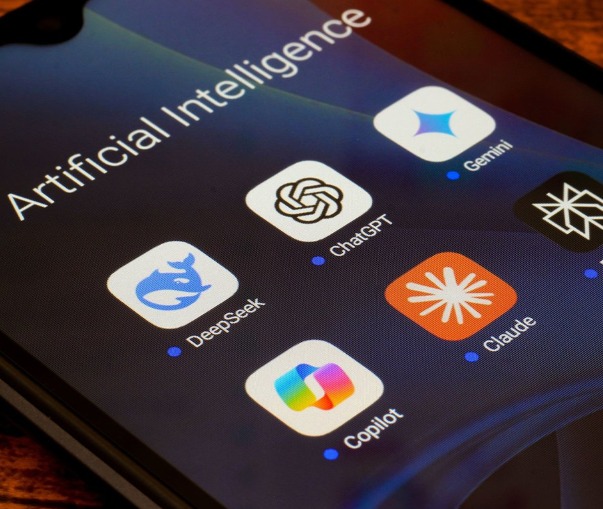
These AI systems are already widely used in Kenya across several sectors, including:
• Education and research (schools, universities, online learning, academic writing, and student support tools) — Microsoft Word, Microsoft Copilot, Google Search, Google Docs, Gemini, ChatGPT (xAI-style generative tools used for research and writing support)
• Business operations and marketing (digital marketing, customer service automation, content creation, and business analytics) — Microsoft Excel, Microsoft Teams, Microsoft Copilot for Business, Google Ads, Google Analytics, Gmail, Gemini
• Cloud computing and enterprise systems (data storage, software hosting, business applications, and remote work infrastructure) — Microsoft Azure, Google Cloud Platform (GCP), Microsoft 365, Google Workspace
• Digital communication tools (email, messaging platforms, collaboration tools, and workplace communication systems) — Gmail, Google Meet, Microsoft Outlook, Microsoft Teams, Google Chat
This means regulatory decisions made in the US could indirectly shape how millions of users in Kenya interact with these AI-powered technologies in daily life.
Kenyan experts raise concerns
According to ESG (Environmental, Social and Governance) research analyst Timothy Ivusah, speaking during an interview with Eastleigh Voice on Wednesday, AI regulation is closely linked to corporate governance, financial markets, and global power structures.
Ivusah argued that major “blue-chip” technology companies such as Google LLC and Microsoft Corporation operate in systems where governments are not only regulators but may also have indirect financial exposure through broader institutional and market linkages.
He said this is particularly important in relation to data protection and individual rights, where the collection and use of personal data directly affects how individuals are monitored and protected by digital systems.
“I would say first off, for all the blue-chip communication companies mentioned above, the US government has a shareholding interest, and more so in accordance with the violation of individual rights; therefore, regulation is a must as per the country’s by-laws,” he said.
He added that while such rules apply within the United States, questions remain on how similar standards are enforced in other countries where these companies operate.
“This is not the time to turn a blind eye; it is the time for governments across the world, especially our Kenyan government, to start asking questions and demanding answers,” he said.
Ivusah warned that without active participation, emerging markets risk becoming passive consumers of technologies whose rules are set elsewhere.
He also noted that regulatory disclosure is a standard requirement for listed companies and is often shaped by public and investor pressure, especially on issues of privacy and safety.
“The only problem is, unless there are different shareholders within the government with personal interests or ulterior motives, they might want companies to disclose unreleased versions so that they could create unfair competition by adulterating the forces of demand and supply,” he said.
He added that regulatory decisions can influence stock markets, as investors often interpret such actions as signals of future risk or cost.
Market reaction
Business reporter Alfred Onyango said the US move to test AI models is likely to have minimal immediate impact on trading, with effects expected to be largely indirect and sentiment-driven.
He noted that markets typically respond only when regulation alters expectations around profitability or long-term growth, meaning any impact would likely be felt over time if oversight expands.
On social media platforms such as X, some users have questioned why only selected companies are included in early testing, suggesting it could reflect control priorities. However, these claims remain unverified in online commentary.
Industry observers say companies like OpenAI and other AI developers may fall under different regulatory pathways or phased review processes, which may explain why they are not always highlighted in early announcements.
Onyango added that investor sentiment is also shaped by how predictable regulatory environments appear, meaning reactions can shift over time.
Overall, he described the current proposal as a routine regulatory step with limited short-term market consequences, though it could gain significance if it becomes part of broader global AI oversight.
Experts: Global imbalance in AI governance
Experts say the development highlights a growing gap between where AI is used and where it is regulated. While countries like Kenya are rapidly adopting AI tools, regulatory frameworks remain more developed in the United States and Europe.
Ivusah argues this creates a structural imbalance where emerging markets generate large-scale usage and data, while governance and rule-making remain concentrated in a few advanced economies.
He suggests that developing countries often serve as high-volume users of technologies whose rules are defined elsewhere.
What the US AI testing programme involves
Recent reports indicate the US government is expanding its AI oversight programme to include early access to unreleased models from major firms
The goal is to:
• Test cybersecurity vulnerabilities
• Assess risks of misuse in cyberattacks
• Evaluate potential biological or chemical misuse
• Identify weaknesses before public release
Government scientists conduct “stress tests” on models, sometimes with reduced safeguards, to better understand real-world risks before deployment.
What Kenyans should pay attention to
Analysts say the key issue is not just which AI tools are popular, but how deeply they are becoming embedded in essential systems, including:
• Mobile money and banking systems
• Education and learning platforms
• Cloud services used by businesses and government
• Communication and identity systems
As Ivusah puts it, the central question is no longer just access, but control: who builds the systems, who regulates them, and who benefits from the data generated.
The US decision to test unreleased AI models reflects growing global concern over cybersecurity and AI safety. But it also highlights a broader reality: global AI governance is increasingly being shaped in a small number of advanced economies, even as adoption expands rapidly across countries like Kenya.
For Kenyan users, businesses, and policymakers, the debate is shifting from technology adoption to the rules that govern the systems shaping economic and digital life.














































Comments
Sign in with Google to comment, reply, and like comments.
Continue with Google