67 journalists killed globally in past year with armed forces, paramilitaries behind most deaths- report
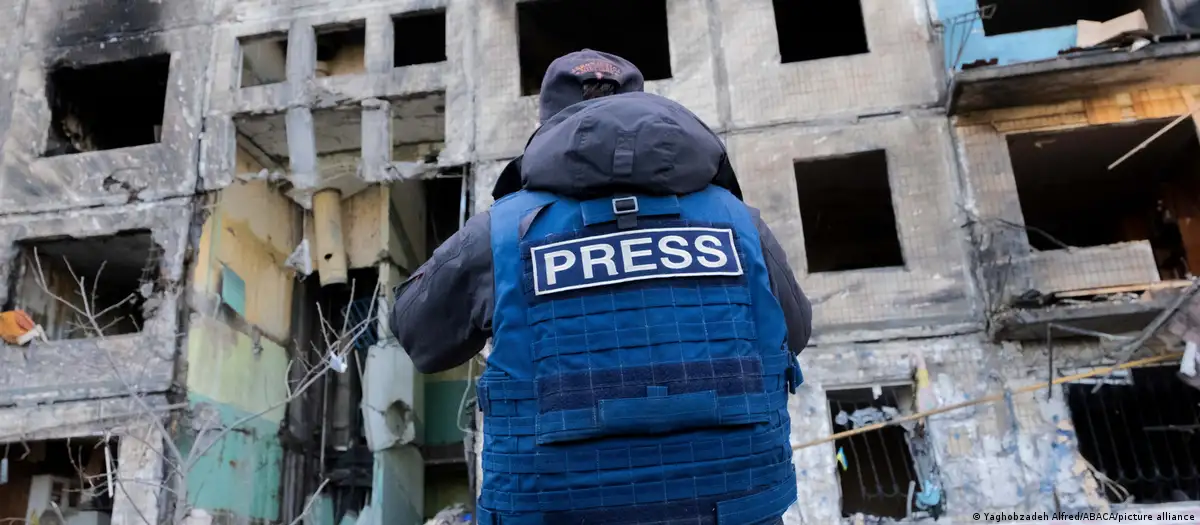
In its annual report, the Paris-based media freedom NGO says the Israeli army is responsible for over 43 per cent, nearly half of the crimes committed against journalists over the past twelve months.
67 journalists were killed between December 1 last year and December 1 this year, up from 66 in 2024, a report by Reporters Without Borders now shows.
Of the total figure, at least 79 per cent were victims of armed forces or paramilitary groups (37 journalists) and criminal networks (16 journalists).
More To Read
- Kabogo threatens to deny adverts to media critical of government
- AI chatbots fail at accurate news, major study reveals
- Raila Odinga: The politician who stood with the press
- DCI orders release of journalist Collins Kweyu from Central Police Station
- Global press freedom suffers sharpest decline in 50 years, report finds
- AI in African newsrooms: Can artificial intelligence help tell Africa’s story accurately and at scale?
In its annual report, the Paris-based media freedom NGO says the Israeli army is responsible for over 43 per cent, nearly half of the crimes committed against journalists over the past twelve months.
"In total, since October 2023, the Israeli army has killed nearly 220 journalists, at least 65 of whom were slain either due to their work or while they were working," the report says.
It added that the most deadly single attack was a so-called "double-tap" strike where dual bombings were staged on a hospital in south Gaza on August 25, killing five journalists, including two contributors to international news agencies Reuters and the Associated Press.
Meanwhile, 2025 was the deadliest of the past three years for news professionals in Mexico, as the country ranked as the second most dangerous in the world for journalists, with nine killed this year.
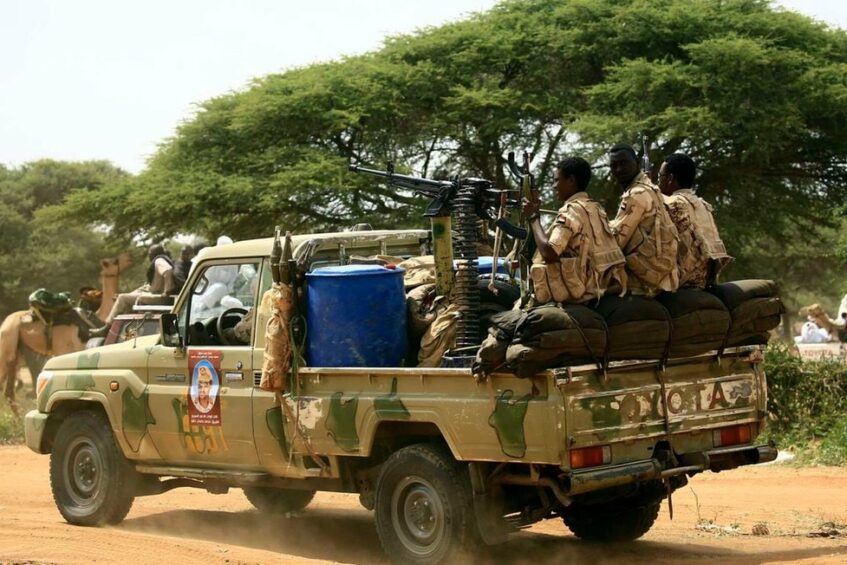
Four journalists were killed in Sudan while working this year, with at least two of them dying after being abducted by the Rapid Support Forces. RSF notes that journalists face serious abuse as the conflict continues to rage.
"Only two of the slain journalists were foreign reporters who died outside their own country: the French photojournalist Antoni Lallican, killed by a Russian drone strike in Ukraine, and the Salvadoran journalist Javier Hércules, killed in Honduras, where he had been living for more than ten years. All the others were murdered while reporting in their own country," the report highlights.
At the same time, it notes that during the period under review, 503 journalists were detained in 47 countries across the globe.
"The world's largest prison for journalists is still China (121), now followed by Russia (48) and then Myanmar (47). Led by Vladimir Putin, Russia imprisons more foreign journalists than any other state (26), followed by Israel (20)," the report says.
It adds that 113 media professionals were detained under Xi Jinping's regime, and eight more were imprisoned in Hong Kong, sustaining the People's Republic of China as the world's largest prison for journalists, jailing more than Russia and Myanmar combined.
"The situation in countries such as Russia, Georgia, Azerbaijan, and Belarus illustrates the serious threats facing press freedom across the former Soviet bloc. In Georgia, the government's relentless authoritarian tactics led to the January arrest of Georgian journalist Mzia Amaghlobeli. In Azerbaijan, 25 journalists are currently behind bars. Russia now occupies the second place on the grim podium of the world's largest prisons for journalists, with 48 news professionals behind bars as of 1 December 2025, 26 of whom are Ukrainian," the document adds.
After Russia, Israel ranked as the second country to imprison the largest number of foreign journalists.
At the same time, 20 Palestinian journalists were behind Israeli bars as of December 1, 2025, 16 of whom were arrested over the past two years in Gaza and the West Bank.
A total of 135 journalists are missing in 37 countries, the report noting that some have been missing for more than 30 years, with a sharp spike recorded in Mexico (28) and Syria (37), where many were held hostage by ISIS or imprisoned by Bashar al-Assad.
In Syria, elements of the jihadist group Hayat Tahrir al-Sham (HTS) rose to power after Assad's dictatorship fell, but the group continues to hold several journalists hostage — and they must be released.
Top Stories Today