Experts urge government to embed health in Northern Corridor infrastructure planning

During peak periods, over 3,500 trucks traverse the Northern Corridor daily, carrying goods while workers confront fatigue and other health risks, according to sector experts.
Drivers and logistics staff along the Northern Corridor are increasingly facing health challenges due to long hours on the road, poor nutrition, limited rest, and exposure to work-related hazards.
The Corridor, stretching 1,700 kilometres from Mombasa into Uganda, Rwanda, Burundi, South Sudan, and eastern Democratic Republic of Congo, has seen a surge in trade, putting added pressure on transport workers and infrastructure.
More To Read
- Kenya urges stronger regional cooperation as transport corridors fuel disease risks across East Africa
- From Dar to Lilongwe: How Tanzania’s post-election chaos threatens regional economies
- South Sudan, Djibouti, Ethiopia and Uganda seal deal on Horn of Africa transport corridor
- Audit exposes confusion over control of Sh5 billion Lamu Port
- LAPSSET countries renew commitment to completing transport corridor projects
- Construction of Kenya-South Sudan road to start soon - CS Murkomen
During peak periods, over 3,500 trucks traverse the Corridor daily, carrying goods while workers confront fatigue and other health risks, according to sector experts.
Speaking at the second Transport Corridors and Health Conference in Nairobi, which concludes today, December 10, North Star Alliance chairman Bernard Kadasia stressed the need to place health at the core of Corridor management and invest in connected roadside health services.
“This is from electronic health passports and cross-border referrals, to mobile health clinics and data-driven site selection,” Kadasia said, highlighting the importance of technology and innovation in addressing workers’ needs.
He urged governments and partners to develop long-term funding strategies combining public budgets, private contributions, social enterprise income, and donor support.
“Health investments along Corridors should be seen as risk mitigation for trade and logistics, worthy of being embedded in infrastructure finance, insurance products and PPP frameworks,” he added.
This year’s conference is anchored on the theme, “Innovations and Partnerships for Healthy and Prosperous Transport Corridors”.
It emphasises building health-smart Corridors through road safety, occupational health, disease surveillance, cross-border preparedness, environmental health, air quality, climate resilience, digital solutions, data governance, and innovative financing models, including public-private partnerships, to support sustainable Corridor infrastructure.
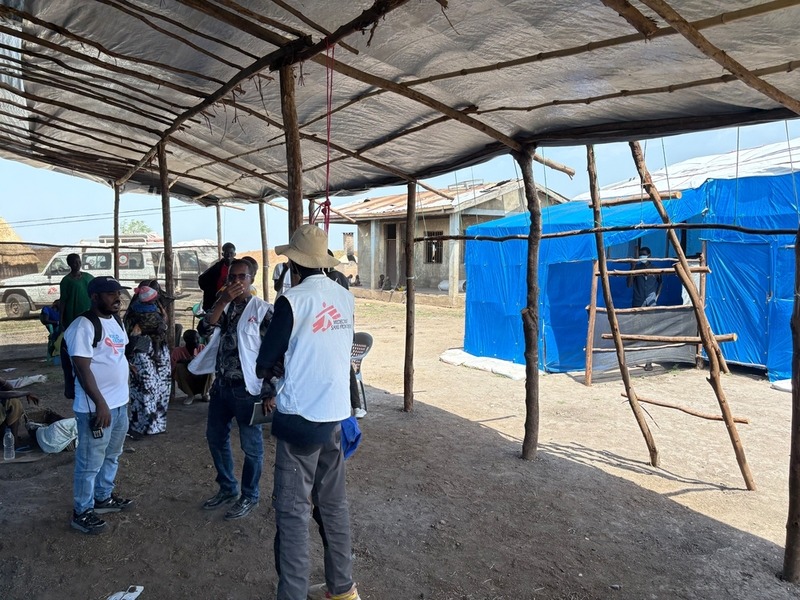
North Star Alliance, a non-profit organisation, provides primary healthcare to mobile populations, including long-distance truck drivers, sex workers, and their communities.
The group operates “Blue box clinics”, converted shipping containers at key points like ports and border posts, and is advocating for the expansion of roadside wellness centres and deeper collaboration with ministries of health, transport authorities, Corridor management agencies, and local governments.
“There is also a need to invest in data systems and research to understand and address the health needs of truck drivers, sex workers, migrants and roadside communities and champion the voices of those who often remain invisible in policy conversations, the drivers, loaders, vendors and service workers who keep Africa’s economies moving,” Kadasia said.
John Deng, Executive Secretary of the Northern Corridor Transit Transport Coordination Authority, highlighted the importance of integrating health into transport systems, noting that safe, resilient, and health-responsive Corridors are essential for regional trade, mobility, and socioeconomic well-being.
He pointed to progress along the Corridor, including modernised infrastructure, digital systems, and improved border operations, while emphasising ongoing health challenges for mobile populations and transport workers.
Deng reaffirmed the Corridor’s commitment to regional coordination, innovation, and partnerships to build healthier and more efficient transport routes.
The conference was officially opened by Kenya’s Health Cabinet Secretary Aden Duale, who reiterated the government’s commitment to strengthening health systems along transport Corridors.
He described the connection between mobility, health, and regional prosperity, stating, “healthy Corridors are productive Corridors”.
The Cabinet Secretary noted Kenya’s strengthened cross-border disease surveillance and regional genomic lab for early outbreak detection, and commended Roadside Wellness Centres that have served over 200,000 mobile workers with HIV, non-communicable disease, and mental health care.
He stressed that the future of Corridor health depends on technology, artificial intelligence, and strong multi-sector partnerships.
Top Stories Today