Senate’s handling of Nyaribo impeachment raises questions on oversight role, procedures
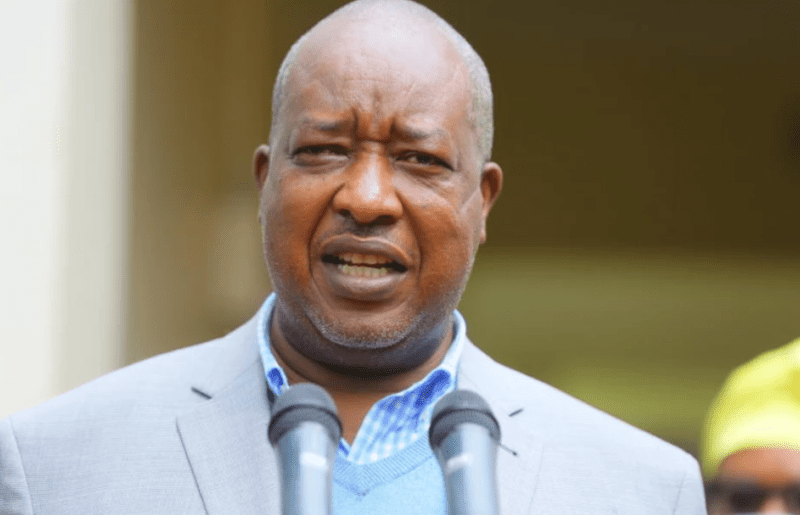
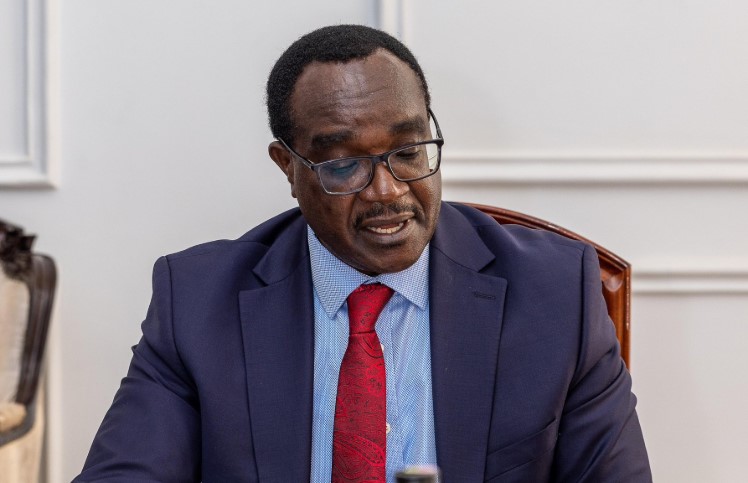
Nyamira Governor Amos Nyaribo’s latest escape from impeachment has triggered a Senate debate on whether current rules favour legal technicalities over fair hearings for county assemblies.
The third survival of Nyamira Governor Amos Nyaribo from impeachment has sparked sharp debate over whether the Senate’s impeachment rules and procedures truly promote good governance in devolved units or have instead become tools for political machinations.
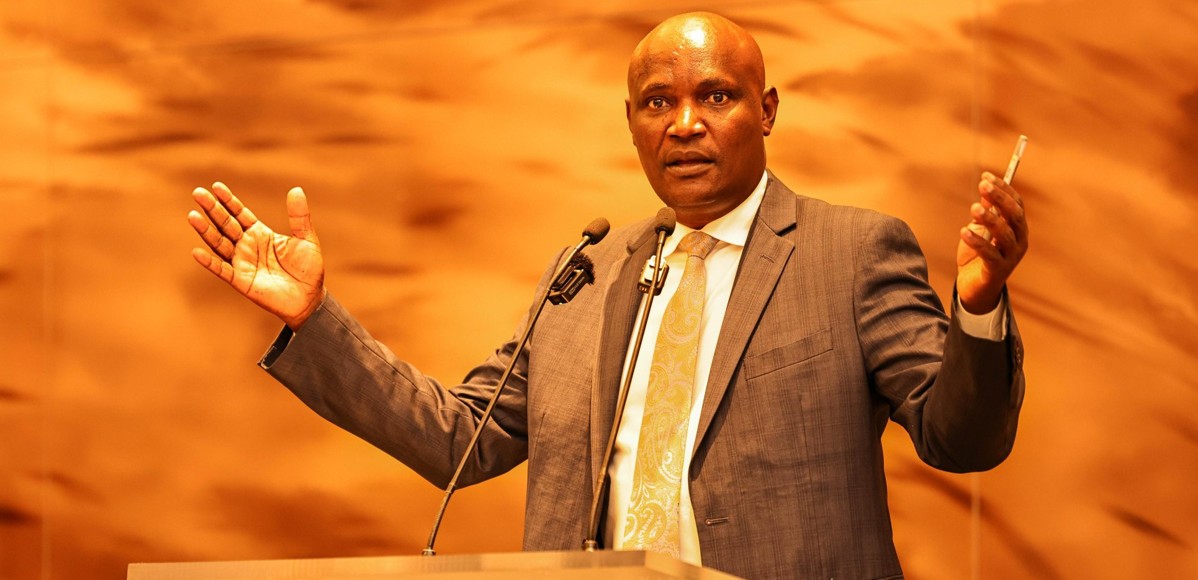
Nyamira Senator Okong’o Omogeni has raised concern about what he termed a disturbing trend in which the impeachment process is reduced to arguments and lobbying rather than giving County Assembly members a fair chance to be heard.
More To Read
- Senate targets KEMSA in plan to turn devolved institutions into executive agencies
- Nyamira Governor Amos Nyaribo pleads not guilty to impeachment charges before Senate
- Three MCAs deny voting in Governor Nyaribo impeachment, file criminal complaint
- Senate convenes special sitting to hear Governor Nyaribo’s impeachment charges
- Nyamira Governor Amos Nyaribo impeached
- Why City Hall moved hospital accounts to Sidian Bank- Sakaja
The senator, who is also a senior counsel, expressed dissatisfaction with the repeated “saving” of a beleaguered county chief facing removal from office.
Speaking to Citizen TV on Thursday, December 4, 2025, Omogeni argued that in Nyaribo’s case, a ward representative who claimed he did not participate in the impeachment, yet whose details were used, should have been allowed to testify.
Omogeni faulted the approach taken in Nyaribo’s impeachment, specifically objecting to Senate Majority Leader Aaron Cheruiyot moving the impeachment motion.
“The issue I have with the procedure we are taking is that we are prioritising legal technicalities over substantive justice, reducing it to lobbying rather than oversight. We need to allow MCAs to be heard, even when technicalities arise in attempts to stop the process,” he stated.
“It is important we listen to the issues and allow them to be cross-examined. That way, we retain our oversight role. I have a problem with a process that denies MCAs the chance to speak. There is no way to investigate such matters without listening to the county assembly. We are adopting a disturbing trend,” he added.
Omogeni’s remarks came after the Senate, on Wednesday, December 3, 2025, voted to save Nyaribo from impeachment for the fourth time.
The Senate, led by Speaker Amason Kingi, ruled that the Nyamira County Assembly had not met the two-thirds threshold required to oust a governor.
During the session, 38 senators voted to uphold a preliminary objection filed by Nyaribo’s legal team, while only four opposed it.
The governor’s legal team, led by Advocate Elias Mutuma, challenged the validity of the County Assembly’s process, arguing that the required two-thirds threshold was not met; out of 35 MCAs, only 23 voted. This outcome ended the impeachment process, with most senators affirming the objection as a clear numerical issue.
On the other hand, Bomet Senator Hillary Sigei defended the procedure that spared Nyaribo, dismissing claims of political undertones after the governor was pictured with Gusii leaders shortly before the quasi-judicial session.
According to Sigei, the matter was purely numerical.
“Impeachments are both political and legal processes, but this case had nothing to do with politics. The issue was about the threshold, not political leanings or persuasion of the House,” he said.
He also defended Majority Leader Cheruiyot’s role in moving the motion.
“For the Majority Leader to move the motion is part of his responsibility. As a senator, he is entitled to vote and take a position. His moving the motion did not necessarily mean a political stance was taken,” he added.
Sigei maintained that the decision was made on merit and guided by the principles of law and Senate precedents.
“The law is the law; without it, we have anarchy. The Senate is a house of record, and the impeachment relied on past precedents,” he said.
According to Senate rules on the removal of governors and their deputies, the process begins with the Speaker convening a sitting to hear charges levelled by the County Assembly.
A special committee of 11 senators is then formed to investigate the charges and report within 10 days. If no proof is found, the impeachment inquiry is dismissed.
If proof exists, the Senate proceeds to vote on the charges, ensuring the governor has received a fair hearing. A governor ceases to hold office if a majority of senators vote in favour of impeachment.
If the vote fails, the Senate Speaker notifies the County Assembly Speaker, and an MCA may reintroduce the charges after three months.
Top Stories Today