Government sets 14-day deadline to end student bursary delays nationwide
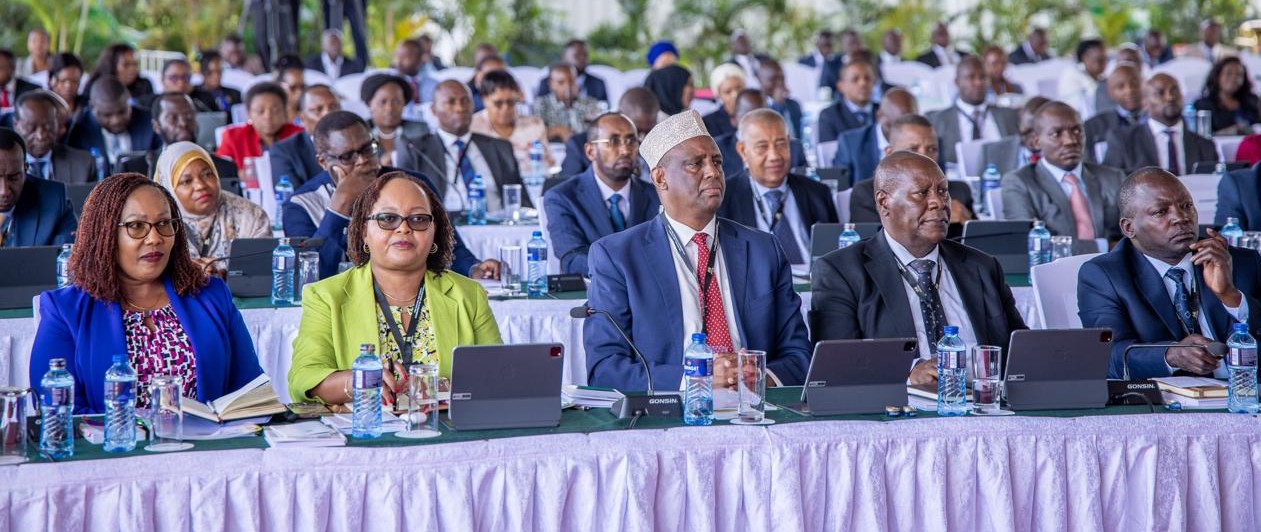
The 12th National and County Governments Coordinating Summit has given IGRTC 14 days to finalise county bursary agreements and ordered faster CAIP funding, seeking to end student delays and protect key devolution projects.
The Intergovernmental Relations Technical Committee (IGRTC) has been given 14 days to complete all pending agreements on county government bursaries, in a bid to ensure timely and coordinated disbursement to students nationwide.
The directive was issued on Wednesday during the 12th National and County Governments Coordinating Summit and aims to prevent the delays that have previously affected thousands of students, while strengthening cooperation between the National and County Governments.
More To Read
- Treasury: Kenya can no longer rely on taxes or borrowing for big infrastructure projects
- World Bank warns political interference weakening Kenya’s state-owned enterprises
- Treasury CS John Mbadi defends ballooning State House budget
- Ndindi Nyoro questions government’s decision to sell 15 per cent Safaricom stake
- Government cuts funding to merged, dissolved state corporations
- MPs push for urgent funding boost for Auditor General’s office
The 12th Ordinary Session reviewed the implementation of decisions made during the 11th Session held on 16 December 2024 and provided further strategic direction to both levels of government to support the objectives of the devolved system of government.
Contested functions
Beyond bursary agreements, the Summit directed IGRTC to fast-track the unbundling and delineation of contested functions for transfer to county governments. The Commission on Revenue Allocation and the National Treasury will verify the financial resources linked to these functions to guide allocations and transfers under the Division of Revenue Act for the 2026/27 Financial Year.
Counties will also work with relevant state agencies, including IGRTC, to secure legal ownership of transferred fixed and movable assets.
The summit further resolved that the proposed Intergovernmental Relations Sector Forums Regulations will be amended to allow for co-chairing by both levels of government. All pending intergovernmental sector forums are expected to be operational by the end of January 2026.
Fast-track pending disbursements
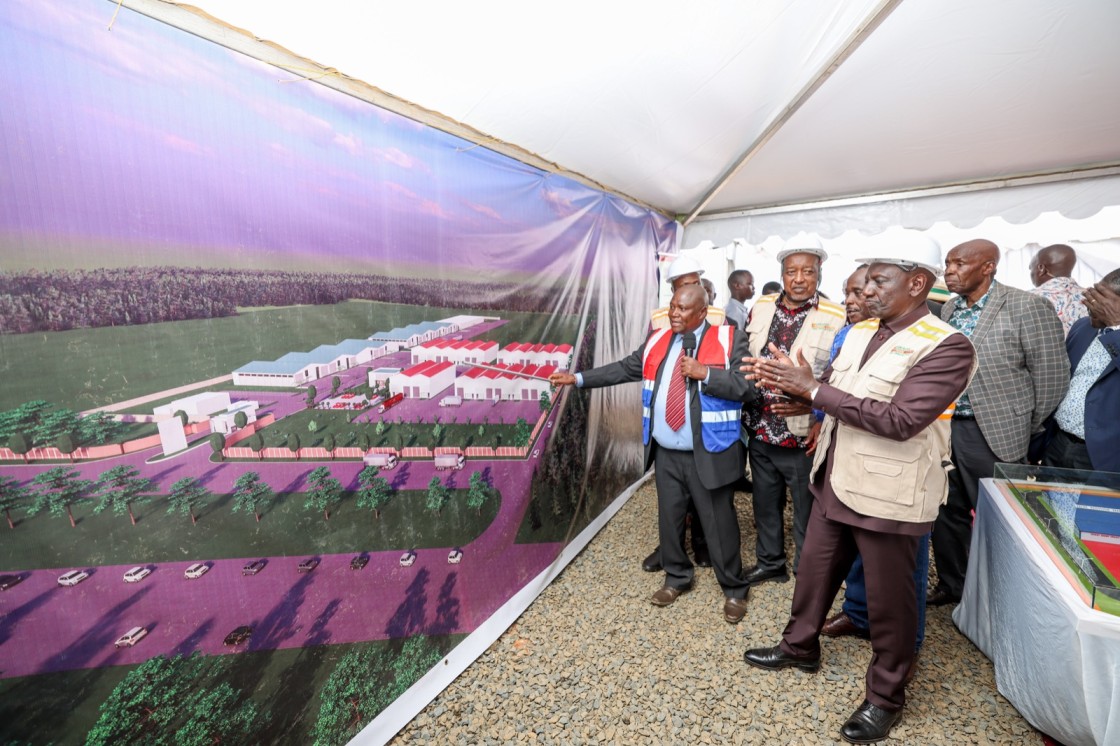
The National Treasury has also been instructed to fast-track pending disbursements for County Aggregation and Industrial Parks (CAIPs) and social infrastructure projects to ensure they are completed on time.
Kenya’s plan to establish CAIPs in all 47 counties under the Bottom-Up Economic Transformation Agenda (BETA) continues to face funding challenges that could delay the rollout.
Launched in July 2023, the initiative aims to boost agro-industrial development, strengthen local manufacturing and improve farmer productivity. Each CAIP is co-funded by national and county governments, with each contributing Sh250 million, bringing the total investment to Sh500 million per county.
According to Cytonn reports, only Sh3.3 billion of the Sh9 billion pledged by the national government has been disbursed, limiting the first phase of the rollout to 19 counties, including Nakuru, Bungoma, Uasin Gishu, Mombasa and Kirinyaga. The allocated budget for this phase is Sh4.7 billion, comprising Sh4.5 billion for park construction and Sh200 million for project coordination and monitoring.
Acknowledged funding constraints
Deputy President Kithure Kindiki, who recently received a progress briefing, acknowledged the funding constraints but stressed the initiative’s potential economic impact.
“Once complete, the CAIPs will enhance the competitiveness of Kenya’s agriculture sector and sustainably grow our manufacturing base,” he said.
CAIPs are designed as agro-industrial hubs to promote value addition, improve market access, increase foreign exchange earnings and create jobs, particularly in rural areas. They are central to the government’s plan to raise the manufacturing sector’s contribution to GDP from seven per cent to 15 per cent by 2027 and 20 per cent by 2030.
Despite the challenges, the Ministry of Investment, Trade and Industry, together with county governments and development partners such as UNIDO, said they remain committed to delivering the parks in three phases.
However, without urgent and sustained budgetary support, the CAIP programme risks stalling and could delay the achievement of Vision 2030 targets.
Top Stories Today