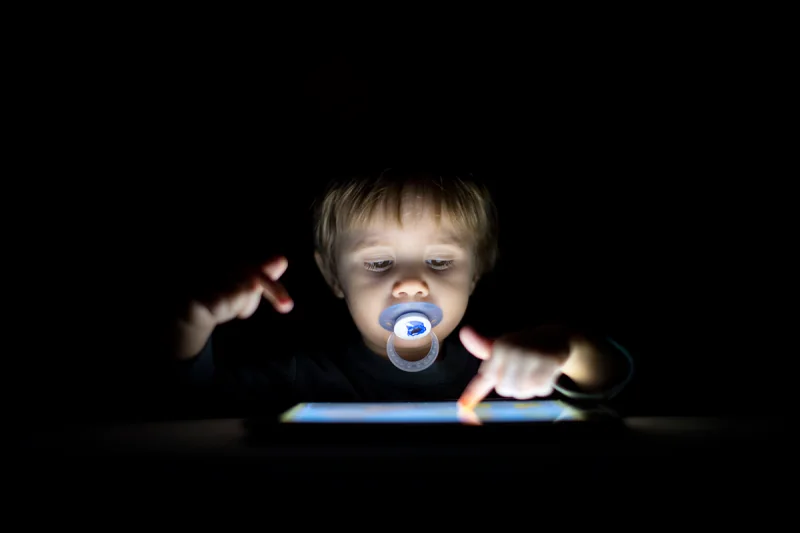
Overstimulation, sleep problems, delayed language development, and weaker parent-child bonding are among the growing concerns linked to screen use in babies and toddlers, according to a landmark study that warns children under the age of two should avoid regular screen time where possible.
Researchers say early exposure to smartphones, tablets, televisions, and other digital devices may affect children’s development and have long-term effects on their health and quality of life.
Published in the Archives of Disease in Childhood, the study reviewed global research on screen use during the earliest years of life and is described as one of the most comprehensive reviews on the subject.
Exposure is becoming increasingly common in early childhood, with digital devices now part of many daily routines despite growing concerns that excessive screen use during these early years may affect healthy growth and development.
Phones and tablets are now commonly used during feeding, travel, meals, or to calm children when they become upset. While screens may make parenting easier in the short term, experts warn that they should not replace face-to-face interaction during the early years, which are important for brain growth and learning.
“Parents are often not given enough guidance on their own screen habits and may unintentionally encourage unhealthy relationships with digital devices from an early age.” According to researchers.
According to the review, screen time in children under two may reduce opportunities for bonding with parents and caregivers. Children may spend less time playing, moving around, exploring their environment, and interacting with others, activities considered important for healthy development.
Researchers also linked early screen use to overstimulation and difficulty sleeping. Too much screen exposure may affect children’s ability to settle down and rest properly. There were also concerns about possible effects on eye health and an increased risk of childhood obesity due to reduced physical activity.
Language development was another area highlighted in the study. Babies and toddlers learn language mainly through hearing and responding to real conversations. Researchers said spending more time with screens may reduce these opportunities and affect communication skills.
The review also raised concerns about children increasingly turning to screens for comfort and soothing instead of seeking reassurance from parents or caregivers. Experts warned that this may affect how children learn to manage emotions and build social connections.
However, researchers noted that the study did not prove that screen use directly causes developmental disorders. Instead, it found strong links between early screen exposure and developmental concerns. More research is needed to understand the long-term effects fully.
Even so, the researchers noted that there is currently little evidence showing regular intentional screen use benefits children under two. They said passive exposure to screens may be difficult to avoid in modern homes, but adding deliberate screen time may increase risk without offering clear developmental advantages.
The study also questioned advice suggesting some forms of shared screen use can support learning in very young children. Researchers warned that parents may misunderstand this guidance and assume screen time is generally safe for babies.
Another researcher involved in the review said families need support rather than blame when addressing screen habits.
“The goal is not to judge parents but to help families make informed choices and support healthy child development in a world where screens are everywhere,” the researcher said.
Experts stressed that reducing screen time does not mean removing technology completely. Instead, parents are encouraged to focus more on activities that support development, including reading, talking, outdoor play, movement, and spending quality time together.
Simple changes such as keeping screens away during meals, encouraging play, and creating more opportunities for interaction may help support healthy development during the earliest years of life.
Researchers say the first years of life are among the most important for brain development, making early habits around screens increasingly important for children’s future health and well-being.
Screen use among children has become increasingly common worldwide. A global review involving more than 89,000 children found that only about one in four children under the age of two meet recommended screen time guidelines, meaning most are exposed to screens during their earliest years. Among children aged two to five, only about one in three stays within the recommended daily screen time limit, raising concerns about the impact of digital devices on healthy growth and development.














































Comments
Sign in with Google to comment, reply, and like comments.
Continue with Google