MPs propose extending voting rights for diaspora, inmates beyond presidential polls
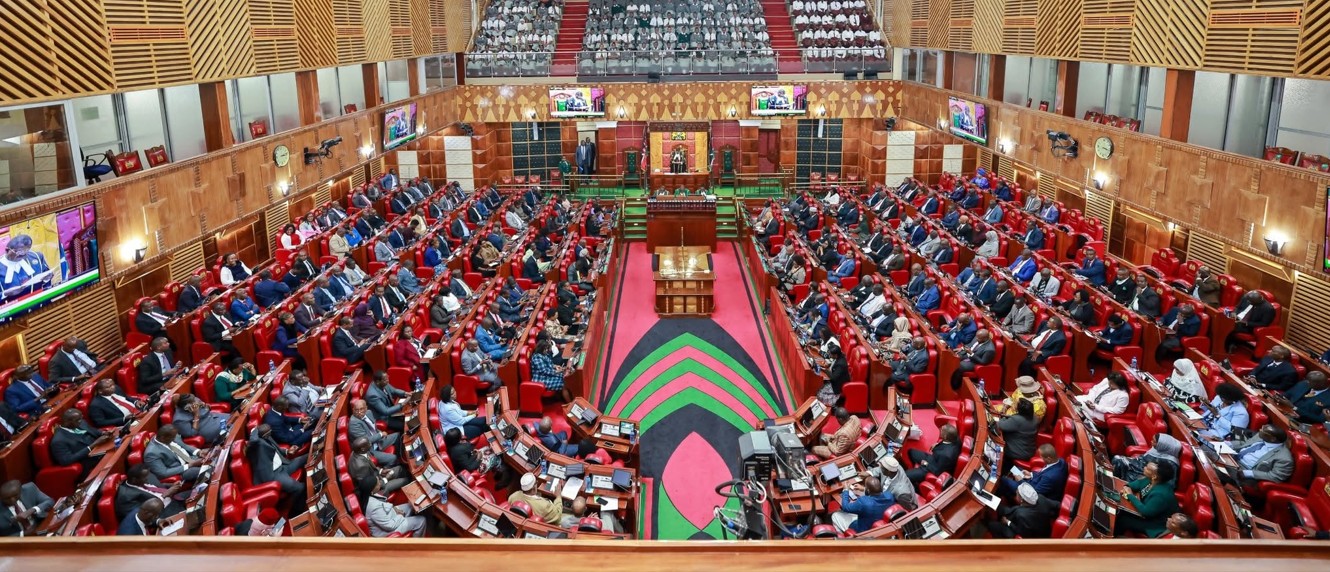
A Parliamentary Committee has proposed concrete plans to remove barriers to voting, aiming to ensure millions of Kenyans outside the country and in correctional facilities can participate fully in the electoral process.
Kenyans in the diaspora and those behind bars could soon see their voting rights extended beyond presidential elections, paving the way for broader political participation in the 2027 General Election.
A Parliamentary Committee has proposed concrete plans to remove barriers to voting, aiming to ensure millions of Kenyans outside the country and in correctional facilities can participate fully in the electoral process.
More To Read
- IEBC drops census data, adopts ID and passport records for voter registration targets
- MPs to hold public hearings on proposed sale of 15 per cent Safaricom stake to Vodacom
- New Bill hands NCIC swift powers to curb hate speech, divisive conduct
- High Court petition challenges IEBC’s role in legal profession elections
- IEBC warns low voter registration, apathy could undermine future elections
- IEBC warns boundary review may spark community, religious and class tensions
The Constitutional Implementation Oversight Committee (CIOC) of the National Assembly argues that the expansion of voting rights is in line with the Constitution. The committee, chaired by Suba South MP Caroli Omondi, has recommended that the Independent Electoral and Boundaries Commission (IEBC) propose a law change to recognise national identity cards as valid voting documents for Kenyans in the diaspora, in addition to passports.
The move seeks “to expand electoral inclusivity” beyond the current 12 countries and remove barriers to participation.
“The commission [IEBC] is required to provide detailed plans for expanding diaspora voter registration centres with specific targets for the 2027 General Election and a roadmap for progressive realisation of diaspora voting rights,” reads the CIOC report.
During the 2022 General Election, 7,483 inmates were registered across 121 gazetted GK prisons, with Kisumu Main recording the highest at 494 voters. Kitui Women and Busia Women Wing polling stations had the lowest, with only one registered voter each.
IEBC noted that despite progress, only 10,443 diaspora voters were registered in 2022 across 12 countries, with a 58 per cent turnout, “highlighting the need for expanded voter registration centres to enhance participation.”
Articles 38 and 82 of the Constitution guarantee all Kenyans the right to political participation, including voting, regardless of geographic location. Article 82(1)(e) specifically ensures the progressive realisation of voting rights for Kenyan citizens residing outside the country.
The policy on voter registration and voting for citizens outside Kenya, first established in 2015 and reviewed in 2021, provides the framework for operationalising this right. The Elections Act and the Elections (Registration of Voters) Regulations, 2012, form the legal framework for diaspora voting, assigning IEBC the responsibility to implement these provisions.
IEBC has traditionally designated Kenyan missions in foreign countries as polling stations for citizens abroad. However, the distance to these stations has remained a challenge, particularly for Kenyans in remote towns, leaving many disenfranchised.
Diaspora voting was first implemented in 2013 under the 2010 constitution, limited to four East African Community (EAC) states, including Uganda, Tanzania, Rwanda and Burundi. In 2017, South Africa was added, bringing the total to five countries.
The 2022 general election marked the most significant expansion of diaspora voting to date, including the USA, Canada, the UK, Germany, the UAE, Qatar and South Sudan.
The commission reported that registered diaspora voters rose to 10,443 in 2022, more than double the 2017 number, “but still a fraction of the estimated millions of diaspora population.”
The CIOC has called on IEBC to submit a roadmap for the progressive realisation of diaspora voting rights and to expand registration centres beyond the current 12 countries with specific targets for the 2027 elections.
The 2022 diaspora voter registration data presented to Parliament by IEBC showed significant variation across countries. In Tanzania, the Kenyan Embassy in Dar-es-Salaam had 496 registered voters, while the consulate in Arusha had 410.
Uganda’s High Commission in Kampala recorded 471 voters, Rwanda’s embassy in Kigali had 545, and Burundi’s embassy in Bujumbura registered 201.
In South Africa, the embassy in Pretoria had 479 registered voters, while South Sudan’s embassy in Juba recorded 489. Europe also saw moderate participation, with Germany’s embassy in Berlin registering 314 voters and the UK’s High Commission in London having 399. In the Middle East, Qatar’s polling stations registered 479 voters in Doha, 103 in Abu Dhabi, and 642 in Dubai.
Canada had three polling stations with a total of 366 registered voters: Ottawa 112, Toronto 167, and Vancouver 87. In the United States, 744 Kenyans were registered across three cities, including 314 in Washington DC, 298 in New York and 132 in Los Angeles.
The CIOC report emphasises that these recommendations are aimed at ensuring all Kenyans, whether in correctional facilities or living abroad, can fully participate in the democratic process ahead of the 2027 polls.
Top Stories Today