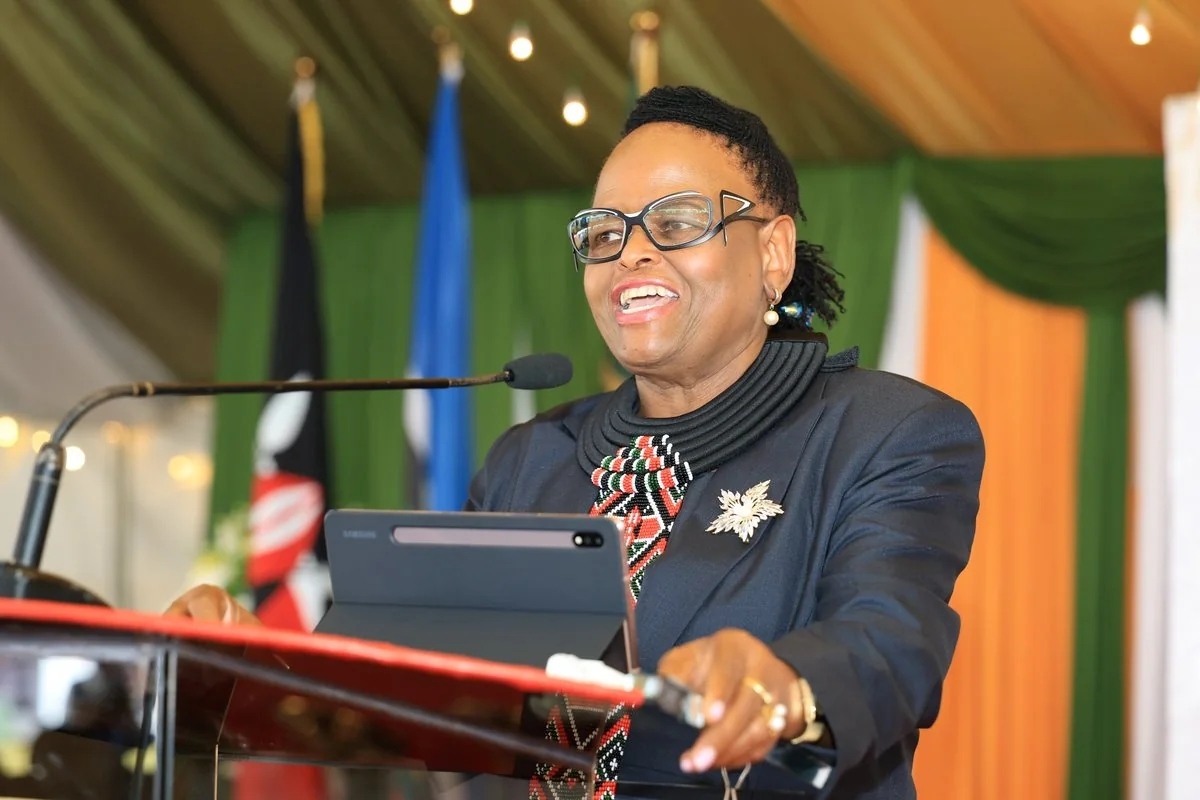
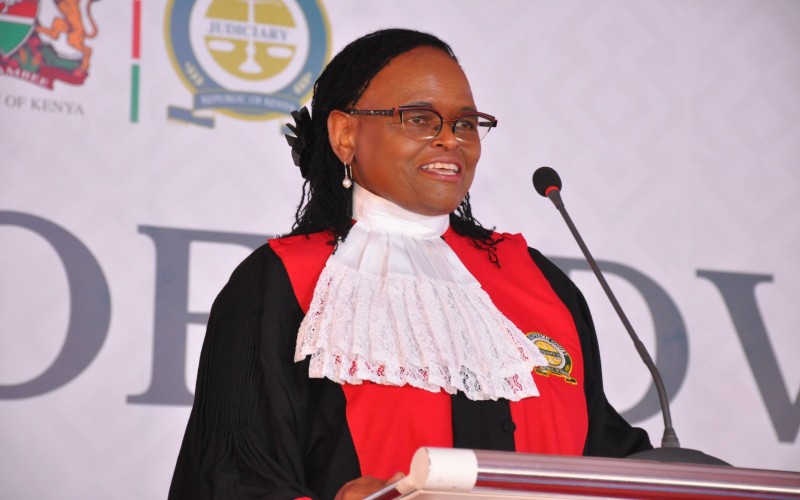
Chief Justice Martha Koome has called on African judiciaries to broaden their understanding of justice by embracing traditional and community-based dispute resolution mechanisms alongside formal court processes, arguing that justice should be measured not only by efficiency but also by its impact on people's lives.
Speaking during the opening of the Fourth National Conference on Alternative Justice Systems (AJS) at the University of Embu, attended by more than 12 chief justices and senior judicial leaders from across Africa, Koome said the future of justice on the continent depends on systems that are accessible, inclusive and responsive to the needs of ordinary citizens.
She noted that while indicators such as case clearance rates, backlog reduction and speedy resolution of disputes remain important, they do not fully capture whether justice has been achieved from the perspective of those seeking it.
“Traditionally, justice systems have relied on indicators such as case filings, case clearance rates, backlog reduction and the speed of case resolution. These measures remain important, but they do not always capture the full experience of justice from the perspective of the people we serve,” Koome said.
The Chief Justice urged African countries to build integrated justice systems that combine formal courts, Alternative Dispute Resolution (ADR), Alternative Justice Systems, restorative justice and community dialogue.
According to Koome, justice should also be assessed through the restoration of relationships, healing of families and communities, preservation of dignity and the extent to which people feel heard and respected.
The conference, themed “Data-Driven Pathways for People-Centred Justice in Kenya,” challenged justice sector stakeholders to rethink how success is measured.
“What if success is measured not only by the number of disputes resolved, but also by the number of relationships restored? What if justice is measured not just through efficiency, but also through reconciliation, trust, social cohesion and human dignity?” she posed.
During the event, Koome officially launched the Embu Alternative Justice Systems Centre and AJS registries for Embu, Siakago and Runyenjes law courts, describing the initiative as a major step in expanding access to justice.
She said Alternative Justice Systems are not secondary to formal courts but form an essential part of African jurisprudence, rooted in culture, community values and indigenous knowledge.
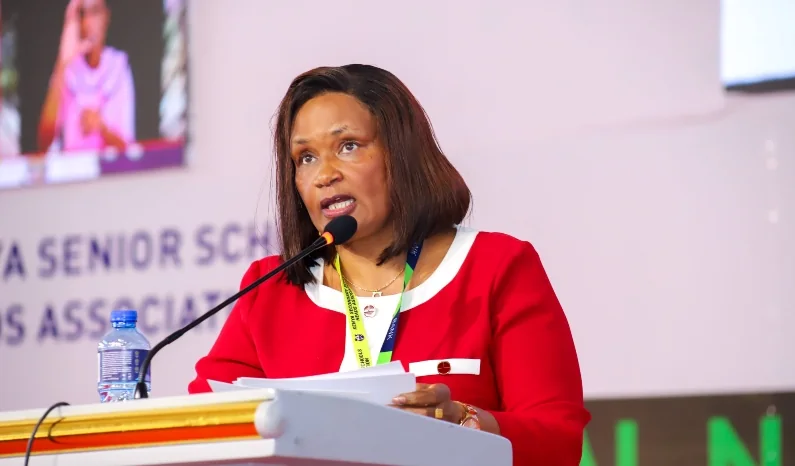
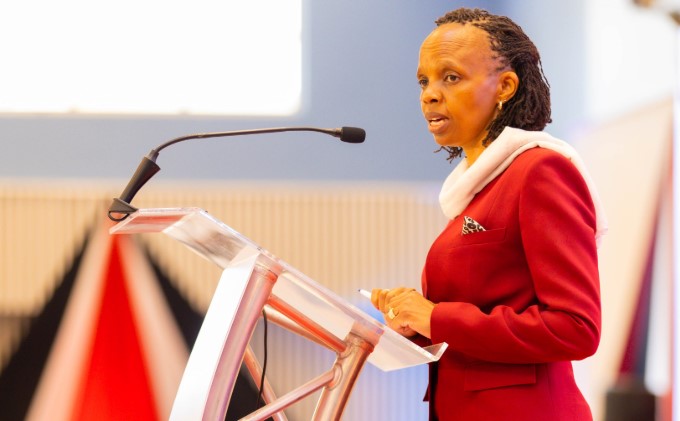
Deputy Chief Justice Philomena Mwilu called for stronger collaboration among the Judiciary, county governments, academia, civil society and development partners to ensure justice reforms deliver meaningful social impact.
She emphasised the need for better data collection, evaluation and community involvement while keeping justice seekers at the centre of reforms.
Meanwhile, Mumba Malila, who chairs the African Chief Justices ADR Forum, urged judges across the continent to champion alternative dispute resolution mechanisms, saying they can expand access to justice, preserve social harmony and free up resources tied up in lengthy litigation.
The Embu conference is expected to shape discussions on the future of people-centred justice and the role of Alternative Justice Systems in strengthening social cohesion and access to justice across Africa.














































Comments
Sign in with Google to comment, reply, and like comments.
Continue with Google