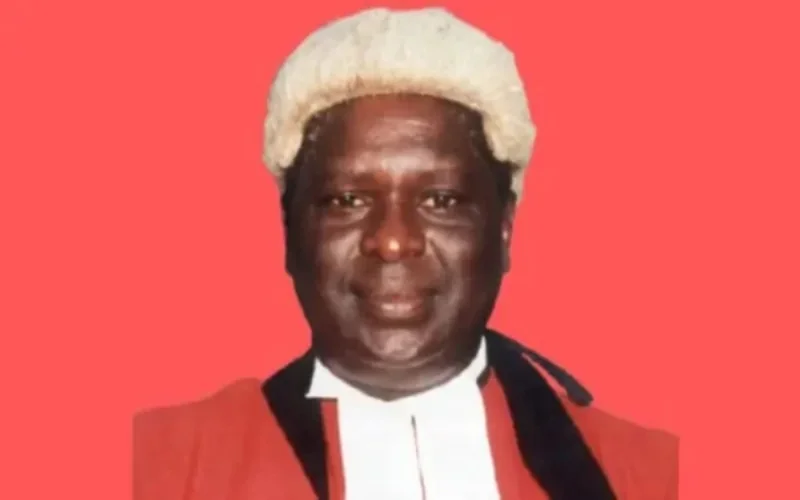
When Chief Justice Martha Koome showered extensive praise on the late retired High Court Judge Godfrey Omondi Tunya, who died on Sunday after a prolonged illness, prominent Kenyans who interacted with him spoke about his complicity in perpetuating ex‑President Daniel arap Moi's dictatorship.
While announcing his passing on Monday, CJ Koome eulogised Tunya as a dedicated jurist whose decades of service helped shape Kenya’s legal system during its transition from one‑party rule to constitutional democracy.
She described Justice Tunya as a committed judicial officer whose career was marked by integrity, diligence and a strong devotion to the administration of justice.
The Chief Justice said his contribution to the Judiciary and the development of Kenya’s legal system would remain part of the country’s institutional memory.
“Justice Tunya served the people of Kenya with diligence, integrity and unwavering commitment to justice. His contribution to the growth of our jurisprudence and the strengthening of the rule of law will remain part of the Judiciary’s enduring legacy,” she said.
She added that he would be remembered as “a distinguished judicial officer whose service reflected fidelity to the Constitution and the law.”
However, pro‑second liberation reformist and Kamukunji Member of Parliament Yusuf Hassan was candid about Tunya's tenure in the Judiciary. The fiery yet soft‑spoken MP did not mince his words about the suffering those who opposed Moi's rule endured with Tunya’s help.
"I remember him with deep regret, as a brutal instrument of the monstrous Moi‑KANU regime. At a critical juncture in our nation’s history, he chose to stand on the wrong side of history," Yusuf told The Eastleigh Voice.
Yusuf went on to recount that during the height of resistance against Moi's dictatorship in the 1980s and the intense struggle for democratic change, Tunya served as a judge in what was, in practice, little more than a 'kangaroo court'.
"He shamelessly abdicated his judicial responsibilities and grossly abused his powers, unlawfully sending hundreds of our Mwakenya comrades to prison without due process or even the semblance of legal representation," Yusuf said.
Mwakenya, short for Muungano wa Wazalendo wa Kenya, was a clandestine socialist movement established in the 1980s to oppose President Daniel arap Moi's repressive one-party rule. Operating underground, the movement brought together activists, academics and other pro-democracy advocates, including the late renowned author Ngũgĩ wa Thiong'o. It secretly published and distributed anti-government literature calling for multiparty democracy, human rights and social justice.
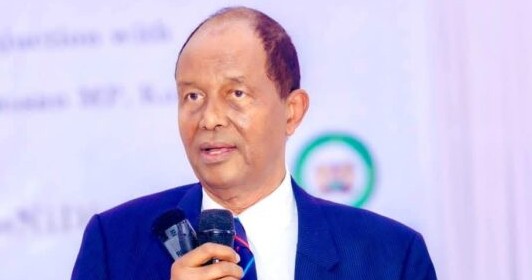 Kamukunji Member of Parliament Yusuf Hassan. (Photo: File/Abdirahman Khalif)
Justice Tunya began his career in the Judiciary as a magistrate before rising through the ranks to become a High Court judge.
Over the years, he presided over politically sensitive criminal cases, election petitions, constitutional disputes, commercial litigation, civil claims and appeals, earning recognition as one of the country’s most experienced judicial officers.
His years on the bench coincided with some of Kenya’s most defining political and constitutional moments.
During the 1980s and early 1990s, while serving as a senior magistrate, he handled several politically charged prosecutions as demands for multi‑party democracy gathered momentum.
Judge Omondi Tunya also presided over other politically sensitive cases linked to the pro‑democracy movement during the final years of the Kenya African National Union’s one‑party rule.
In 1986, while serving as Senior Resident Magistrate in Nyeri, Justice Tunya ordered then-Mathira MP Matu Wamae to appear in court to answer charges of contravening the Employment Act after prosecutors informed the court that the summonses had not been served.
He directed the district labour officer to ensure the summonses were properly served before the matter resumed. Wamae was represented by advocate Hatari Waweru, who later became a High Court judge.
Pro‑democracy observers argue it is impossible to tell Tunya's story honestly without the 1980s.
During the crackdown on the underground Mwakenya movement, Tunya was the magistrate before whom most sedition cases landed, with Bernard Chunga, who later became Kenya's Chief Justice during the final years of President Moi's administration, as the state’s chief prosecutor.
Suspects interrogated at Nyayo House would emerge with confessions, be arraigned, sometimes late at night, and enter guilty pleas that, under the law of the day, could not be appealed. Within minutes, sentences were passed. Dozens of academics, students, lawyers and perceived dissidents were imprisoned this way.
For survivors of that era, Tunya's courtroom is remembered as the final stop in the machinery of state repression, not because he was ever adjudged corrupt, but because the bench he occupied lent legal form to an authoritarian project.
His docket in those years was not only political.
In 1987, as Principal Magistrate, he tried and sentenced Duncan Wahome Wamae to death for robbery with violence in the case arising from the 1985 night attack at the Naro‑Moru farmhouse of Senior Resident Magistrate John McReady, in which McReady and his wife were killed.
The conviction, built on circumstantial evidence and vigorously contested, was upheld by the High Court in 1991 and by the Court of Appeal in 1998.
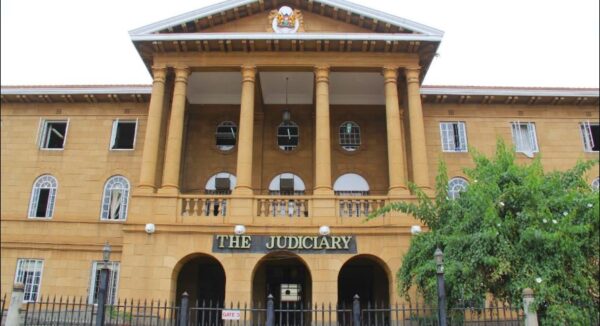 The Judiciary. (Photo: File)
In one positive note, while presiding over the inquest into the 1996 murder of human rights activist Karimi Nduthu, Tunya openly expressed “surprise” at the refusal of the police to follow clear leads, criticised the shallowness of the investigation, declined to either exonerate or indict the government without proper inquiry, and named two individuals he believed had a case to answer.
Coming from a man so associated with the state’s courtrooms, it was a ruling of unexpected independence, one that the police, tellingly, never acted upon.
Tunya's judicial career ended amid the most dramatic shake‑up the Kenyan bench has known.
In October 2003, he was reportedly among the judges named in the report of the Integrity and Anti‑Corruption Committee chaired by Justice Aaron Ringera, the “radical surgery” that cited sweeping allegations of unethical conduct and corruption in the Judiciary.
He is reported to have opted for retirement with benefits rather than face the disciplinary tribunal, leaving the allegations against him forever untested. It was a quiet exit, and, in the way of that exercise, an ambiguous one, since the purge itself was later criticised for its rough justice.
Retirement did not remove him from the law. He continued to serve as an arbitrator in commercial disputes, at one point, in an irony history could not resist, sitting on a tribunal alongside retired Justice Ringera himself.
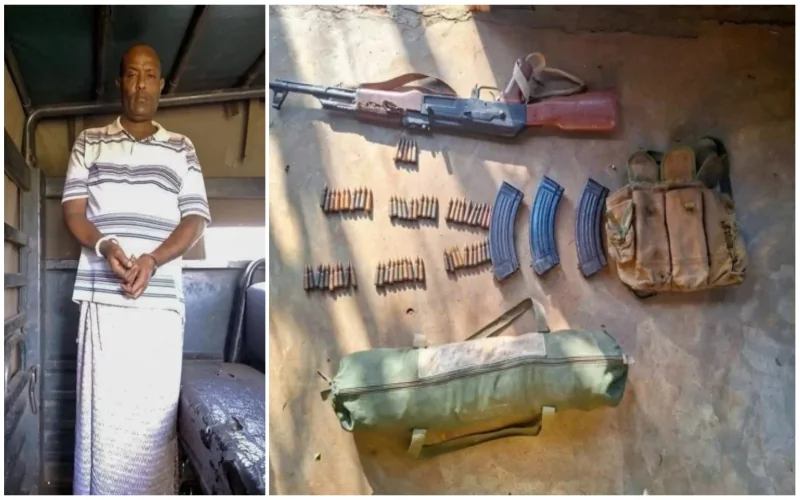
He also made headlines in October 2013 when, according to press reports, a four‑man gang armed with an AK‑47 rifle blocked his car near his Mamlaka Road residence in Nairobi’s Kilimani area and robbed him of his licensed pistol. He escaped unhurt.
Tunya's career reflected the metamorphosis of the Judiciary itself, from a wing of government operating under the grip of the one‑party era to one expected to uphold constitutionalism, accountability and the rule of law.






































Comments
Sign in with Google to comment, reply, and like comments.
Continue with Google