Trump faces rising backlash over remarks targeting Somali immigrants
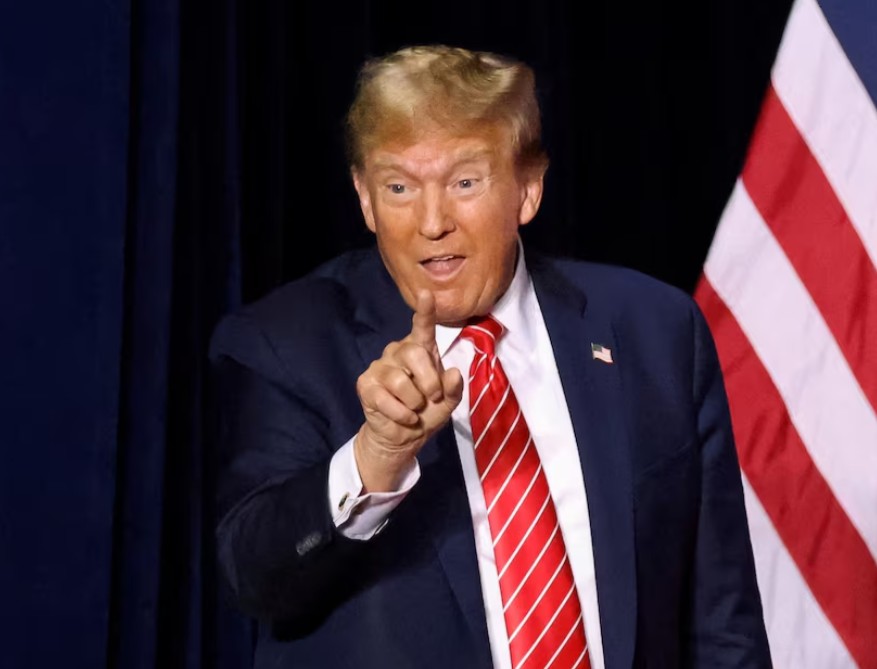
Trump said that “hundreds of thousands of refugees from Somalia are completely taking over the once great State of Minnesota,” and he continued by saying that he did not want Somali immigrants in the country. He said the country of Somalia “stinks,” and he used the word “garbage” to describe Rep. Ilhan Omar of Minnesota during the same discussion.
President Donald Trump is facing rising criticism after delivering a series of remarks that targeted Somali immigrants in the United States, with a focus on the large Somali community living in Minnesota.
The statements, which he made over several days in public events and during an extended Cabinet meeting, have drawn concern from elected officials, community leaders and advocacy groups who say the comments are creating fear and tension.
More To Read
- Federal authorities plan large-scale immigration raids targeting Somali community in Minnesota, US
- Trump administration halts immigration applications for migrants from 19 nations
- Somalia welcomes first group of Sudanese students under new scholarship programme
- Mogadishu’s Hamarweyne market shut for third day amid tax dispute
- How to make sweet and savoury plantains at home
- Somalia on high alert as Marburg virus outbreak hits neighbouring Ethiopia
Trump said that “hundreds of thousands of refugees from Somalia are completely taking over the once great State of Minnesota,” and he continued by saying that he did not want Somali immigrants in the country. He said the country of Somalia “stinks,” and he used the word “garbage” to describe Rep. Ilhan Omar of Minnesota during the same discussion.
Ilhan responded on the social platform X, where she wrote that “his obsession with me is creepy. I hope he gets the help he desperately needs.”
She later said during a television interview that Somali immigrants will not be intimidated by the president and that they will not accept being used as scapegoats for political gain.
She said, “We are here to stay,” and she pointed to her own history as proof of that position because she came to the United States as a child fleeing conflict and earned her citizenship twenty-five years ago.
Federal data shows that about 260,000 people of Somali descent are currently living in the United States. Minnesota is home to the country’s largest Somali community. Minneapolis alone has about 84,000 Somali residents, and most of them are United States citizens or lawful permanent residents.
Local officials say that these residents are part of many sectors, including transportation, health care, business, education and public service.
The Star Tribune editorial board released a detailed statement that addressed Trump’s remarks. The board wrote that Minnesota is home to many Somali residents who serve as colleagues, neighbours and members of public institutions, and the board said that attacking an entire group whose members are largely legal residents or citizens “is beyond reprehensible. It’s dangerous.”
The editorial said the comments have the potential to damage community trust and create long-term harm to residents who have lived in the state for decades.
Minnesota Governor Tim Walz also responded, saying Trump was “demonising” Somali migrants in a way that ignores their contributions to daily life in the state. He said during a national interview that Somali residents work in many professions, including education, the arts, medicine, law and business.
He said that Minnesota sees value in the diversity and energy these residents bring to the state. Walz added that attacking an entire community over the actions of a small number of people does not help the public and does not solve any policy problems.
Minneapolis Mayor Jacob Frey held a press conference where he said he was concerned about the impact of the remarks. He said that many people across the country have started blaming Somali residents for unrelated issues.
He added that it is wrong to target people because of their background or their appearance. He said that the city must protect residents who follow the law and contribute to the community.
“I’ve heard commentary that a number of people around this country are making about our Somali community as a whole, holding them at fault for the actions of a few,” he said.
Reports indicate that the Trump team is preparing future immigration operations that may focus on Somali immigrants in Minnesota. These reports have increased concern among families who fear that enforcement actions may target people based on suspicion rather than verified status
Top Stories Today