Global arms sales hit Sh87.8 trillion in 2024 amid wars in Ukraine and Gaza
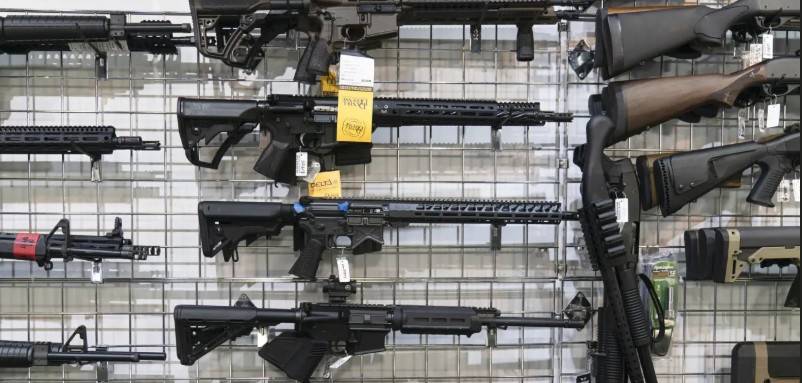
Global arms sales by the top 100 producers rose 5.9% to a record Sh87.8 trillion in 2024, driven by wars in Ukraine and Gaza, higher defence budgets and rising demand across key regions.
Global sales of weapons and military services by the world’s 100 largest arms producers rose to $679 billion (Sh87.8 trillion) in 2024, a 5.9 per cent increase from the previous year, according to a new report by the Stockholm International Peace Research Institute (SIPRI).
SIPRI attributed the revenue growth to ongoing conflicts, including the wars in Ukraine and Gaza, rising geopolitical tensions worldwide, and expanding military budgets.
More To Read
- Gaza: Two children killed every day during fragile ceasefire, says UNICEF
- Ukraine accuses Russia of recruiting over 1,400 Africans for frontline combat
- We are slaughtered, and no one hears us- Gaza journalists testify at Istanbul Tribunal
- WHO says rebuilding Gaza’s shattered health system critical to a lasting peace
- Cairo peace talks offer new hope for Gaza as Hamas signals readiness for truce
- Heavy battlefield losses in Ukraine push Russia to seek foreign recruits
"Last year global arms revenues reached the highest level ever recorded by SIPRI as producers capitalised on high demand," said Lorenzo Scarazzato, Researcher with the SIPRI Military Expenditure and Arms Production Programme.
"Although companies have been building their production capacity, they still face a range of challenges that could affect costs and delivery schedules."
US arms companies
The report highlights that US arms companies earned a total of $334 billion (Sh43.2 trillion) during the period, marking a 3.8 per cent increase from 2023. Thirty of the 39 US companies listed in the report saw their revenues rise, with major players like Lockheed Martin, Northrop Grumman, and General Dynamics leading the growth.
However, key projects such as the F-35 fighter jet, Columbia-class submarine, and Sentinel intercontinental ballistic missile continue to face delays and higher-than-expected costs.
"The delays and rising costs will inevitably impact US military planning and military spending," said Xiao Liang, Researcher with the SIPRI Military Expenditure and Arms Production Programme.
"This could have knock-on effects on the US government’s efforts to cut excessive military spending and improve budget efficiency."
Europe arms revenues
In Europe (excluding Russia), arms revenues grew 13 per cent in 2024, reaching $151 billion (Sh19.5 trillion), driven by demand related to the war in Ukraine and concerns over Russian offensives.
The Czech firm Czechoslovak Group saw the largest revenue jump, soaring 193 per cent to $3.6 billion (Sh465.3 billion), largely due to contracts supplying Ukraine.
"European arms companies are investing in new production capacity to meet the rising demand," said Jade Guiberteau Ricard, another SIPRI researcher.
"But sourcing materials could pose a growing challenge. In particular, dependence on critical minerals is likely to complicate European rearmament plans."
Despite international sanctions and a shortage of skilled workers, Russia’s leading arms companies, Rostec and United Shipbuilding Corporation, increased their combined revenues by 23 per cent to $31.2 billion (Sh4 trillion), largely due to strong domestic demand.
Shortage of skilled labour
"Besides sanctions, Russian arms companies are facing a shortage of skilled labour. This could slow production and limit innovation," said Diego Lopes da Silva, another SIPRI researcher.
"However, we need to be cautious when making such predictions, as Russia's arms industry has proved resilient during the war in Ukraine, contrary to expectations."
The Asia and Oceania region was the only one to record a decline in 2024, with arms revenues falling 1.2 per cent to $130 billion (Sh16.8 trillion), primarily due to Chinese producers, whose combined revenues dropped 10 per cent amid corruption-related procurement delays.
Meanwhile, Japanese and South Korean companies reported substantial growth, with revenues rising 40 per cent and 31 per cent respectively, fuelled by strong domestic and European demand. South Korea’s Hanwha Group alone saw a 42 per cent revenue increase, more than half of it from exports.
For the first time, nine Middle Eastern companies entered the Top 100, collectively generating $31 billion (Sh4 trillion), a 14 per cent increase from 2023. Despite the Gaza conflict, Israeli firms also saw revenues rise by 16 per cent to $16.2 billion (Sh2.1 trillion) during the period.
Top Stories Today