Iranian woman spared execution after paying Sh12 million compensation for killing abusive husband
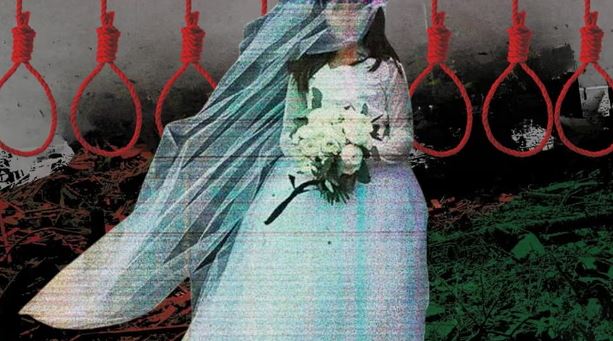
Iran Human Rights director Mahmood Amiry-Moghaddam condemned the initial amount as punitive and discriminatory.
A 25-year-old Iranian woman who was married off as a child and sentenced to death for the killing of her abusive husband has been spared execution after the victim’s parents accepted financial compensation totalling about £70,000 (approximately Sh12.08 million).
Goli Kouhkan’s release comes seven years after she was convicted under qisas laws and placed on death row in Gorgan Central Prison in northern Iran.
More To Read
- Commission sounds alarm as new data shows rising gender-based violence in Kenya
- Men are majority of homicide victims in Kenya despite media focus on women, state report reveals
- Kenya, UK celebrate success of Sh3.6 billion REINVENT security programme after seven years
- W20 pushes G20 to advance women’s economic empowerment, care work, health, climate justice
- Under rising global pressure, Iran ramps up its push for strategic partnerships in Africa
- Sexual violence driving mass flight from Sudan to South Sudan: What you need to know
Kouhkan was arrested at 18 over accusations that she took part in the killing of her husband, Alireza Abil, in May 2018. Her sentence under qisas, which allows retribution-in-kind, meant she faced execution by hanging unless the family of the deceased agreed to pardon her through a payment known as blood money.
Mai Sato, the UN special rapporteur on the situation of human rights in Iran, said the decision to halt the execution was welcome but did not address wider concerns about Iran’s laws.
“It’s great that Kouhkan won’t be executed, one life has been saved … but it doesn’t really solve the issue of the qisas law, which is in violation of many international standards,” she said as quoted by the Guardian.
Earlier this month, Sato and three other UN experts said the case “exemplifies the systemic gender bias faced by women victims of child marriage and domestic violence within Iran’s criminal justice system”.
Kouhkan’s looming execution first drew global attention in November when the Guardian revealed that the undocumented Baluch woman would be killed unless she could raise 10bn tomans, roughly £80,000 (Sh13.81 million), demanded by her husband’s family under Iran’s blood-money provisions. Iranian law permits families of homicide victims to forgive offenders in exchange for compensation.
In a statement issued last month, Iran Human Rights director Mahmood Amiry-Moghaddam condemned the initial amount as punitive and discriminatory.
“The blood-money amount set for her case is several times the official rate, an impossible sum for a young, undocumented Baluch woman from a deprived background who has also been rejected by her family,” he said.
Kouhkan’s childhood was marked by forced marriage and persistent abuse. She was married to her cousin at 12, became pregnant at 13, and later endured years of physical and emotional violence. On the day her husband died, she reportedly found him assaulting their five-year-old son. She called her husband’s cousin, Mohammad Abil, to intervene, but a confrontation followed that resulted in Abil’s death. According to Iran Human Rights, he, too, remains on death row.
On December 9, Kouhkan’s lawyer confirmed in an Instagram post that the required blood money had been reduced from 10bn tomans to 8bn tomans, and that supporters had successfully raised this amount through donations. Mizan News Agency later published a video showing her parents-in-law signing the legal documents needed to approve the pardon.
According to Mehdi Ghatei, founder of the Australia-registered Qasim Child Foundation, who launched a global fundraiser, Kouhkan now hopes to reunite with her son upon her release. He added that Iranian law entitles the boy to 2bn tomans out of the total blood money, which he described as “a good sum for establishing a new life”.
Ghatei also said international attention helped shift the outcome. He noted that after the Guardian’s initial report, organisations and individuals from around the world contacted him offering support.
“The Iranian regime tries to keep people silent. When people start raising awareness [of cases such as Kouhkan’s] there is sometimes huge pressure from international bodies, which increases the chances of halting executions. The role of the mainstream media is huge in this case, unbelievable,” he said.
Available data indicate that Iran executes more women than any other country. Iran Human Rights reports that at least 241 women were executed between 2010 and 2024, including 114 who received qisas sentences for homicide.
Many had killed husbands or intimate partners after prolonged domestic abuse or forced marriages. Amnesty International says at least 30 women were executed last year alone, while Iran Human Rights estimates that at least 42 women have been put to death in 2025 so far, 18 for killing their husbands, including two who, like Kouhkan, were child brides.
Top Stories Today