State agencies, counties owe Kenya Power Sh4.67 billion in unpaid bills - Auditor General
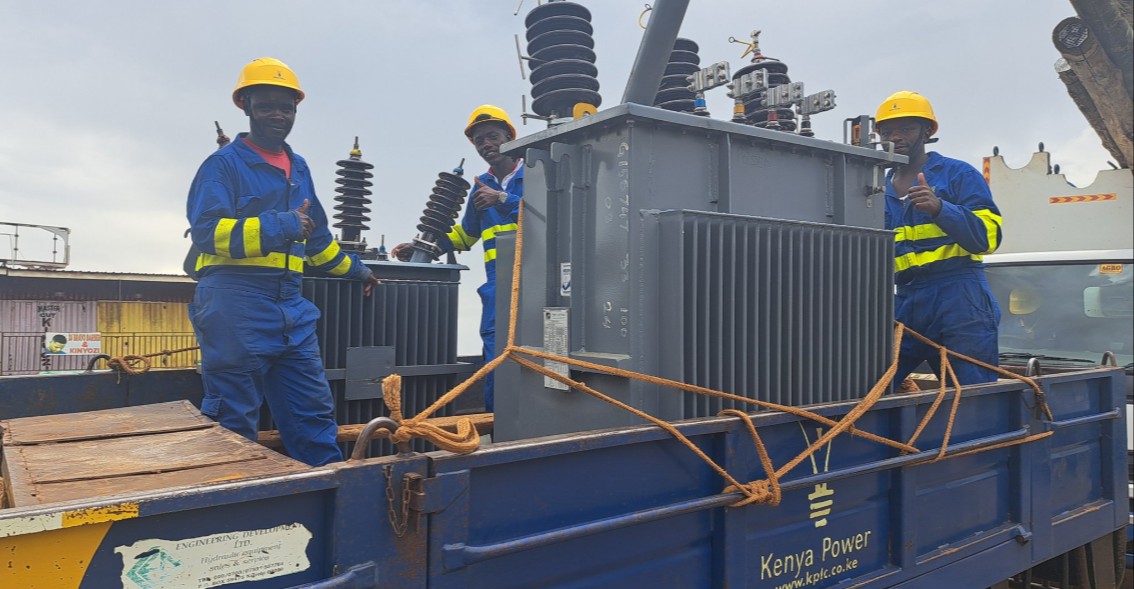
Auditor General Nancy Gathungu said the unpaid bills cover 140.06 million units of electricity, highlighting persistent revenue collection challenges that have plagued the utility for years.
State entities and county governments have emerged as the biggest defaulters in Kenya Power’s electricity billing, contributing to Sh4.67 billion in unpaid dues in the year ending June 2025.
In her latest report, Auditor General Nancy Gathungu said the unpaid bills cover 140.06 million units of electricity, highlighting persistent revenue collection challenges that have plagued the utility for years.
More To Read
- Kenya Power ends manual applications, new connection requests exclusively via website
- Over 16,000 in the dark as Kenya Power struggles to procure essential meters, transformers
- MPs push for urgent funding boost for Auditor General’s office
- 122 electrocuted as illegal connections, encroachment rise - Kenya Power
- Top schools flagged for illegal fees and uniform procurement in Auditor General’s report
- County governments owe Kenya Power Sh5.67 billion in unpaid electricity bills - report
“During the year under review, a total of 140,064,582 units were billed to customers for electricity consumption equivalent to Sh4,669,271,477 but remained unpaid. Reasons for non-payment and measures taken by management to collect the unpaid amount were not confirmed,” Gathungu said.
Part of the outstanding amount, Sh1.786 billion, relates to electricity consumed through active and vending meters, with high defaults flagged as a major concern for Kenya Power. Some bills have been pending for over a decade.
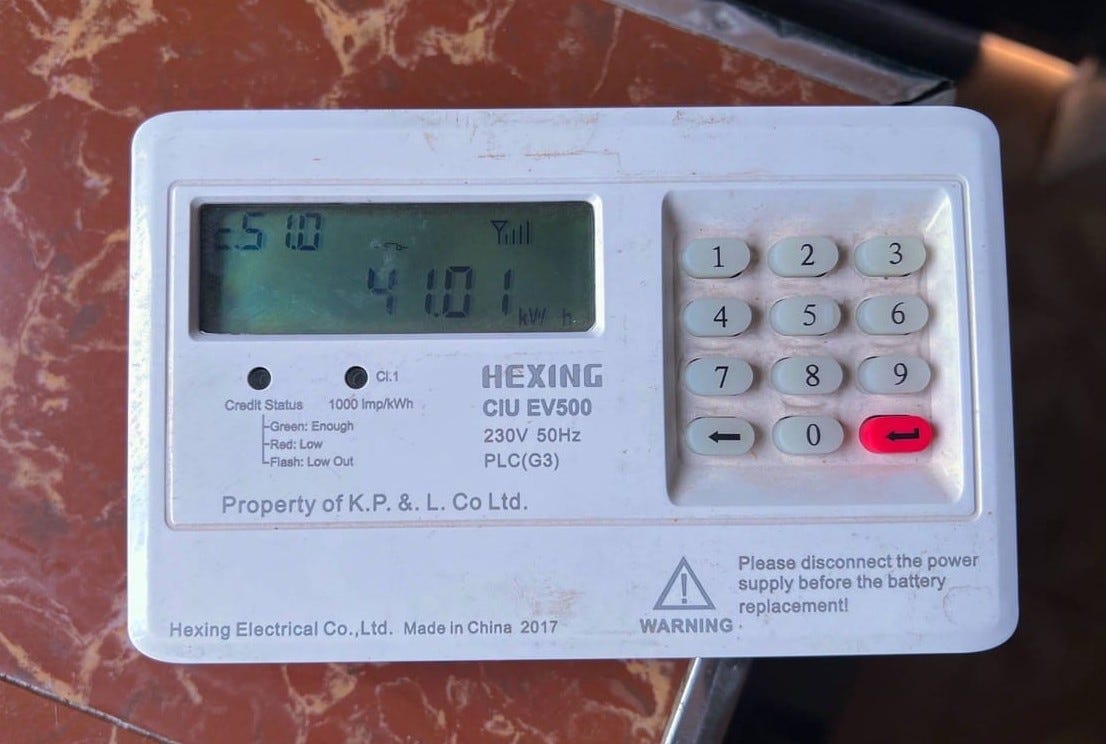
To curb arrears, the utility has adopted various measures, including the installation of prepaid and smart meters and requiring higher security deposits for high-risk customers. Postpaid customers must also pay deposits equivalent to twice their monthly consumption, with a minimum of Sh2,500.
Kenya Power has also enlisted debt collectors, though results have been marginal, forcing the firm to request Treasury approval to write off certain unrecoverable debts.
“The following strategies are currently in operation and are largely successful in other high-risk areas of non-paying customers. These include the use of third-party debt collectors and a focus on early identification and the requirement for higher security deposits for defaulting customers,” the firm said in its annual report.
Customers who fail to pay within 21 days after billing face disconnection, with further measures including demand letters and closure of accounts if payment is not made within three months of disconnection. Kenya Power reduced its provision for impairment of defaulted bills to Sh13.32 billion in 2025 from Sh19.28 billion the previous year and requested Treasury approval to write off Sh4.19 million in unrecoverable debts.
The Auditor General’s report also highlighted neglect of off-grid power stations, exposing households and businesses to prolonged outages. Kenya Power operates 57 off-grid stations in areas not connected to the national grid, mainly in Northern Kenya, including 30 diesel-powered and 27 solar-powered stations.
“25 diesel generators deployed to the stations, with a combined capacity of 12,454 kilowatts (kW), were not in operation due to breakdown and lack of maintenance, which contributed to the reduction of capacity required to supply customers in these areas,” Gathungu said.
Physical inspections in August 2025 at Habaswein and Eldas stations revealed that solar and wind generation plants, installed with a combined capacity of 1,170kW to reduce operational costs, were non-functional due to a lack of periodic maintenance.
Diesel generator failures caused extended outages, including a 25-day blackout in July 2024 at Lokitaung in Turkana County, attributed to delays in procuring spare parts. The audit further uncovered inefficiencies in fuel usage.
“Instances of overlapping dates were detected, which compromised the integrity of fuel tracking and inventory management, raising doubts about the accuracy of recorded consumption and stock balances. In addition, the investigation identified stations which either lacked a flow metre or had faulty metres for measuring generator fuel usage. Personnel at the stations relied on manual dip measurements by station operators, which compromised the verifiability and reliability of fuel consumption data,” reads the report.
Despite the off-grid challenges, Kenya Power’s overall system reliability improved.
The System Average Interruption Duration Index (SAIDI) fell from 120.6 hours in 2024 to 113 hours in 2025, while the System Average Interruption Frequency Index (SAIFI) decreased to 44.07 outages per year from 47.5 the previous year.
However, outages in off-grid regions were often not logged in the company’s Incident Management System, making it difficult to monitor reliability.
Top Stories Today