MPs warn teacher shortage to worsen as new schools open without staffing plans
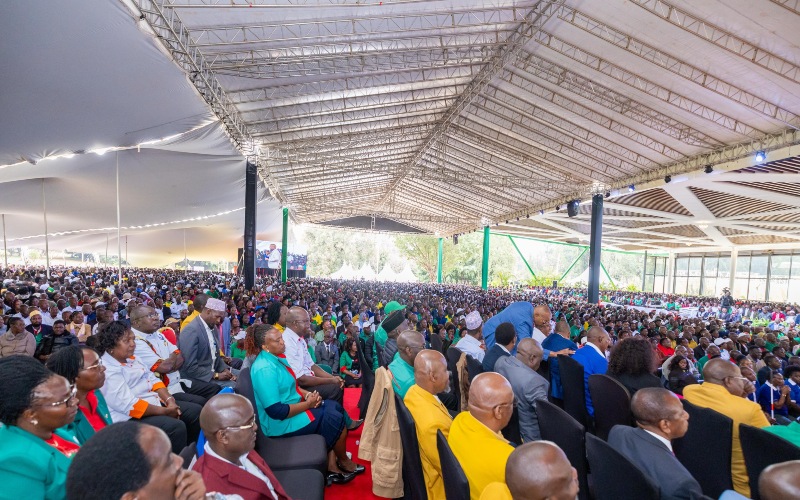
While international standards recommend a learner-to-teacher ratio of 1:25, Kenya’s figures vary widely: 1:38 in pre-primary, 1:46 in primary, 1:38 in junior school and 1:34 in secondary.
A parliamentary committee has raised concerns that new schools are being established without corresponding staffing plans, intensifying Kenya’s existing teacher shortage and threatening learning quality.
The National Assembly’s Constitutional Implementation Oversight Committee (CIOC) warns that without urgent intervention, teacher deficits will deepen in 2026 with the rollout of senior school, leaving many classrooms overcrowded and learning standards at risk.
More To Read
- Court orders TSC to transfer teacher from North Eastern over trauma
- Kenya needs 58,590 more teachers for 2026 senior school transition - TSC
- Home Science hit hard as teachers exit for lucrative private ventures - TSC director
- 1.13 million Kenyan children out of school amid deepening inequalities – report
- Kenya requires Sh72.8 billion annually to fill 100,000 teacher shortage - report
- TSC begins deployment of teachers to Junior Schools to address shortages
The committee’s findings capture concerns raised by the Teachers Service Commission (TSC), which has warned that the ongoing staffing shortages in public schools could undermine the right to access quality basic education. According to the report, the current teacher shortfall stems largely from insufficient budgetary allocation and is projected to worsen as senior school transitions take effect.
CIOC, chaired by Suba South MP Caroli Omondi, also highlights sharp disparities in teacher distribution across the country. It notes that some populous counties face overwhelming workloads while others have adequate coverage.
“The committee noted that counties like Kakamega specifically demonstrate severely inadequate teacher distribution ratios,” reads the report, which adds that the imbalance has resulted in certain constituencies experiencing a “complete absence of teaching staff while others maintain adequate coverage.”
In the current financial year, TSC received Sh378.2 billion, including Sh2.4 billion for recruiting permanent teachers and Sh7.2 billion for hiring intern teachers for junior school.
Despite this, CIOC says the commission’s staffing challenges remain significant.
“The commission faces significant challenges in fulfilling its mandate to recruit and employ registered teachers. The primary impediment is the inadequate budget allocation, which has resulted in a critical teacher shortage,” reads the report.
While international standards recommend a learner-to-teacher ratio of 1:25, Kenya’s figures vary widely: 1:38 in pre-primary, 1:46 in primary, 1:38 in junior school and 1:34 in secondary. In some rural areas, the ratios exceed 1:70. The report notes that these shortages are worsened by increasing enrolment, expansion of learning areas, and insufficient infrastructure such as classrooms and laboratories, conditions that disproportionately affect rural schools.
CIOC further observes that TSC lacks qualified teachers for several new learning areas, including leather craft, sculpting, jewellery and ornament making, media technology, marine and fisheries technology, general science and indigenous languages.
Documents presented to Parliament show that junior and senior schools require around 129,392 teachers. However, the committee notes that recent recruitment of permanent and intern teachers has not significantly eased the shortage. TSC is quoted in the report saying it has not achieved optimal teacher numbers since its establishment, underlining the “persistent nature of this challenge.”
The committee adds that the crisis is worsened by irregular establishment of new schools “without corresponding budgetary provisions for teaching staff”, a trend it warns is stretching an already constrained system.
“The proposed solutions include securing increased budgetary allocations from the National Assembly for teacher recruitment, strengthening coordination among stakeholders to ensure planned school establishment and implementing advisories to the national government for training teachers in new learning areas,” the document reads.
The report also raises concerns over teacher training institutions that admit trainees who do not meet the registration requirements.
“This practice undermines the quality and standards expected in the teaching profession and creates complications in the registration process,” it states.
It further points to persistent security threats, including banditry, Al-Shabaab and hostile communities, which make postings to certain areas difficult to fill and maintain.
Top Stories Today