KNEC warns schools over misleading 2025 KJSEA performance reports

KNEC explained that the Competency-Based Curriculum (CBC) framework assesses each subject independently and reports learners’ achievements using clearly defined performance levels rather than totals.
Members of the public and schools have been warned against circulating misleading analyses of the 2025 Kenya Junior School Education Assessment (KJSEA) results, which the Kenya National Examinations Council (KNEC) says are inaccurate and not reflective of official assessment practices.
In a statement on Monday, KNEC urged institutions to stop producing fake analyses that claim aggregate scores or school mean grades.
More To Read
- Grade 9 transition: Why population, poverty and performance will guide senior school placements
- Explainer: How KJSEA 2025 results determine senior school pathways
- KJSEA 2025 results: Mathematics, Kenyan sign language record lowest performance among learners
- KJSEA 2025 results: Girls outshine boys in majority of subjects as over 1.1 million complete first CBC assessment
- How Grade 10 learners will be placed in senior schools using eight-point assessment system
- KNEC warns parents over social media scams to alter KCSE, KJSEA scores
“We urge schools to stop misleading the public with fake and inaccurate KJSEA results analysis. Unlike the former system, KJSEA does not provide an aggregate score. Why? Because CBC is about nurturing individual potential, not ranking learners,” the council said.
KNEC explained that the Competency-Based Curriculum (CBC) framework assesses each subject independently and reports learners’ achievements using clearly defined performance levels rather than totals.
“This approach ensures that a child’s excellence in one subject is not overshadowed by weaker performance in another. There is, therefore, no school mean score as is depicted in the attached fake analysis,” the council added.
The warning follows fabricated reports from institutions, including St. Vincent De Paul Boys’ School, that misrepresented aggregate scores and mean grades. KNEC reiterated that the official KJSEA framework measures performance through four levels: Exceeding Expectations, Meeting Expectations, Approaching Expectations, and Below Expectations.
The 2025 KJSEA results were officially released on December 11, 2025, by Education Cabinet Secretary Julius Migos Ogamba at New Mitihani House, Nairobi. The assessment covered 1,130,459 Grade 9 learners, marking the first cohort under the CBC transitioning to senior school pathways in STEM, Social Sciences, or Arts & Sports Science.
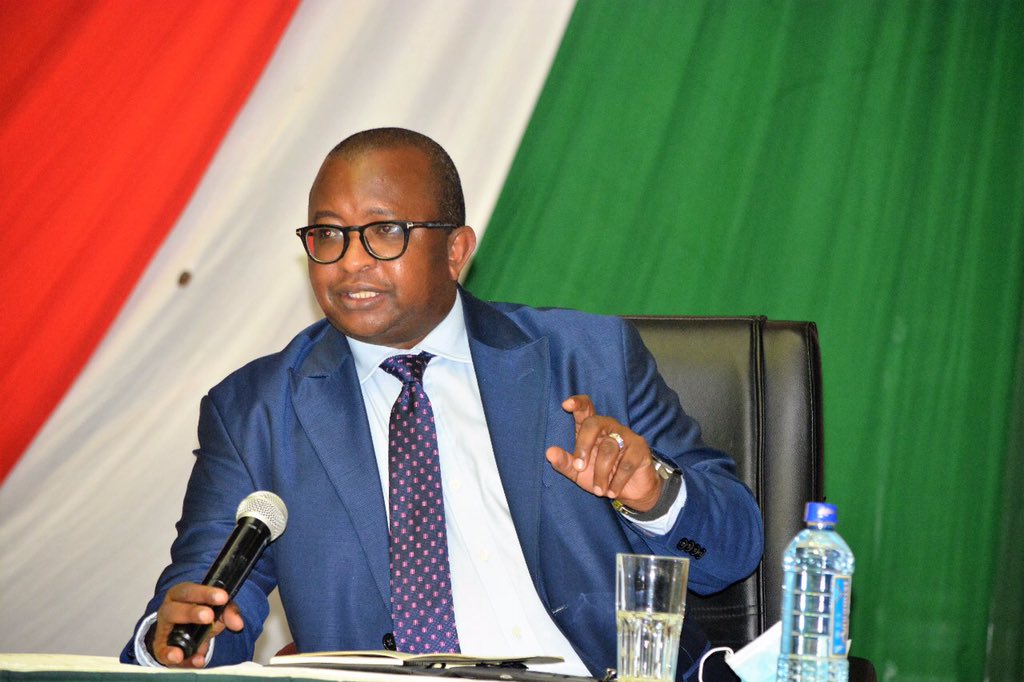
KNEC CEO David Njengere highlighted that learner performance is derived from continuous assessments: 20 per cent from Grade 6 KPSEA, 20 per cent from school-based evaluations in Grades 7 and 8, and 60 per cent from the summative KJSEA exam.
“This comprehensive approach focuses on individual competencies rather than competitive totals, marking a clear shift from the previous 8-4-4 system,” he said.
The Ministry of Education has assured sufficient institutional capacity and transparent placement of learners into senior schools, with the process expected to conclude by December 20, 2025, and reporting scheduled for January 12, 2026.
For access, learners’ results are available online at https://selection.education.go.ke/my-selections or via SMS by sending the assessment number to 22263 at a cost of Sh30.
Ogamba confirmed that all candidates will transition to senior school in 2026. Each subject is graded out of eight points, with overall performance categorised as Exceeding Expectations (EE), Meeting Expectations (ME), Approaching Expectations (AE), or Below Expectations (BE). The summative assessment included written papers and practicals or projects, with some subjects requiring two papers due to project or practical components.
KNEC warned that misleading analyses of KJSEA results undermine the principles of CBC and misinform parents and learners.
“Unlike the former system, KJSEA does not provide an aggregate score. Each subject is assessed independently, and learners’ achievements are reported using performance levels, not totals,” the council said.
Top Stories Today