Nearly 4.7 million Kenyans aged between 15 and 65 are using at least one drug or substance of abuse, according to a new National Authority for the Campaign Against Alcohol and Drug Abuse (NACADA) survey, highlighting the scale of substance abuse in the country.
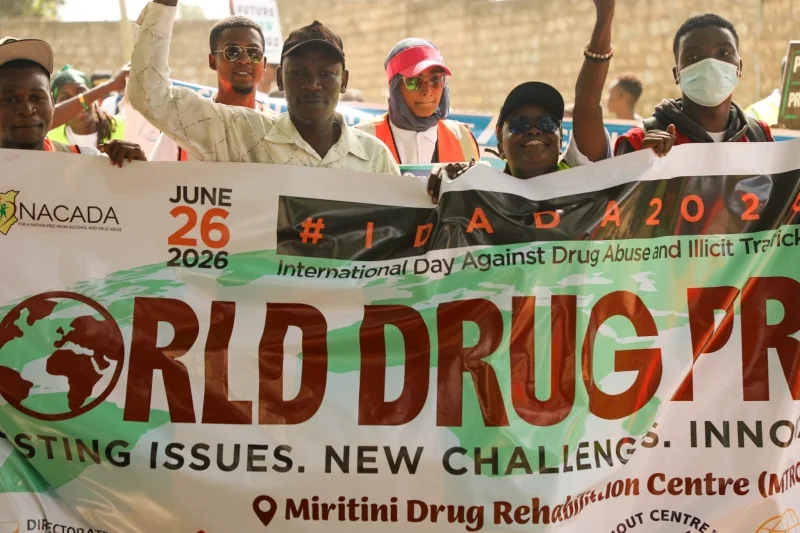
The survey, released during this year’s International Day Against Drug Abuse and Illicit Trafficking commemorations held at the Miritini Treatment and Rehabilitation Centre in Mombasa County, shows that about one in six Kenyans in the age bracket is affected.
The Coast region recorded the highest prevalence at 29.3 per cent, with Mombasa County emerging as the most affected at 34.4 per cent.
Government officials, anti-drug agencies, rehabilitation experts and community leaders gathered at the event under the theme “World Drug Problem: Persisting Issues, New Challenges, Innovative Responses,” calling for stronger collective action against substance abuse.
Principal Secretary for Internal Security and National Administration Raymond Omollo said the figures represented real lives that could be saved through timely intervention, emphasising that enforcement alone could not solve the problem.
“These are not just statistics. They represent our children, our brothers and sisters, our colleagues, and our future workforce,” he said, urging a balanced approach combining prevention, treatment, rehabilitation and social reintegration.
Interior Cabinet Secretary Kipchumba Murkomen said the government would intensify its crackdown on traffickers, including enhanced intelligence and inter-agency cooperation, citing the recent interception of 1,024 kilograms of crystal methamphetamine valued at Sh8.2 billion in the Indian Ocean.
NACADA Board Chairman Bishop Stephen Mairori said the agency had adopted wastewater analysis technology to monitor drug consumption trends in near real-time, strengthening its ability to respond to the evolving drug problem.
“If the drug problem is changing, our responses must change with it,” he said.
The government also used the event to promote youth engagement through a national essay-writing competition, with students like Omar Mohamed of Kongowea Secondary School recognised for highlighting the role of parents and communities in prevention.
Officials and stakeholders stressed that tackling drug abuse would require a “whole-of-society approach,” involving families, schools, religious institutions and the private sector alongside government interventions.






































Comments
Sign in with Google to comment, reply, and like comments.
Continue with Google