Kenya unveils two-year strategy to fix data gaps and fast-track gender equality
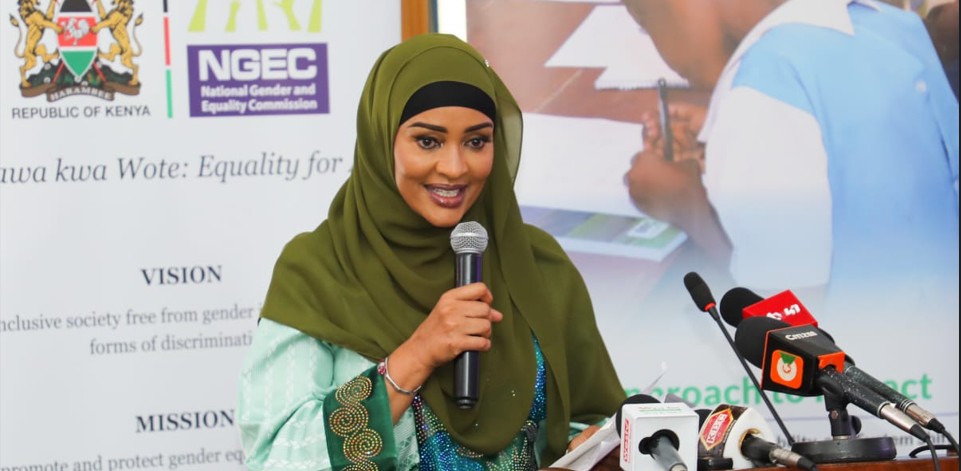
Kenya’s National Gender and Equality Commission has launched a 2025–2027 data strategy, including a gender data hub and capacity building, to close evidence gaps slowing gender equality progress.
In a renewed effort to tackle persistent gender inequalities, the government has introduced a more coordinated and evidence-driven approach to gender research for the next two years.
On Wednesday, the National Gender and Equality Commission (NGEC) unveiled a structured research agenda aimed at addressing long-standing gaps in data quality, fragmented research efforts and weak synthesis of existing evidence.
More To Read
- KNCHR report casts doubt on Kenya’s commitment to refugee protection
- Women and youth in marginalised communities highlight exclusion, demand action
- Women secure majority of contracts in inclusive government procurement programme
- Senate demands swift compliance with disability access in public offices
- Only 4 per cent of public institutions meet disability hiring quota - survey
- Kenyan women shoulder Sh1.89 trillion in unpaid domestic work, says KNBS
According to the Commission, these shortcomings have slowed progress towards gender equality across key sectors.
The report notes that despite Kenya’s strong legal and policy frameworks, gender disparities remain deeply entrenched. Women continue to experience lower employment rates, a 17.7 per cent wage gap, and underrepresentation in leadership, holding just 23 per cent of elected positions.
“There is a need for well-coordinated research and data management to fulfil the mandate of promoting equality and non-discrimination for all Kenyans,” NGEC said.
No synthesised, accessible evidence
A major concern highlighted in the report is the lack of synthesised, accessible evidence to inform policymaking. While research institutions, state agencies, civil society organisations and sector-specific think tanks have generated substantial gender-related data over the years, they have often done so independently and without standardised frameworks.
As a result, datasets remain scattered, studies are frequently duplicated, and the available evidence is underutilised when designing long-term solutions, NGEC notes.
The commission warns that this fragmentation risks undermining efforts to understand and respond to the realities facing special interest groups (SIGs). It stresses that more comprehensive and accessible data is particularly vital for SIGs, whose experiences are often poorly documented.
“Data can only be truly effective if it is robust, accessible and actionable.”
Capture complex and evolving challenges
The report adds that enhanced metrics, intersectional analysis and consolidated evidence are needed to capture the complex and evolving challenges affecting women, young people, persons with disabilities and other marginalised groups.
To address these gaps, the 2025–2027 plan sets out several priority actions. Key among them is the rollout of the Gender Sector Statistics Plan (GSSP), which aims to strengthen national systems for generating and managing gender data.
The plan aligns with the Kenya Strategy for the Development of Statistics and seeks to ensure that policymaking, programming and resource allocation are guided by evidence rather than assumptions.
A central feature of the agenda is the establishment of a gender equality and social inclusion (GESI) data hub — an integrated platform designed to serve as a one-stop centre for real-time, disaggregated gender data.
Eliminate duplication
The hub is expected to eliminate duplication, streamline access to information and support universities, research institutions and government agencies with up-to-date evidence for decision-making.
NGEC describes it as a transformative step that will “stamp out duplication and promote and strengthen access and utilisation of gender resources.”
The strategy also prioritises capacity building, with plans for masterclasses, mentorship schemes, fellowships and skills-development initiatives targeting data producers, policymakers, researchers and communicators.
According to NGEC, these programmes will ensure that those generating and using data have the technical expertise to produce high-quality, context-driven insights.
To maintain momentum, the commission plans to broaden its partnerships with government agencies, academic institutions, civil society organisations and private sector players.
Top Stories Today
Reader Comments
Trending