Bulgarian Government resigns amid mass protests over corruption, economic woes
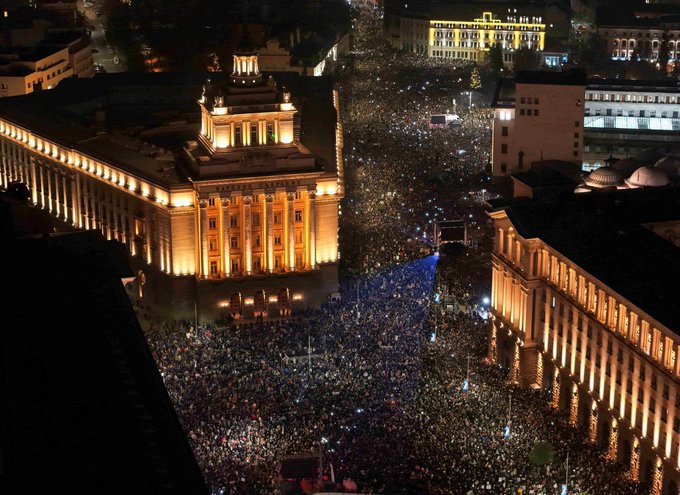
Prime Minister Rosen Zhelyazkov said the decision to step down was a response to the “voice of the people” and the need to uphold democratic values.
Bulgaria’s government has resigned after weeks of mass protests swept across the country, with citizens demanding an end to corruption and economic mismanagement.
The demonstrations, which drew tens of thousands in Sofia and other major cities, escalated after the government withdrew its controversial 2026 budget, but public anger over entrenched graft and poor governance persisted.
More To Read
- Kenyans and Tanzanians unite across borders in new era of civic and democratic activism
- Bangladesh court sentences ex-PM Sheikh Hasina to death in absentia for crimes against humanity
- Leaked audio implicates former Bangladesh PM Hasina in deadly 2024 protest crackdown
- Bangladesh: Exiled ex-PM Sheikh Hasina on trial
- Exclusive: UN panel investigates UAE links to seized weapons in Darfur, Sudan
- Redefining protests in Kenya: How accountability and stability can coexist
Prime Minister Rosen Zhelyazkov said the decision to step down was a response to the “voice of the people” and the need to uphold democratic values.
“Our coalition met, we discussed the current situation, the challenges we face and the decisions we must responsibly make. Our desire is to be at the level that society expects. Power stems from the voice of the people,” Zhelyazkov said in a televised address announcing the resignation.
“People of all ages, ethnic backgrounds and religions have spoken out in favour of [the government’s] resignation. This civic energy must be supported and encouraged.”
The protests, which saw tens of thousands take to the streets in Sofia’s central Triangle of Power and Independence Square, also spread to dozens of other towns and cities. Demonstrators carried signs reading “I’m fed up!” and chanted “Resign,” reflecting growing frustration with successive governments’ inability to tackle corruption.
The 2026 budget plan, the first drafted in euros, had proposed raising social security contributions and taxes on dividends to fund increased state spending. Despite its withdrawal, the demonstrations continued, highlighting broader dissatisfaction with governance.
“This [resignation] is the first step towards Bulgaria becoming a normal European country,” Asen Vassilev, leader of the opposition, Continue the Change, Democratic Bulgaria party, which filed the no-confidence motion, said.
“The next step… is to hold fair and free elections, not elections marred by electoral manipulation, as was the case with the last parliamentary elections.”
President Rumen Radev, who had earlier called on the government to resign, will now invite parties in parliament to try forming a new government. If they fail, he is expected to appoint an interim administration to run the country until new elections—the eighth in four years—can be held.
Boyko Borissov, former prime minister and leader of the centre-right GERB party that led the outgoing coalition, defended the government’s record.
“We have nothing to be ashamed of over these past 11 months. After today, we will be a strong opposition; we will work to win the [next] elections,” he said.
Protesters have also expressed anger at oligarch Delyan Peevski, whose New Beginning party supported Zhelyazkov’s minority government, and at Borissov, whose GERB party formed the coalition. Peevski has denied all allegations of corruption, bribery and embezzlement, despite being sanctioned by the US and UK.
Despite the political turmoil, Bulgaria is expected to adopt the euro on January 1, though public scepticism remains high amid fears of inflation and disinformation campaigns aimed at undermining confidence in the single currency.
Top Stories Today