County services at risk as 79 public funds lapse or near expiry, CoB warns
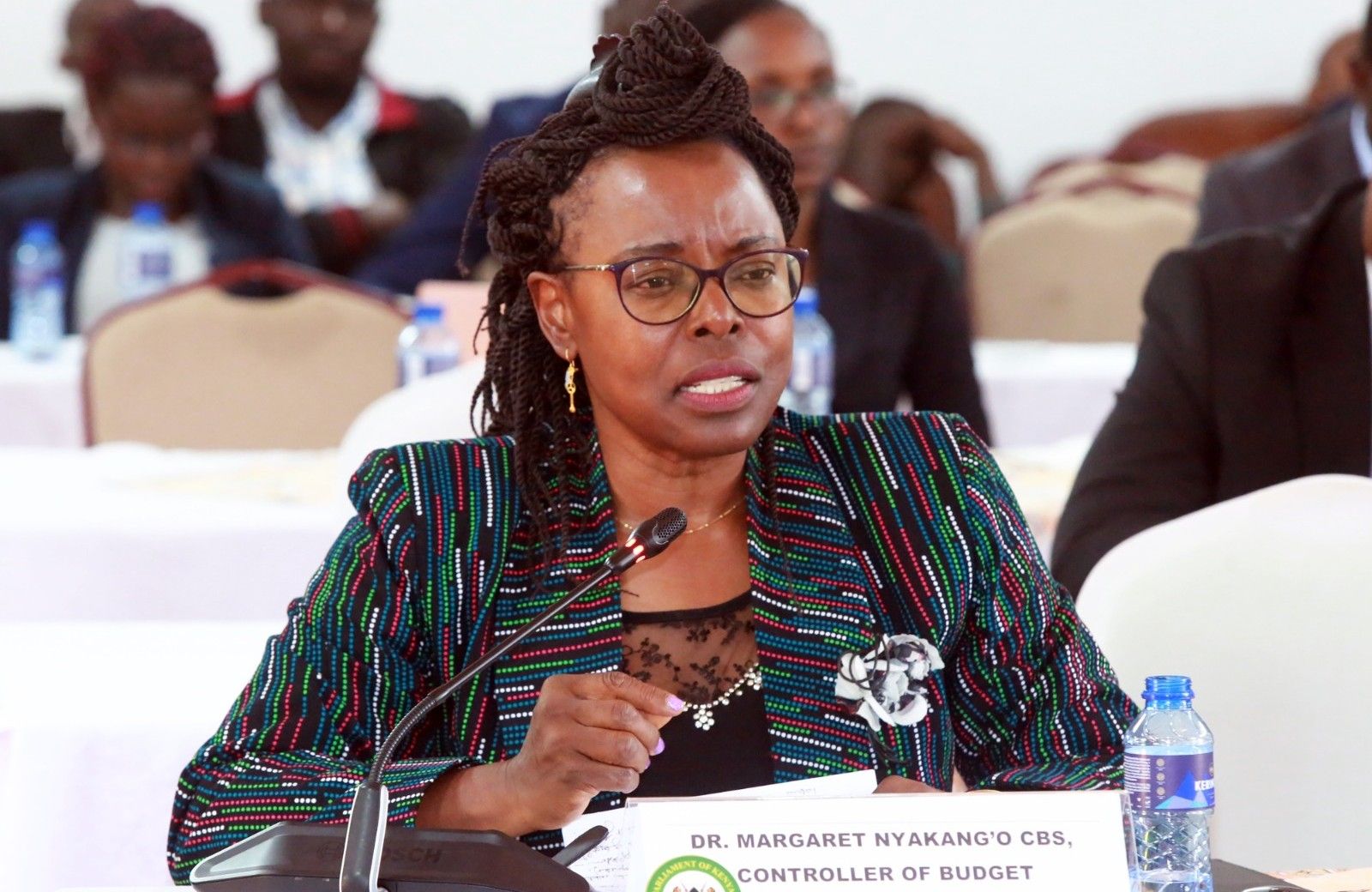
Nyakang’o warned that expired funds are no longer eligible for withdrawals from the National Treasury, leaving counties at risk of service interruptions.
County governments are facing mounting pressure as dozens of public funds are expiring, threatening the continuation of bursaries, empowerment programmes, and staff loans.
According to a report by Controller of Budget Margaret Nyakang’o, as of September 30, the legal tenure of 79 county public funds has either ended or is approaching its limit, putting billions of shillings and critical services in jeopardy.
More To Read
- County governments turn to banks as short-term debt hits Sh3.2 billion
- 20 counties record zero development spending in first quarter - CoB
- CS Kagwe warns donor-funded agriculture projects are not free money, must benefit farmers
- No layoffs for civil servants as Treasury unveils new payroll control system
- President Ruto pitches National Infrastructure Fund as engine for long‑term growth
- Senate committee approves Bill protecting governors from early impeachment
Nyakang’o warned that expired funds are no longer eligible for withdrawals from the National Treasury, leaving counties at risk of service interruptions.
She urged immediate action, advising that counties either extend the lifespan of current funds or establish new ones under the law.
“Counties risk paralysing key services if urgent remedial action is not taken,” Nyakang’o said.
The report highlights that several counties are still using funds whose authorisation has expired, exposing them to audits and potential legal disputes.
Under Section 116 of the Public Finance Management (PFM) Act, 2012, counties may create additional public funds with approval from the county executive committee and county assembly.
Regulation 197(1)(i) of the PFM (County Governments) Regulations, 2015, limits these funds to a maximum of ten years unless extended formally by the assembly. Once the period ends, funds automatically lapse unless renewed.
Nyakang’o stressed that all spending from lapsed funds should stop immediately. Counties must take steps to legally re-establish or wind up the affected funds to ensure compliance with the PFM Act.
The issue spans multiple counties. In Baringo, seven funds created in 2014, including the Small and Medium Enterprise Fund, County Bursary Fund, Youth and Women Fund, Corporate Development Fund, Persons with Disabilities Fund, Lake Bogoria Grants, and the County Assembly Car and Mortgage Fund, have expired.
Bomet’s County Executive Car Loan and Mortgage Fund has also lapsed.
Bungoma faces the expiration of funds such as the Scholarship and Other Educational Benefits Fund, Trade Loan Fund, Women Empowerment Fund, Youth Empowerment Fund, and MCA Car Loan and Mortgage Scheme Fund.
Busia can no longer access its Agriculture Development Fund, Bursaries and Scholarships Fund, and Cooperative Enterprise Fund. In Turkana, five key funds, including Biashara and Education Funds, have expired.
Marsabit is affected by five lapsed funds, among them the Emergency Fund. Other counties facing similar challenges include Kericho, Kitui, Machakos, Migori, Nakuru, and Siaya, where bursary programmes and staff car loan and mortgage facilities are no longer accessible.
Nyakang’o’s report highlights an urgent need for counties to act within legal frameworks to protect student support, community empowerment programmes, and staff benefits.
Without immediate remedial measures, millions of shillings and essential services remain at risk.
Top Stories Today