President Ruto presides over 'Trooping of Colour' for Kenya’s elite 20 Parachute Battalion
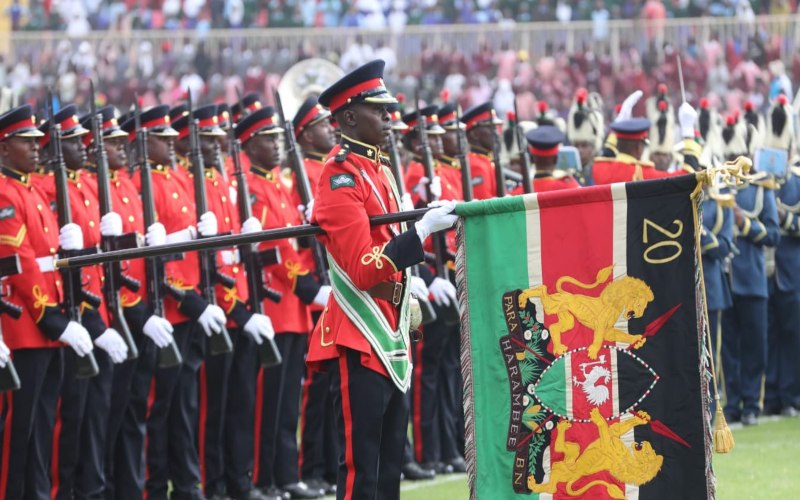
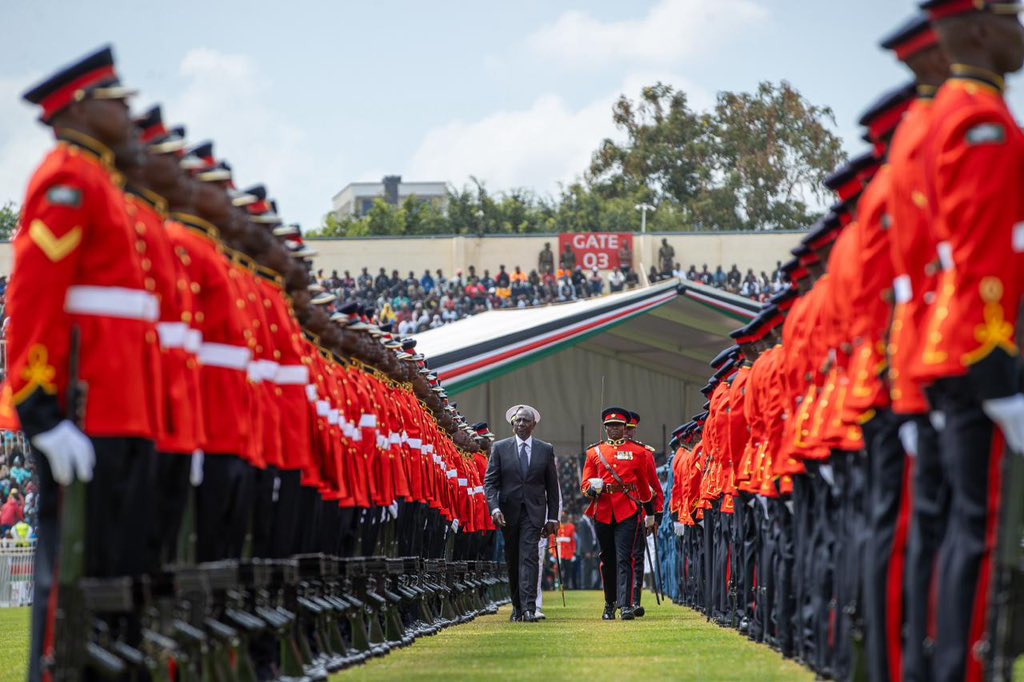
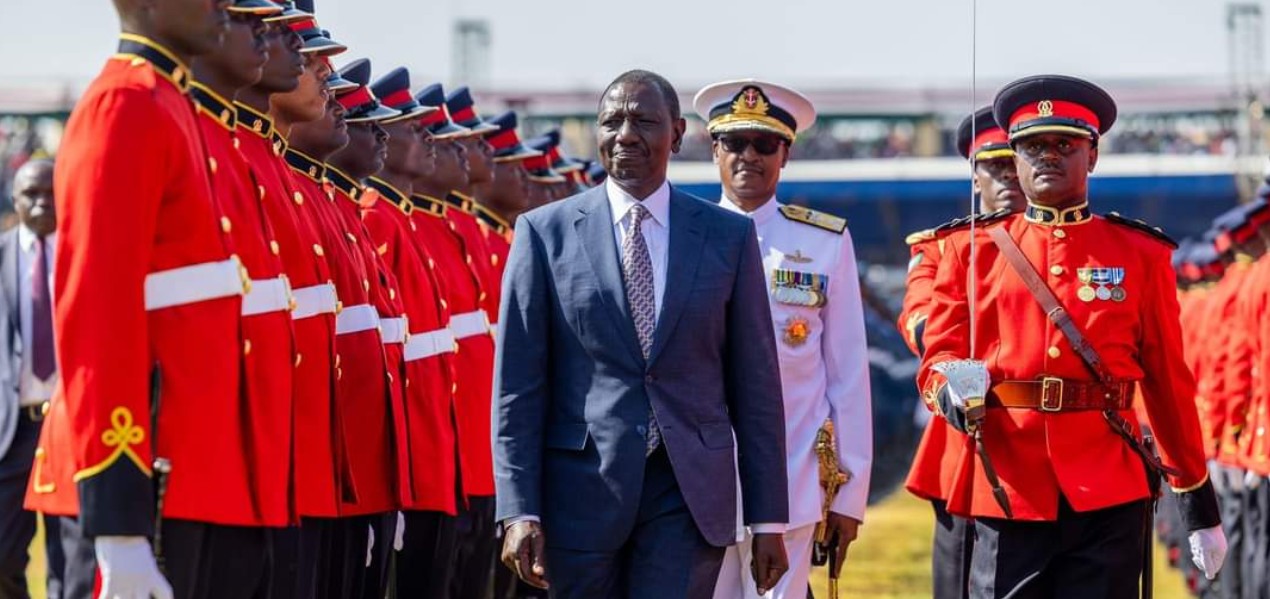
President William Ruto led the trooping of colour for the Kenya Army’s 20 Parachute Battalion at Nyayo Stadium, highlighting the unit’s history, airborne role and key operations in Kenya and abroad.
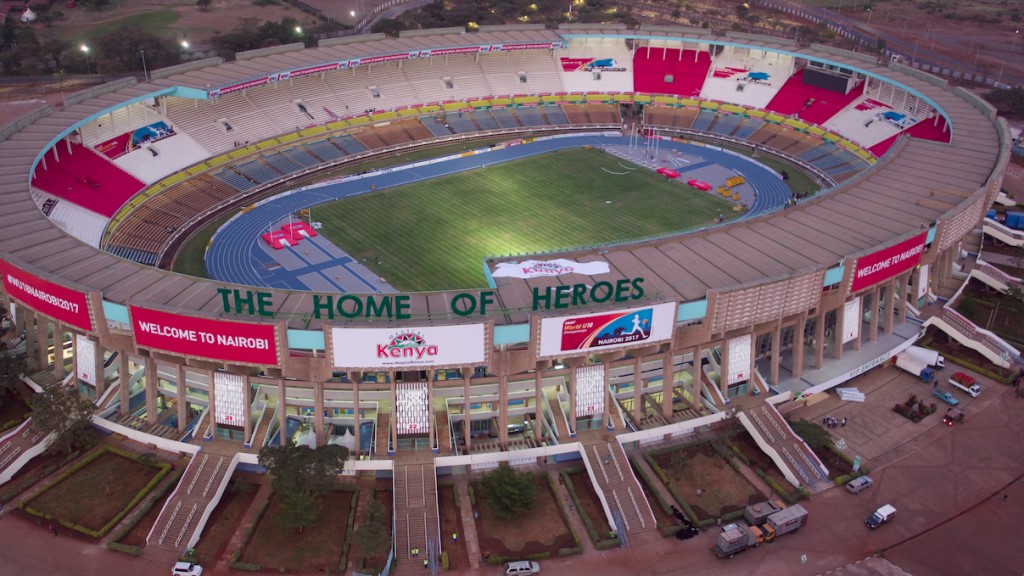
President William Ruto on Friday presided over the Trooping of Colour for the Kenya Army's 20 Parachute Battalion as the country marked the 62nd Jamhuri Day fete at the Nyayo Stadium.
The 20 Parachute Battalion, also nicknamed Airborne or Paratroopers, is a unit under the Kenya Army Special Operations Brigade (ASOB), under the Command of Brigadier Ahmed Mohamed Saman.
More To Read
- President Ruto announces plan to build 60km Nairobi–Thika Expressway
- Watch: 62nd Jamhuri Day celebrations at Nyayo Stadium
- Gen Z redefines freedom as Kenya marks 62 years of independence
- Explainer: From Madaraka to Jamhuri, tracing Kenya’s road to freedom
- Police announce road closures, traffic diversions for Jamhuri Day celebrations at Nyayo Stadium
- Police officers returning from Haiti to be honoured at Jamhuri Day parade
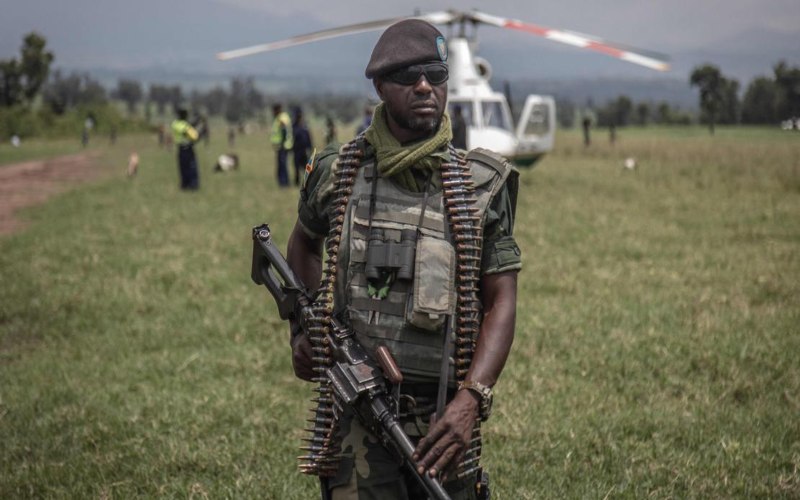
The unit is mainly known for jumps from serviceable aircraft during flights into combat zones.
A ceremonial free-fall sports team, officially known as "The Green Eagles Free Fall Team", which performs advanced parachuting displays, was formed from the unit.
According to a brief from the event, the idea of forming an airborne force emerged as Kenya moved closer to Independence.
On October 14, 1962, the first cohort of 40 Kenyans was sent to the United Kingdom (UK) for Parachute Basic Training at a Royal Air Force base in Abingdon, after completing a selection phase in Kenya that included a must-finish 22-mile run from Lanet to Gilgil.
By April 24, 1965, over 200 personnel had been trained in military parachuting, consequently forming Kenya's 1st Independent Parachute Company (Coy) stationed at the then Napier Camp 7 (Kenyatta Barracks) in Gilgil.
This was later renamed the 1st Parachute Company after joining the Kenya Army Support Battalion, marking the birth of Kenya's Airborne Capability.
Continuous efforts to expand the capacity and skills of the battalion led to the rapid growth of the Kenya Defence Force's military parachuting capability, and in 1983, the Parachute Coy was elevated to a Battalion and renamed the 20 Parachute Battalion.
The brief adds that the unit remained the Kenya Army Commanders' reserve and helped safeguard the nation against external land-based aggression.
On October 20, 1990, it was presented with both a Regimental and a Presidential Colour by the late President Daniel Toroitich Arap Moi.
The brief says that to date, the Unit has trooped its colours twice since inception; on December 12, 1996 and on December 12, 2003.
At the same time, in 2010, the 20 Para Battalion paved the way for the formation of Special Forces and Ranger Units to boost its war engagements.
To date, the unit has achieved many operational successes and continues to register successes in current engagements as well as produce many highly decorated Officers and Service Members since its inception.
"The Unit brought peace in Mt Elgon, pacified the Jore Region in Somalia, brought normalcy in Turkana and West Pokot, secured the Boni forest in Lamu County, operated in the Jungles of Congo Forest and has always remained the Kenya Army's reliable lethal force," the brief adds.
Other Topics To Read
- Headlines
- National
- Jamhuri Day
- Trooping of Colour
- airborne operations
- military parachuting
- special forces
- Ranger Units
- presidential colour
- regimental colour
- Kenya Army history
- ceremonial military traditions
- President Ruto presides over 'Trooping of Colour' for Kenya’s elite 20 Parachute Battalion
- News
The Trooping of Colour is a very significant ceremony done by infantry units whereby they are handed both Presidential and Regimental Colours (flags) for the first time.
It is symbolic of the trust given to the unit and involves a strict drill for marching in and out, and handling of the Colours (flags), which on normal occasions are kept under lock and key and only removed occasionally for ceremonial displays.
The Colours symbolise the spirit of the Regiment, for they bear the battle honours and badges granted to commemorate the gallant deeds performed by a specific regiment.
During trooping, every soldier on parade has a close view of the Colour as it passes whilst paying the highest possible honours by presenting arms in salute, a significant event for a unit that is recorded in its history.
The practice of the "Trooping of the Colour" originated in 17th-century England.
It involved the Queen's colour, which was a symbol of sovereignty and would be showcased in an elaborate ceremony. After independence, the presidential and regimental colours replaced those of the Queen.
The Presidential Colour is trooped on special days such as Jamhuri Day.
Top Stories Today