South Africa warns G20 risks irrelevance without sharper focus
Key areas identified for renewed focus include digital transformation, sustainable development, inclusive growth, trade and investment, health, education, tourism, culture, infrastructure, and innovation.
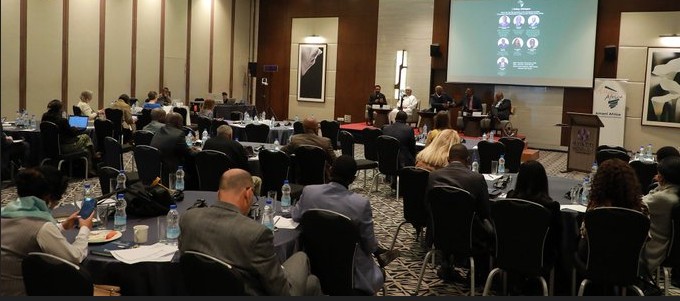
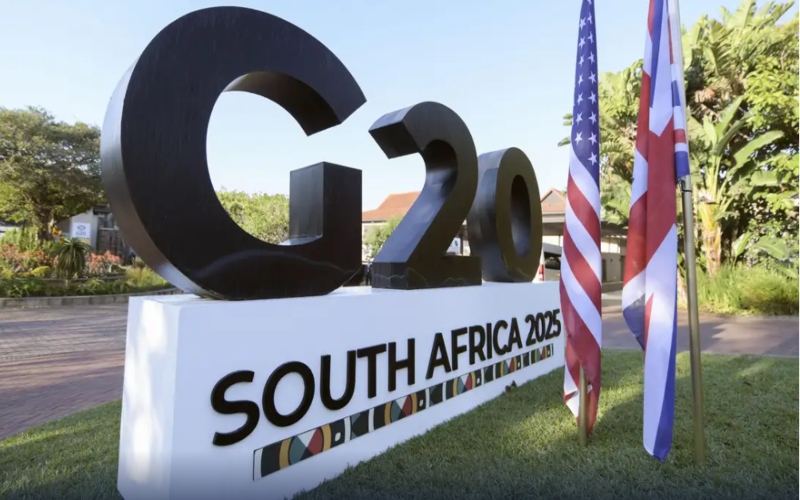
South Africa’s 2025 G20 presidency has warned that the bloc risks losing relevance unless it sharpens its focus and streamlines its agenda, according to the final G20@20 review, a comprehensive assessment of the forum’s first full cycle of Presidencies since 2008.
The review warns that while the G20 has delivered decisive outcomes during global crises, its effectiveness has declined in recent years due to geopolitical tensions, an overcrowded agenda, and weak continuity between Presidencies.
More To Read
- South Africa’s G20 presidency is over – What did it achieve for climate and clean energy in Africa?
- No single G20 member has unilateral right to exclude South Africa: Foreign Minister
- W20 pushes G20 to advance women’s economic empowerment, care work, health, climate justice
- Ramaphosa hits back after Trump says South Africa won’t be invited to 2026 G20 summit
- Africa’s first G20 Summit closes in South Africa amid US boycott
- G20 summit in South Africa adopts declaration despite US boycott
Commissioned at the 2024 Rio de Janeiro Summit, the review offers recommendations for the next cycle, beginning under the United States’ presidency in 2026.
Drawing on surveys of members, Sherpa-level discussions, written submissions, and insights from an advisory panel, with support from the OECD (Organisation for Economic Co-operation and Development), the South African Institute for International Affairs, and the University of Toronto’s G20 Research Group, the G20@20 review seeks to improve coordination across working groups, ensure stronger follow-up on commitments, and identify high-impact priorities for future presidencies.
The report underscores the importance of the Troika mechanism, the trio of consecutive presidencies (past, current, and incoming), which ensures continuity, smooth transitions, and alignment of agendas across Presidencies.
“The Troika Mechanism is an important feature for continuity, given that the G20 operates without a secretariat or permanent staff. To enhance its ability to carry priority areas over a longer period and further ease consensus on priorities and implementation, it was stressed that incumbent and incoming presidencies must work in close coordination," read the report.
The G20’s most significant achievements are highlighted during moments of global crisis.
These include coordinated fiscal stimulus during the 2008–09 financial meltdown, the creation of the Financial Stability Board, rapid policy coordination during the Covid-19 pandemic, the launch of the Pandemic Fund, and debt relief measures such as the Debt Service Suspension Initiative (DSSI) and the Common Framework for Debt Treatments for vulnerable economies.
“With the outbreak of the Covid-19 pandemic, the G20’s focus shifted toward crisis response. Under Saudi Arabia’s 2020 presidency, leaders convened an Extraordinary Virtual Summit in March, pledging to do “whatever it takes” to overcome the health, social, and economic impacts of the crisis, the report notes.
Beyond crisis management, the review emphasises the G20’s influence on long-term global policy.
Initiatives such as the OECD/G20 Base Erosion and Profit Shifting framework, the Agricultural Market Information System, and reforms in health, education, infrastructure, digitalisation, tourism, culture, and innovation demonstrate where political consensus has translated into lasting institutional change.
However, survey findings reveal that three-quarters of members believe the G20’s overall effectiveness has waned, citing an overcrowded agenda, overlapping mandates across more than 20 working groups and task forces, and limited follow-through on initiatives.
Key areas identified for renewed focus include digital transformation, sustainable development, inclusive growth, trade and investment, health, education, tourism, culture, infrastructure, and innovation.
“Since 2016, successive presidencies have kept digital economy priorities high on the agenda, with the presidencies of Japan (2019), Saudi Arabia (2020), Italy (2021), Indonesia (2022), India (2023), and South Africa (2025) including it among their overarching priorities,” the report states.
To maintain relevance, the review recommends streamlining workstreams, merging or pausing less central initiatives, prioritising high-impact deliverables, and enhancing engagement with regional organisations, multilateral development banks, and the United Nations.
At the same time, it stresses preserving the G20’s informal, leader-led character, consensus-based decision-making, and the space for candid dialogue at leaders’ summits, which foster agility, trust, and political breakthroughs.
The G20@20 review concludes that the bloc remains an essential pillar of global economic cooperation, but only a sharper, more coordinated, and agile G20 can maintain its relevance in an increasingly fragmented and volatile world.
“To remain effective as a premier forum for economic cooperation, the G20 priority areas should include: (1) issues pertinent to the global economy and development, (2) urgent matters requiring the attention of the Leaders, and (3) developments with clear global ramifications,” the report states.
Top Stories Today