Nairobi has received the biggest share of Sh22.1 billion under the newly enacted County Allocation of Revenue Act, 2026, making it the highest beneficiary among the country's 47 counties after President William Ruto signed the law that unlocks a record Sh428 billion for devolved units.
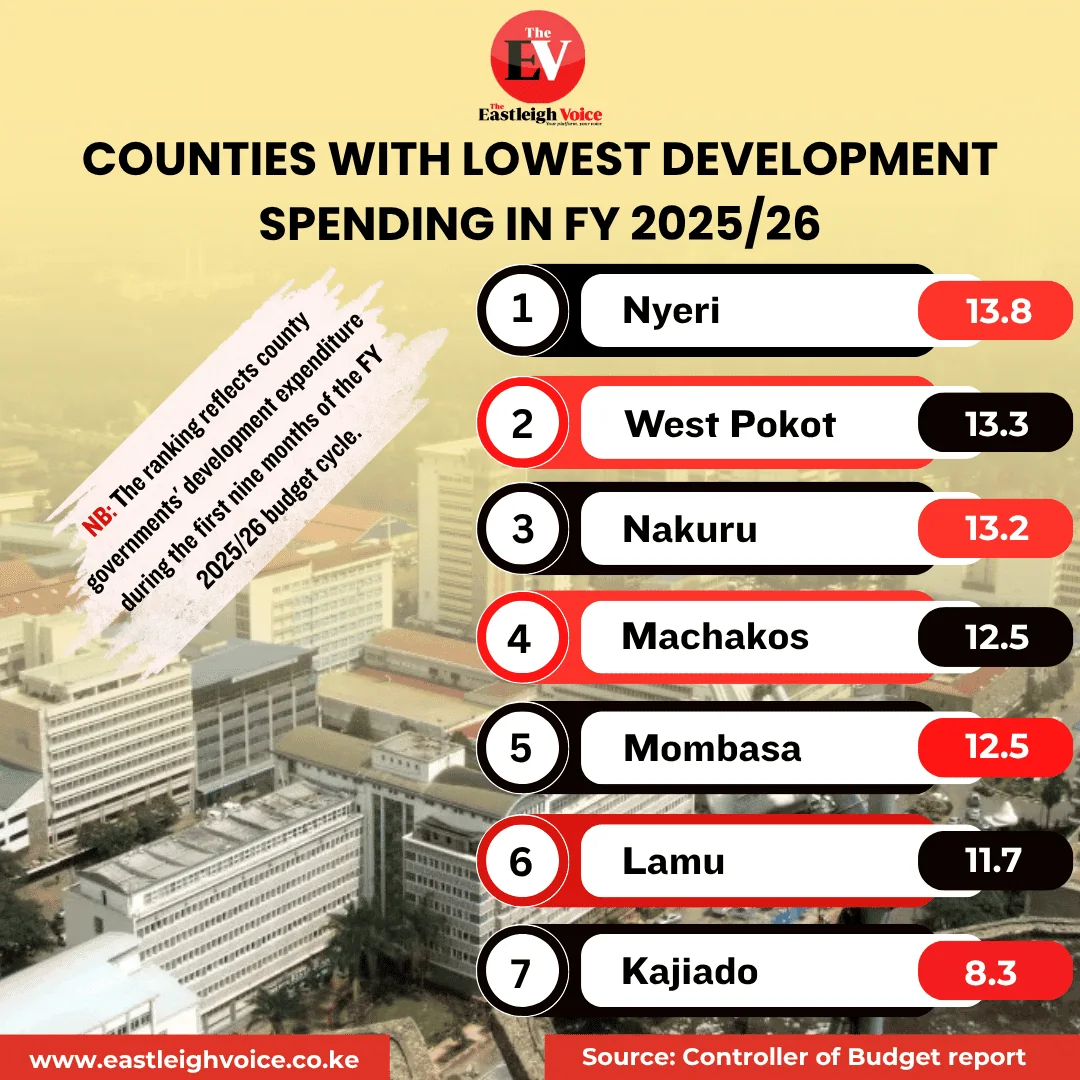
The allocation places Nakuru second with Sh14.9 billion, followed by Turkana at Sh14.3 billion, Kakamega at Sh14.1 billion and Kiambu at Sh13.5 billion.
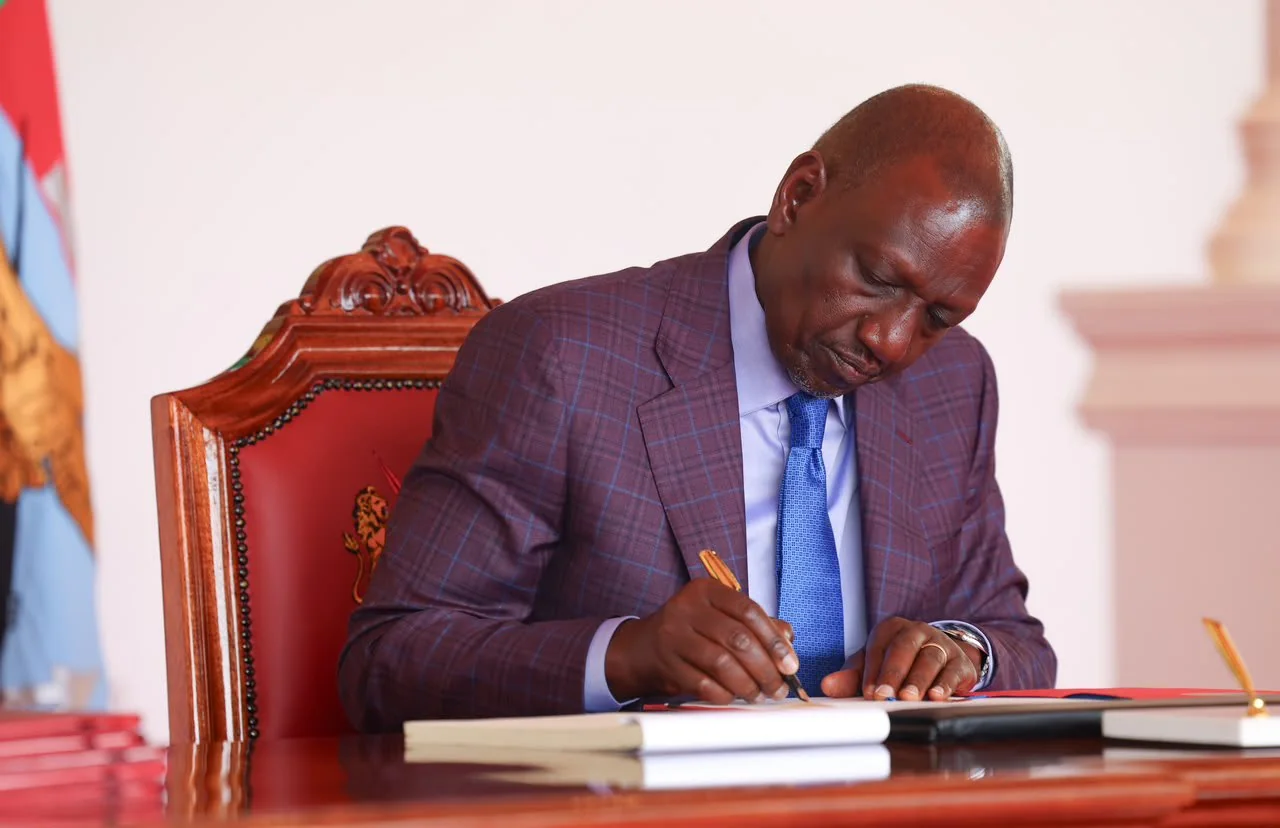
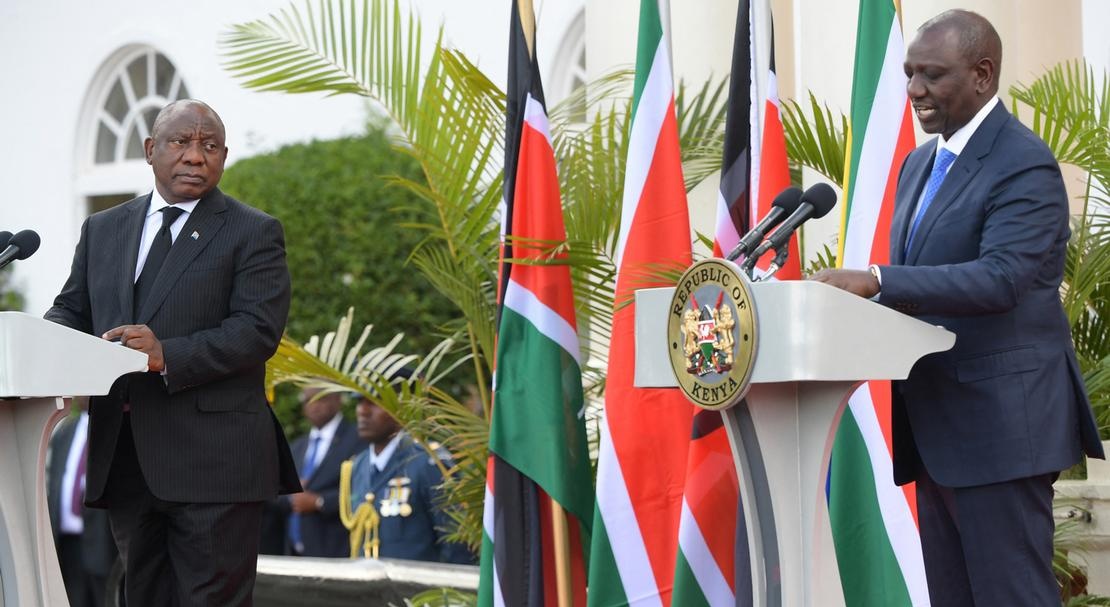
President Ruto assented to the County Allocation of Revenue Bill, 2026, at State House, Nairobi, on Monday, during the 11th Presidential Assent of 2026, giving legal effect to the distribution of county governments' share of nationally raised revenue under the Division of Revenue Act, 2026.
The Sh428 billion allocation is an increase of Sh13 billion from the Sh415 billion allocated to counties in the 2025/2026 financial year. It is equivalent to 20.9 per cent of the most recent audited national revenue for the 2022/23 financial year, exceeding the constitutional minimum allocation of 15 per cent.
President Ruto said the formula will strengthen devolution by providing counties with a stable baseline allocation while ensuring fair distribution based on equal share, population, poverty levels and geographical size.
"The formula provides a stable baseline allocation while ensuring a fair distribution based on equal share, population, poverty level and geographical size. The enhanced allocation will strengthen devolution by equipping county governments with the resources they need to fulfil their constitutional mandate and deliver quality services in line with their budgets and development priorities," he said.
The law also outlines the responsibilities of both the national and county governments in the management of the allocated funds.
It was sponsored by the Senate Standing Committee on Finance and Budget Chairperson Ali Roba. The Bill was passed by the Senate with amendments on June 17 before being approved by the National Assembly without further changes on June 25. It was then forwarded to the President in line with Article 110(5) of the Constitution.
The legislation implements Parliament's fourth revenue-sharing formula approved in June 2025 under Article 217(7) of the Constitution.
Under the formula, Sh387.43 billion will be distributed through a Baseline Allocation linked to what counties received in the 2024/25 financial year to protect them from sudden funding reductions.
A further Sh4.46 billion has been set aside as an Affirmative Action Allocation for 12 historically marginalised counties to help bridge development gaps.
The remaining Sh36.1 billion will be shared using a weighted formula that considers population, poverty levels, income distance and geographical size, directing additional resources to counties with greater development needs.
Of the amount distributed through the formula, 35 per cent will be shared equally among all counties, 45 per cent based on population, 12 per cent according to poverty levels and eight per cent based on geographical size, with the land area component capped at 10 per cent.
The government said the approach is intended to protect counties from major budget disruptions while ensuring more resources reach areas facing higher population pressure and widespread poverty.
The law also introduces measures aimed at improving financial management and accountability at the county level.
It sets budget ceilings on recurrent expenditure for county executives and county assemblies to help contain rising wage bills and leave more funds for development projects.
The legislation also sets out new rules governing functions transferred between county and national governments under Article 187 of the Constitution.
County executives, working jointly with the national government, will be required to determine the cost of all transferred functions. County assemblies must continue appropriating funds for transferred functions at not less than the amount allocated in the previous financial year to avoid disruption of services.
National government entities carrying out transferred county functions will also be required to submit quarterly reports to the Senate and the respective county assemblies on the implementation of the funds and service delivery.
Treasury Cabinet Secretary John Mbadi will be required to publish a schedule showing transfers made to counties from the Consolidated Fund, alongside monthly reports on the actual disbursements.
County treasuries will also be required to record all transfers received and include them in quarterly and annual financial reports in line with the Public Finance Management Act, 2012.
The government said the new allocation framework will provide counties with more predictable financing while supporting development programmes aimed at improving livelihoods, creating economic opportunities and expanding access to public services. It is also expected to strengthen transparency, improve oversight of county funds and promote prudent spending across devolved units.
The county allocation follows the earlier enactment of the Division of Revenue Act, 2026, which shared a national revenue base of Sh2.46 trillion between the national and county governments, alongside allocations for the Equalisation Fund.


































Comments
Sign in with Google to comment, reply, and like comments.
Continue with Google