African leaders hail historic peace agreement between Rwanda and DRC
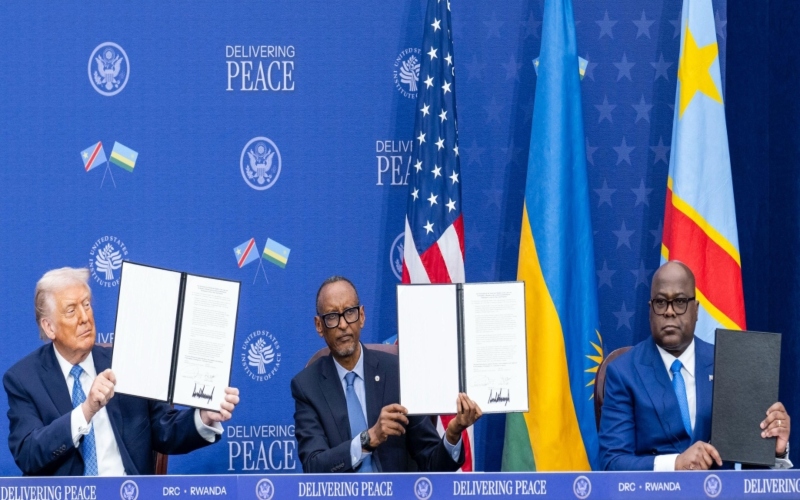
Rwanda and the DR Congo have signed the Washington Accords for Peace, backed by African leaders and the US, pledging a permanent ceasefire, disarmament of militias and a new regional economic framework.
African leaders have endorsed the new peace agreement between Rwanda and the Democratic Republic of Congo, describing it as a long-awaited breakthrough for stability in the Great Lakes region.
Their collective support follows the signing of the Washington Accords for Peace, described as one of the strongest steps yet toward ending the long period of violence in eastern Congo.
More To Read
- DR Congo, Rwanda vow to uphold Trump-backed peace deal
- Full implementation of NADCO report puts UDA–ODM pre-election alliance under pressure
- OPINION: Before pointing at Rwanda, Belgium must finally confront its own African history
- How AI and robotics are improving underground mine safety in Rwanda
- Historic Algeria declaration frames colonialism as multidimensional crime
- Nigeria provides safe haven for Guinea-Bissau opposition leader as coup crisis deepens
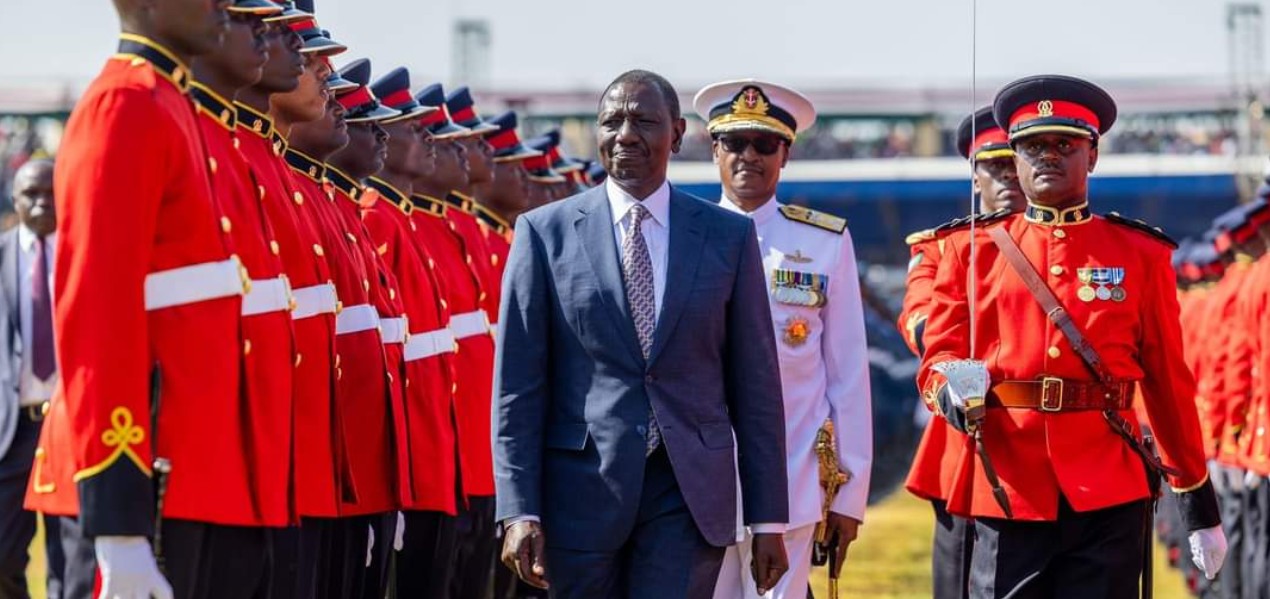
President William Ruto was among the first to welcome the breakthrough, saying the agreement was the result of years of coordinated diplomacy.
Ruto noted that the talks held under the Nairobi, Luanda, and Washington tracks created the structure that made the deal possible.
“Today’s (Thursday) achievement culminates a relentless regional effort. The coordinated Nairobi, Luanda, and Washington processes created the essential pathway that brings us to this pivotal moment,” he said.
He added that a peaceful eastern Congo could unlock major economic possibilities for the region.
The president said the return of stability would help private investors gain confidence, explaining that governments must focus on creating a safe environment for business to thrive.
Ruto pointed to Kenya’s own experience with public-private partnerships that have expanded major roads and strengthened clean energy production, now producing more than 92 per cent of the country’s electricity from renewable sources.
He also urged African countries to stop exporting raw materials and instead build value chains in mining, agriculture, and manufacturing.
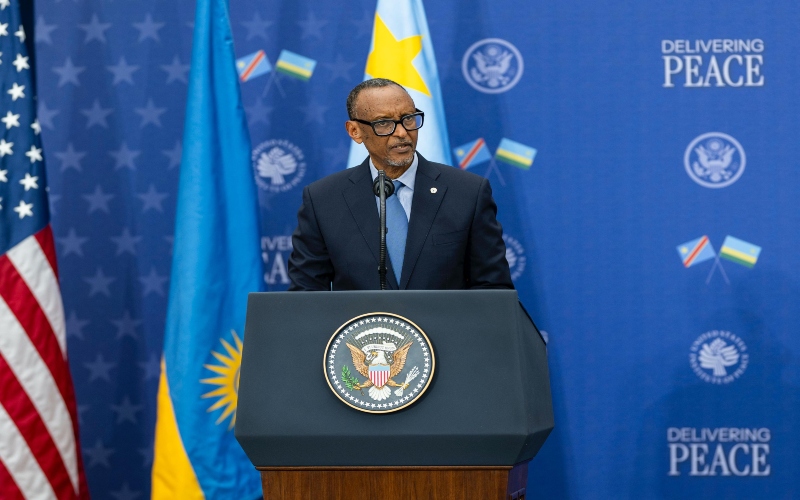
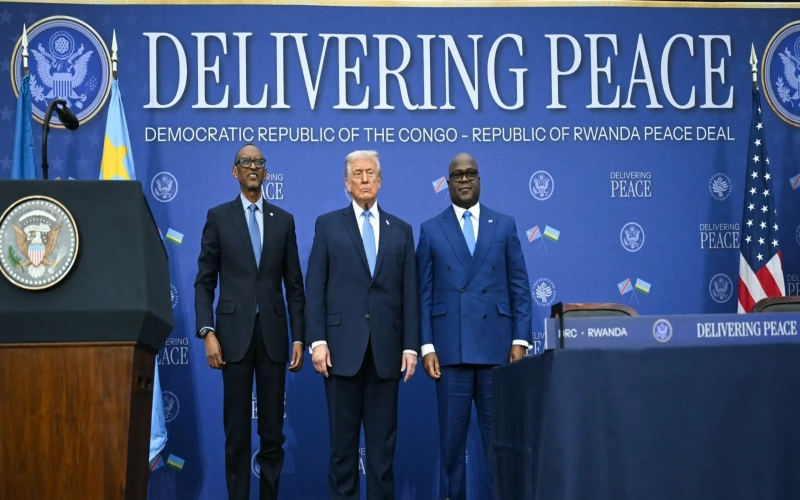
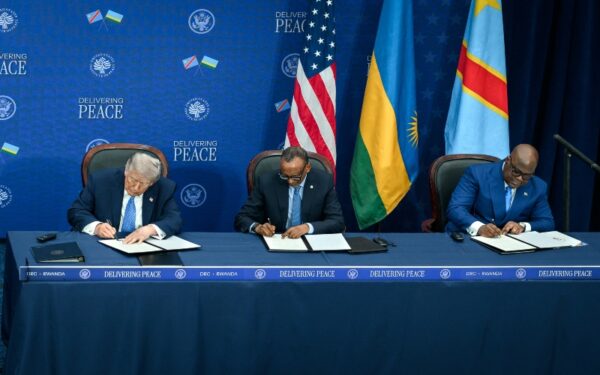 US President Donald Trump, Paul Kagame of Rwanda and Felix Tshisekedi of the DRC sign the Washington Accords at the Donald J. Trump Institute for Peace in Washington, D.C. (Photo: White House)
Ruto, however, warned that Africa must remain alert to other emergencies and appealed to President Donald Trump to support efforts to address the worsening crisis in Sudan.
Former President Uhuru Kenyatta, who has played a key role as a regional peace facilitator, was present at the United States Institute of Peace in Washington, where the agreement was signed.
“The Washington Accords signed by Rwanda’s President Paul Kagame and President FelixTshisekedi ends decades of conflict in the region by establishing a permanent ceasefire, the disarmament of rebel groups, provisions for refugees to return home, and a new framework for economic prosperity, addressing one of the world’s deadliest conflicts, which has claimed more than 10 million lives,” Uhuru said.
His involvement underlined Kenya’s commitment to supporting peace efforts in the Great Lakes region.
African Union Commission Chairperson Mahmoud Ali Youssouf praised the agreement, saying it showed the commitment of both countries to settle disputes peacefully.
“This agreement reflects the determination of both nations to resolve disputes peacefully and to build a foundation for stability,” he said.
He also acknowledged Trump’s involvement and Qatar’s support.
Youssouf recognised President Faure Gnassingbé for helping sustain talks, alongside early mediation efforts by Angola and contributions from East African and Southern African leaders.
He urged all sides to implement the agreement fully, saying it should anchor long-term cooperation and healing.
He assured both countries that the African Union (AU) would continue backing regional mechanisms working to restore peace in Rwanda, Congo, and neighbouring states.
Trump, who hosted the ceremony, said the United States was fully committed to helping both countries move past years of fighting.
“We have come to the US Institute of Peace to sign a historic agreement that will end one of the longest-running conflicts anywhere in the world,” he said. He added that the accord was aimed at stopping bloodshed and opening a new chapter of cooperation.
Tshisekedi thanked the mediators who started the peace talks that built the foundation for the agreement.
He highlighted the contribution of Uhuru and Angola’s leader, noting, “These two great Africans were there at the beginning; they started the Nairobi and Luanda peace processes”.
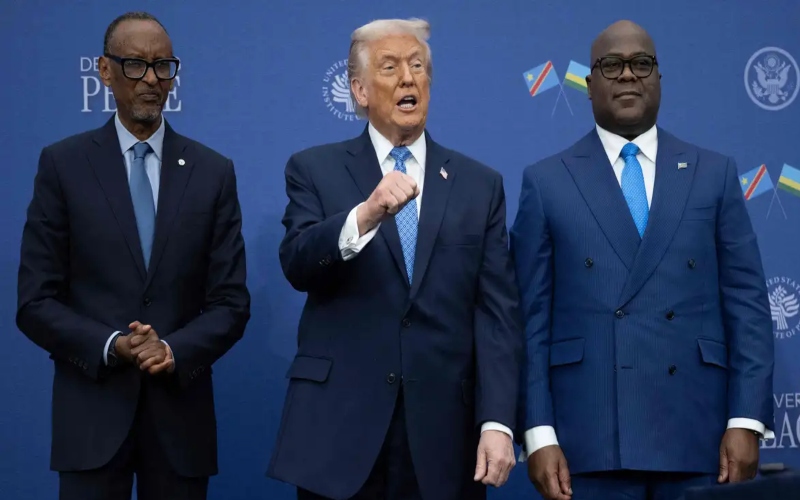
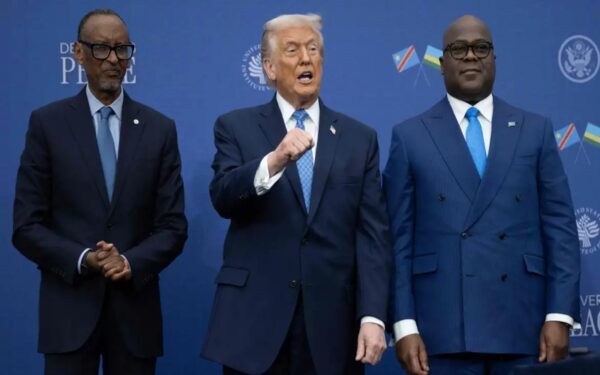 Rwandan President Paul Kagame, US President Donald Trump, and Congo's President Felix Tshisekedi at the Donald J. Trump Institute of Peace, Washington, DC. (Photo: Andrew Caballero-Reynolds/AFP via DW)
He also expressed gratitude to Trump and the American people for supporting the reconciliation effort. Tshisekedi said the agreement combines principles, a peace plan, and an economic structure meant to help both countries move away from mistrust and conflict.
Kagame affirmed Rwanda’s commitment to working with partners to secure long-term peace. “It is now up to us in Africa, working with our partners to consolidate and expand this peace, Rwanda will not be found wanting,” he said.
He added that Rwanda’s goal has always been to keep its people safe after many years of suffering.
The agreement, formally signed on December 4 under the name Washington Accords for Peace and Prosperity, includes strong security commitments.
Both sides pledged a permanent halt to fighting, respect for national borders, and an “irreversible and verifiable” end to state support for non-state armed groups.
Rwanda will withdraw its troops from eastern Congo and stop backing the M23 rebels, while Congo will dismantle the FDLR militia.
A Joint Security Coordination Mechanism will supervise withdrawals, disarmament, verification, and the safe return of displaced families, while also ensuring full humanitarian access.
The accord also outlines a regional economic partnership to make use of the area’s mineral resources through joint projects, organised supply chains with US backing, and shared infrastructure, including hydropower.
The US, the AU, and Qatar will serve as guarantors and oversee implementation.
Top Stories Today