UN report warns of escalating violence as M23 captures key towns in eastern DRC
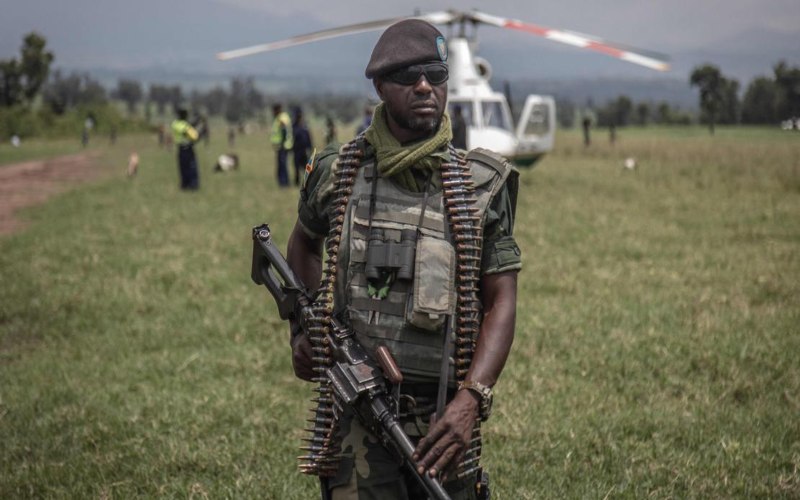
A new UN report to the Security Council details worsening violence in eastern DRC, with hundreds of civilians killed, mass displacement and expanding control by M23 and other armed groups.
A report by UN Secretary General Antonio Guterres to the Security Council has exposed widespread violence in eastern Democratic Republic of the Congo (DRC).
The report, which will be discussed at a UN Security Council meeting today, shows how the security situation in eastern DRC has dramatically deteriorated since the signing of the Washington Accords following an escalation of fighting in North and South Kivu provinces.
In recent days, the Mouvement du 23 Mars (M23) rebel group has captured several areas, expanding its control of territory in these two provinces.
On Wednesday, the group announced that it had captured Uvira, a strategic town on the shores of Lake Tanganyika near the Burundian capital, Bujumbura, raising fears of heightened regional tensions.
The report covering the period starting September 18 says the region was marked by persistent insecurity, driven by the expansion of AFC/M23 in North Kivu, as well as sustained violence by the Allied Democratic Forces (ADF), Coopérative pour le développement du Congo (CODECO), and Convention pour la révolution populaire (CRP) in Ituri.
In AFC/M23-controlled areas, access restrictions continued to limit the UN Stabilisation Mission in the Democratic Republic of the Congo's protection of civilians. Consequently, the count of victims killed is likely underreported due to restrictions on access in North Kivu.
"M23, supported by the Rwanda Defence Force, continued to conduct operations against FDLR and Nyatura groups in Rutshuru and Masisi territories, resulting in the deaths of 199 civilians, including 19 women and 56 children, and the displacement of at least 2,500 households. Meanwhile, the number of civilian killings attributed to FDLR increased to 25, compared with eight in the previous reporting period," the report says.
It also notes that the M23 continued its territorial expansion in Masisi and Walikale territories, as well as its large-scale recruitment drive. The group also trained 242 recruits, including 82 women, to reinforce the "local defence forces" that it established recently in North Kivu and to support combat operations in Lubero.
M23 also continued to expand and consolidate its parallel administration in areas under its control. On October 3, the group established an economic regulatory body to control financial institutions, announced the establishment of an "inspectorate-general of governance", and appointed customary chieftains in Masisi.
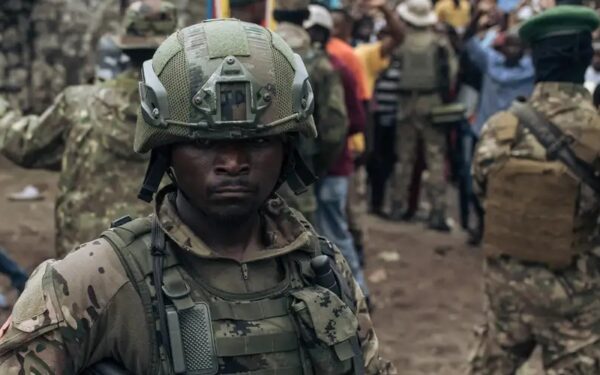 Fighting between the rebel coalition led by the M23 and the Congolese army continues unabated. (Photo: Alexis Huguet/AFP via DW)
During the period under review, MONUSCO documented 255 protection incidents across those two provinces, which resulted in 274 civilian deaths, including 47 women and 72 children, as well as widespread displacement.
"Within that period and for the first time since the joint declaration of principles of 23 April, on September 19, the Armed Forces of the Democratic Republic of the Congo resumed air strikes against M23 and Rwanda Defence Force positions in Masisi territory, and it has significantly increased the use of surveillance and combat drones against M23 positions," the report shows.
Elsewhere in Beni and Lubero territories, the report says, ADF remained the main threat to civilians, conducting attacks on villages and mining sites.
ADF was also responsible for 153 civilians killed in Ituri North Kivu, 27 abductions, widespread displacement and further disruption of livelihoods and access to essential services.
In a series of attacks perpetrated in Lubero territory between November 14 and November 19, ADF killed at least 89 civilians, including at least 20 women. At least 17 of those victims were killed during an attack against a health centre operated by the Catholic Church.
Other Topics To Read
"In Ituri Province, violence by ADF, CODECO, Zaïre and CRP posed the greatest threat to civilians. In Irumu and Mambasa territories, intensified joint operations by the Armed Forces of the Democratic Republic of the Congo and the Uganda Peoples' Defence Forces under Operation Shujaa triggered retaliation by ADF in the form of attacks on civilians and ambushes against State security forces along the EringetiKomanda-Mombasa axis. As a result of ADF attacks against civilians and security forces, at least 21 civilians were killed, including 2 women and 19 men," the document adds.
Since the previous reporting period, MONUSCO has also verified 133 grave violations affecting 125 children, including five girls and 120 boys, with 119 cases in North Kivu and 14 in the same province.
The report adds that the human rights situation remained concerning in areas of North and South Kivu under the effective control of AFC/M23 and Wazalendo elements and in Ituri Province amid continued violence by CODECO and ADF elements.
The United Nations Joint Human Rights Office in the DRC documented 1,292 human rights violations and abuses across the country, with 716 in North Kivu, 250 in South Kivu and 152 in Ituri.
"M23 continued to be the main perpetrator, with 390 abuses against 810 men, 167 women, 62 children and 8 individuals of unknown gender and age, followed by Wazalendo, with 204 abuses against 257 men, 113 women, 27 children and 1 individual of unknown gender and age, while ADF elements committed 109 abuses. Restrictions on freedom of movement imposed by AFC/M23 and the security situation continued to limit on-site monitoring and verification of violations and abuses," the report notes.
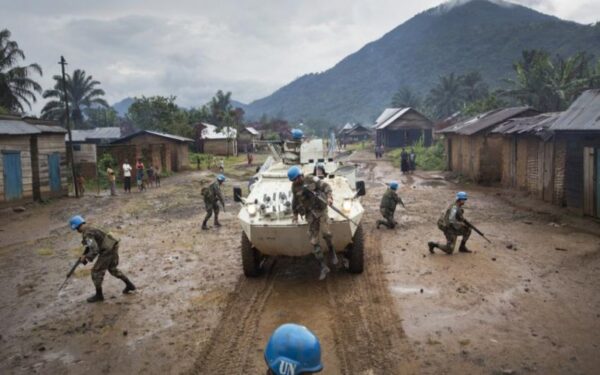 MONUSCO soldiers during a past peacekeeping operation in DRC. (Photo: UN)
In Ituri Province, CODECO elements were responsible for 52 documented abuses against 88 men, 55 women, 9 children and 3 individuals of unknown gender and age. The abuses included 35 summary executions, 38 abductions, 33 incidents of ill-treatment and 35 violations against the right to property.
Meanwhile, ADF committed 39 documented human rights abuses against 64 victims in the province, including 29 summary executions and abductions affecting 12 individuals.
Additionally, State actors committed 348 documented violations, with 147 violations attributed to the Armed Forces of the Democratic Republic of the Congo and 129 to the Congolese National Police, including arbitrary detention, summary executions and conflict-related sexual violence.
Foreign armed forces committed 12 violations across Ituri, North Kivu and South Kivu, including the rape of women attributed to the Uganda Peoples' Defence Forces (UPDF), and two cases of sexual violence attributed to the Burundi National Defence Force in South Kivu.
During the reporting period, the United Nations Joint Human Rights Office also documented 146 cases of conflict-related sexual violence affecting 310 victims in Ituri, North Kivu, South Kivu, Maniema and Tanganyika Provinces.
Armed groups were responsible for abuses against 258 victims, including 97 attributed to M23, 57 to Wazalendo factions, 50 to Résistance pour un État de droit au Burundi, 13 to Twirwaneho, 12 to CODECO, 11 to Mai-Mai factions, 6 to ADF, and six to FDLR and Nyatura.
"Foreign armed forces committed violations against five victims, with the Uganda Peoples' Defence Forces responsible for three victims in the North Kivu and Ituri Provinces and the Burundi National Defence Force responsible for two victims in South Kivu," the report explains.
The President of the Human Rights Council, Jürg Lauber, in October announced the appointment of three experts to conduct an independent inquiry to establish the facts, circumstances and root causes of all the alleged violations and abuses of human rights and violations of international humanitarian law.
Meanwhile, MONUSCO continued to face operational challenges in AFC/M23-controlled areas in North Kivu, primarily due to access and movement restrictions that have delayed delivery of essential goods, including fuel.
Since September 1, four fuel trucks have been blocked from entering Goma and water and electricity to MONUSCO facilities in Goma have been disconnected since July 5 and August 29, respectively.
Banking and airport operations in Goma also remained suspended, severely affecting MONUSCO personnel and local communities.
Despite these restrictions, Guteres notes that MONUSCO made efforts to focus on strengthening threat monitoring mechanisms, including community alert networks and local protection committees.
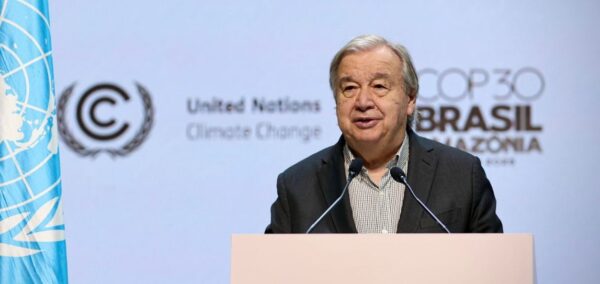 UN Chief António Guterres. (Photo: X/António Guterres)
For example, it continued to shelter 38 individuals under imminent threat at its bases in Goma and coordinated with the Government and AFC/M23 to facilitate their safe relocation to an alternative site.
During the reporting period, in line with system-wide decisions affecting all peacekeeping operations, MONUSCO initiated the implementation of a contingency plan for a reduction in expenditures equivalent to 15 per cent of the approved annual budget.
The report says the contingency plan was developed with a view to ensuring, as much as possible, that the Mission can continue to deliver its priority mandated tasks and that it could be reconfigured to support the implementation of ongoing peace efforts, if and as required.
"MONUSCO deployed 9,281 troops, including 722 women, and 432 United Nations military experts on mission, including 107 women, against an authorised strength of 11,500 troops and 600 military experts and a budgeted strength of 10,494 troops and 434 military experts. The initial reductions in the 2025/26 budget resulted in the repatriation of 755 troops and 26 military experts, and the Mission will repatriate an additional 1,550 troops and 125 military experts under the contingency plan," it adds.
The Mission further continued to ensure security at displacement camps in Beni, Oicha and Bunia, providing physical protection to 230,025 civilians, including 132,779 women. Progress continued towards the establishment of the Joint Operations Coordination Centre in Mavivi, near Beni-Mavivi airport, with constructive engagement with provincial and military authorities.
In North Kivu, MONUSCO disposed of 1,866 explosive remnants of war and 247 rounds of small arms ammunition and cleared 12,612 m2 of land in Beni.
In Ituri, it safely removed and destroyed 14 explosive remnants of war. As a result of those activities, 2,251 individuals (607 women, 574 men, 518 girls, 552 boys) benefited from improved safety and access to previously contaminated land, and 49 community members participated in sessions on explosive ordnance risk education.
The mission is still calling on the AFC/M23 to lift all movement restrictions to enable it to restore its full operational capacity.
Top Stories Today