From protesting tyranny to saving lives: How Sudan’s networks are responding to war
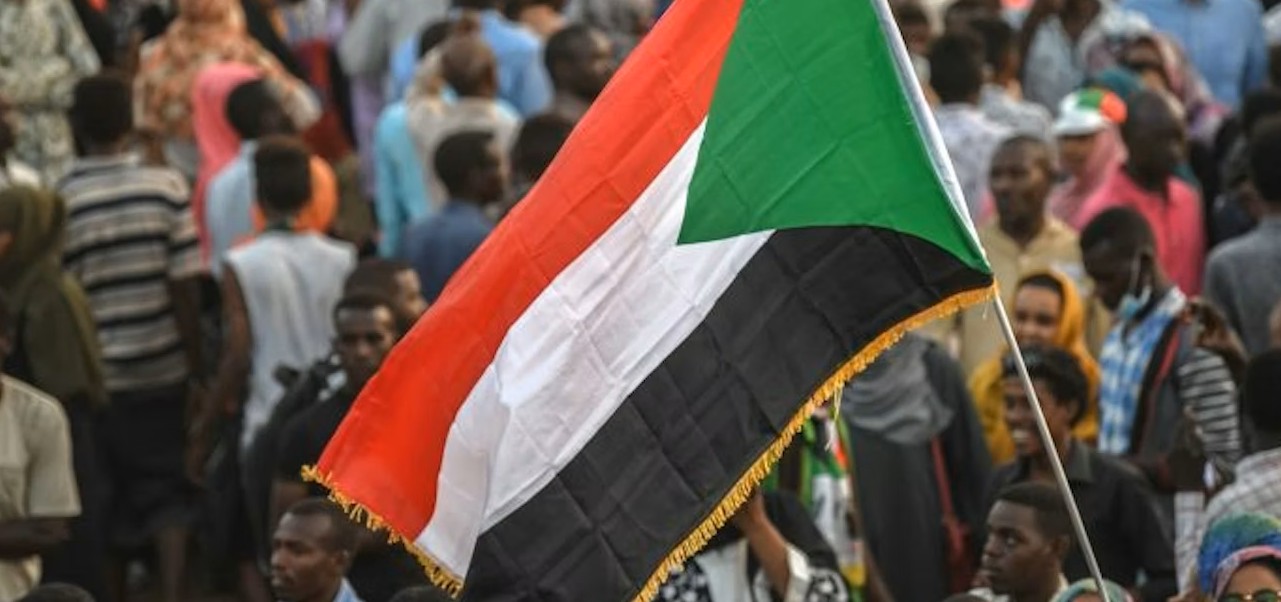
These groups, which helped organise mass protests in 2018, have since become a lifeline for communities affected by the civil war that began in 2023.
Lovise Aalen, Chr. Michelsen Institute and Mai Azzam, Bayreuth University
More To Read
- Rights group calls for nationwide Sudan arms ban amid deadly attacks
- ‘I have to talk about it' - rape and terror sparks mass migration in Sudan
- Sudan army makes major gains in South Kordofan, retakes key villages from SPLM-N
- Sexual violence driving mass flight from Sudan to South Sudan: What you need to know
- Sudan signals willingness to coordinate with UN despite ongoing RSF clashes
- Mass displacement, trafficking fears deepen crisis in Sudan’s El Fasher
Sudan has a long history of civilian-led resistance, with young people playing a key role. For example, informal neighbourhood networks established in 2013 to survive repression under three decades of authoritarian rule have since transformed into vibrant support systems.
These groups helped mobilise mass protests in 2018. They have provided a lifeline for communities in the ongoing civil war, which started in 2023.
During the mass protests, youth-led networks organised political sit-ins and demonstrations against the Islamist regime of Omar al-Bashir. They were ultimately successful in overthrowing a 30-year dictatorship.
We are researchers in the fields of anthropology and political science, studying youth mobilisation in authoritarian states. In a recent paper, we studied the emergence and role of Sudan’s neighbourhood committees and informal networks. These became the backbone of protests.
We found that young people built grassroots networks through engagement in different forms of voluntarism and charity. They built resistance structures under the repressive environment of the Islamist regime. Later (around 2013 or so), these developed into neighbourhood committees organising resistance underground.
And since the outbreak of war in April 2023, Emergency Response Rooms, which are community-led networks, have been providing crucial humanitarian relief.
African youth mobilisation is often seen as an outcome of tension between an urban underclass and a repressive state. We argue that in Sudan, a collaboration between different classes, including the middle class, has been key in the fight against autocratic governance.
We found that the committees enabled protests. They played a vital role in organising emergency responses during times of crisis.
Building the resistance
Under the repressive policies of the al-Bashir regime, political activities were not allowed in public spaces. Opposition was heavily suppressed.
Despite this, young people found innovative ways to create political spaces. Neighbourhood committees became sites of resistance, emerging as a critical infrastructure for grassroots mobilisation.
The committees represent a unique blend of political and practical action. They serve a dual functionality – mobilising for change while addressing immediate community needs. This underscores the potential of informal, decentralised networks to drive both political and social transformation.
They were initially formed during the 2013 anti-austerity protests as neighbourhoods’ underground cells. These committees were informal, hyper-local networks of politically engaged youth.
Over time, they evolved into organised structures. They facilitated protests, provided essential services and emergency responses during crises. In the 2018 uprising, they coordinated logistics. They also provided real-time updates through social media.
The committees also supported a sit-in at the military headquarters in April 2019. This became a focal point of the uprising. This sit-in presented a vibrant community space where youth experienced a sense of political togetherness. It featured art exhibitions, public debates and cultural performances, creating a shared vision of a better Sudan.
The civil war
The war between the army and a paramilitary group, the Rapid Support Forces, has put more than 30 million people – about two-thirds of the population – in need of humanitarian aid. This has created one of the world’s worst humanitarian crises. Conflict and blockades have meant international efforts to send aid haven’t always been possible.
During the transitional period after al-Bashir’s exit and the 2023 war, the committees transformed into emergency response rooms. These provided critical services, such as healthcare, food and water. These rooms were run by the same youth networks that had led the protests. They drew on their pre-war experiences of grassroots mobilisation and humanitarian aid.
Amid a devastating civil war, they carry on the idea of political togetherness. Bonds of trust, necessity and solidarity established years ago have transcended ethnic or class divisions. They have created civilian resilience against state repression.
Lessons in resilience
The committees’ ability to adapt to new challenges underscores the importance of grassroots networks in both political and humanitarian contexts.
The concept of political togetherness, as seen in Sudan, reveals how temporary alliances across class, gender and ethnic divides can create a cohesive force for change.
This has implications for understanding youth movements globally, particularly where formal political spaces are inaccessible or untrustworthy.
The adaptability of Sudan’s neighbourhood committees illustrates the resilience of grassroots networks. By stepping into the void left by state failure, these committees provide essential services and also reinforce their legitimacy within their communities.
This suggests that such networks can serve as a foundation for future governance models, especially in post-conflict reconstruction efforts.
However, our study also reveals risks associated with informal and flexible structures.
The lack of formal governance mechanisms within these committees leaves them vulnerable to co-optation, fragmentation and the erosion of trust over time.
Without proper institutional support, the cohesion and effectiveness of these networks may wane. This is especially true when the crises or transitions are prolonged.
What next?
In a post-war Sudan, both the Sudanese government and the international community should aim to preserve the emergency response rooms’ autonomy and grassroots nature. This should happen while providing resources and institutional support to enhance their capacity for community service and crisis response.
Activists within Sudan and similar contexts should continue to build on the model of political togetherness. This means fostering inclusive alliances that transcend traditional divides.
By prioritising both political mobilisation and community service, these grassroots networks can maintain the momentum for change while addressing immediate needs.

The Conversation
***
Lovise Aalen, Research Professor, Political Science, Chr. Michelsen Institute and Mai Azzam, PhD candidate, Bayreuth University
This article is republished from The Conversation under a Creative Commons license. Read the original article.
Top Stories Today