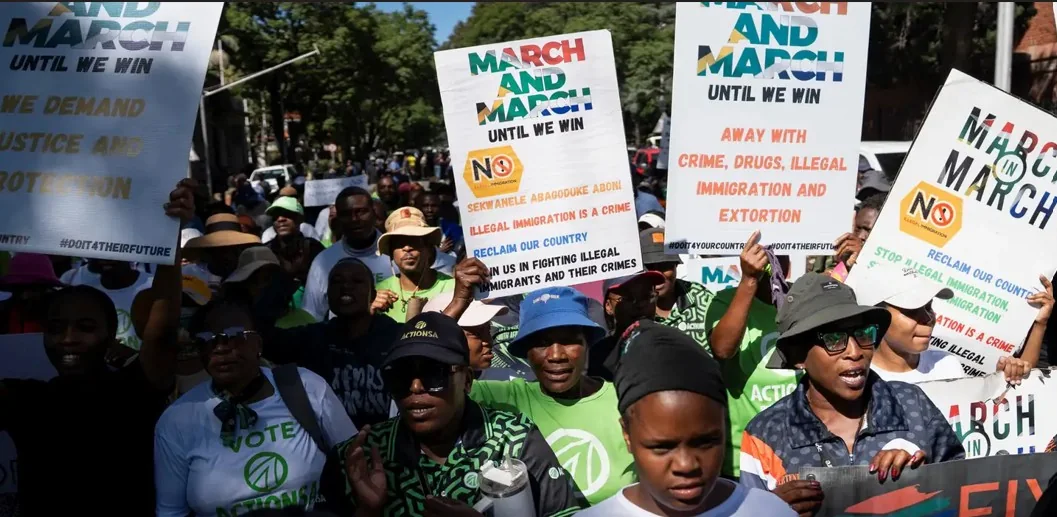
South Africa is in the midst of its most significant anti-immigrant mobilisation in years.
The emergence of the
March and March movement, calls for the mass deportation of undocumented migrants by
30 June 2026, growing
anti-immigrant violence, and the
repatriation of foreign nationals by several African governments have pushed immigration to the centre of national debate.
The anti-immigrant protest movement argues that it is responding to rising
unemployment, deteriorating
public services and growing
insecurity.
The question is not whether these grievances have merit. They do. It’s whether immigrants are, in fact, responsible for them.
This article draws from research by the
Southern Centre for Inequality Studies at the University of the Witwatersrand. It examines the drivers and consequences of
inequality. It focuses on the world of
work, public
spending,
production and ownership, technological change and
innovation, and the effects of
climate change.
Our research provides important context for understanding the economic and social conditions in which anti-migrant sentiment has exploded – and its underlying causes. Immigration is not irrelevant to the multiple and overlapping crises facing South Africans. But it’s not their primary cause.
Joblessness and informality
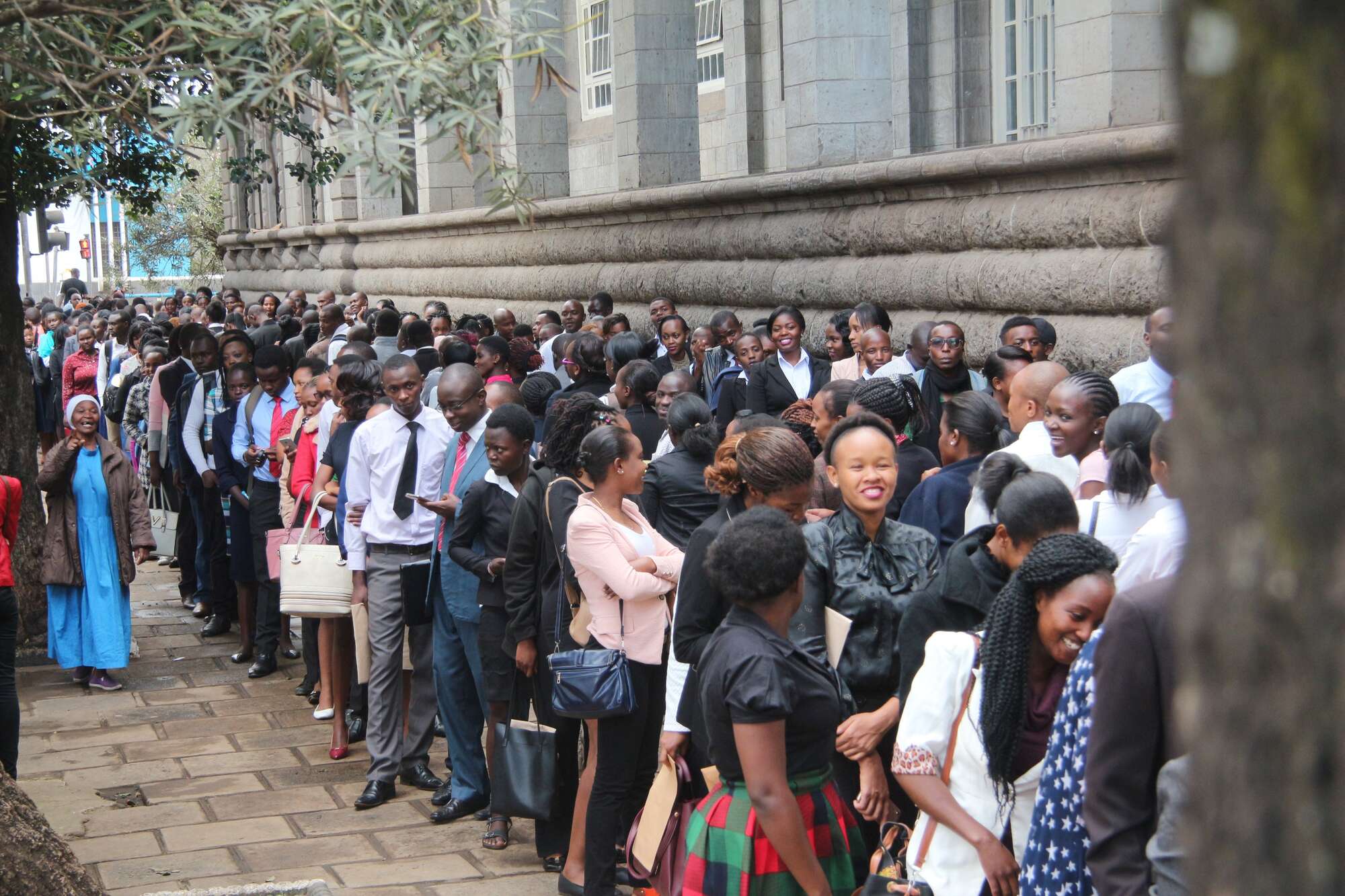
Few issues illustrate this more clearly than employment.
South Africa has one of the highest
unemployment rates in the world. More than four in every ten working-age adults who want work are unable to find it (this includes discouraged work seekers). The scale of this crisis understandably creates pressure to
identify a cause and demand action.
Many South Africans have concluded that immigrants are taking jobs away from local workers. Our
analysis of public opinion data shows that as many as 70 per cent of South Africans believe that immigrants take jobs from people born in the country.
These views help explain the growing support for anti-immigrant mobilisation. But public perceptions do not always align with reality.
Administrative tax data suggest that foreign nationals occupy a very small share of formal employment in South Africa. Our researchers have found that less than 4 per cent of formal jobs are held by foreigners. This share has remained largely unchanged for more than a decade.
The picture is somewhat different in the
informal economy, where foreign-born workers represent a limited but larger 20 per cent share of participants.
Related research by Southern Centre for Inequality Studies scholars, together with the international informal workers’ organisation
StreetNet and Women in Informal Employment: Globalising and Organising (
WIEGO) in South Africa, found that as the informal sector expands amid rising unemployment, competition has increased. This has made livelihoods more precarious and earnings more difficult to sustain.
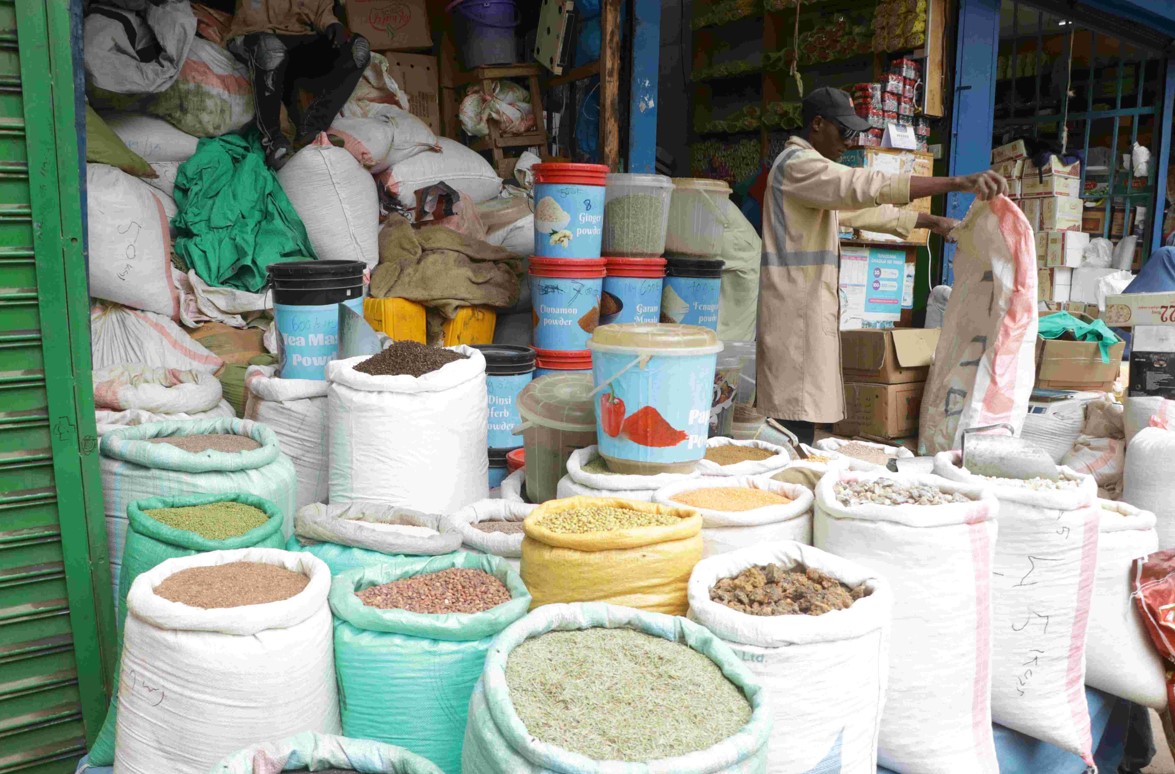
Competition is particularly rife among spaza shop owners (informal neighbourhood grocery stores) and street traders, who purchase goods in the formal sector and resell them at a small profit margin.
Foreign-owned spaza stores tend to run larger and more collective operations – a similar role to that of wholesalers. This enables them to offer a wider range of products at lower prices.
Creating a supportive environment for informal operators would require policy shifts. They could include: access to start-up capital, wholesale sourcing of goods, secure access to public space, investment in affordable public infrastructure and services, and reduced harassment by municipal authorities.
Despite recent
government plans to revitalise the township (historically segregated poor neighbourhoods) and rural economies, South Africa’s economic policy remains focused on the formal sector.
The frustrations experienced by South Africans are therefore understandable. But South Africa’s unemployment crisis is simply too large to be explained by immigration alone.
For example, our
research suggests that the unemployment rate would fall by only six percentage points – from 43.6 per cent to 37.6 per cent – if all foreigners’ jobs were somehow handed to unemployed South Africans.
This is a relatively modest reduction given the scale of South Africa’s unemployment crisis. It highlights that foreigners do not dominate the labour market overall, even if some sectors and locations have higher concentrations of immigrant workers.
Yet, not only is it unrealistic to expect that jobs could be swapped one-to-one between immigrants and South Africans. It could even result in net overall job losses for South Africans because of the reduction in entrepreneurship, investment and skills which foreigners bring.
This was the conclusion of a
World Bank report, which found that one immigrant worker actually generates approximately two jobs for locals.
The economic contribution of migrants may also help explain why attitudes towards immigration vary across South Africa. A Southern Centre for Inequality Studies scholar
found that residents of more deprived municipalities were sometimes more supportive of cross-border movement than those living in better-resourced areas. One possible explanation is that direct contact with migrants helped challenge stereotypes and helped make their economic contributions more visible.
If immigration is not the primary cause of joblessness, why does the perception resonate so strongly?
Part of the answer lies in the economic pressures experienced by ordinary households.
Economic pressures facing households
Households face
rising costs associated with food, transport, electricity and other essentials. These pressures come on top of the deterioration of
public services.
Power outages, unreliable public transport, overcrowded schools, and long waits at public clinics have become part of everyday life for many South Africans. This has reinforced a sense that living standards are steadily declining.
Our
research confirms that the reduction in government borrowing, mainly through reduced budgets and the collection of more revenue, has been squeezing out public services for a decade.
This has contributed to worsening teacher-learner ratios, longer waiting periods at public health facilities, and increasing backlogs at courts.
These pressures are likely to intensify in the years ahead for some reasons.
First, climate change
places disproportionate burdens on vulnerable groups, such as women, particularly through its effects on care work, livelihoods and access to essential resources.
Our
recent research also suggests that the green transition will create highly uneven labour market impacts across South Africa. Some communities will bear significant job losses and economic disruption that could intensify social and political tensions.
Second, the limits of South Africa’s social protection are becoming
more apparent. Social grants have become a lifeline for millions of households and play a vital role in preventing destitution.
But they cannot substitute for
decent work and economic opportunity. Our research on
social protection shows people want something more than survival. They want meaningful work, dignity, independence and opportunities to build better lives.
The challenge facing South Africa is not simply to reduce poverty, but to
expand opportunity. South Africa’s economic prosperity is actually tied to trade and investment with the rest of Africa.
Anti-immigrant politics may deliver short-term political gains. But they risk damaging the relationships and openness on which South Africa’s long-term growth depends.
A warning signal
The rise of anti-immigrant sentiment is a warning signal. It reflects genuine frustration with economic conditions and declining opportunities faced by the average South African. Ignoring those frustrations would be a mistake.
But so too would be blaming migrants for a crisis they did not create. Economic hardship may help explain anti-immigrant sentiment, but it cannot justify directing hostility or violence towards people whose rights and dignity deserve equal protection.
South Africa’s challenges demand better policy, not scapegoating, prejudice or violence against migrants.
The statement on which this article is based was signed by the following Southern Centre for Inequality Studies research staff: Comfort Molefinyana, David Francis, Geci Karuri-Sebina, Glen Robbins, Gontse Mabaso, Imraan Valodia, Julia Taylor, Khanimamba Masuluke, Khumisho Moguerane, Niall Reddy, Nirvana Pillay, Nishal Robb, Rahul Gandhi, Rashaad Mohamed Amra, Rheyna Pattni, Rozeena Das, Ujithra Ponniah.
***
This article is republished from The Conversation under a Creative Commons license. Read the original article.





































Comments
Sign in with Google to comment, reply, and like comments.
Continue with Google