Chad has become the latest African country to embrace visa-free travel for fellow Africans, adding momentum to the continent’s gradual push towards freer movement under the African Union’s integration agenda.
President Mahamat Idriss Deby Itno announced on Wednesday that Chad will abolish entry visas for all African nationals from Jan. 1, 2027, describing the move as a step towards strengthening continental integration and facilitating the free movement of people and goods.
“The Chad of Toumaï, cradle of humanity, opens its borders and abolishes entry visas for all Africans from Jan. 1, 2027,” Deby declared during the opening of the African Water Forum in N’Djamena, held in partnership with the World Bank.
The Chadian leader said the policy reflects his country’s commitment to African integration while reinforcing Chad’s role as a strategic bridge linking West, East, North and Central Africa.
With the announcement, Chad becomes the eighth African country to adopt a visa-free policy for all African citizens, joining Rwanda, Benin, The Gambia, Seychelles, Ghana, Kenya and the Republic of the Congo.
The growing list reflects a gradual shift in how African governments view mobility, with many increasingly treating the free movement of people as an essential pillar of continental integration and the African Continental Free Trade Area (AfCFTA).
Yet visa liberalisation is only one part of the equation. For many Africans, the greatest barrier to movement is no longer obtaining a visa but finding an affordable flight.
Flying within Africa remains among the most expensive in the world. Airfares are routinely inflated by limited competition, fragmented air markets, multiple taxes and weak connectivity between African cities.
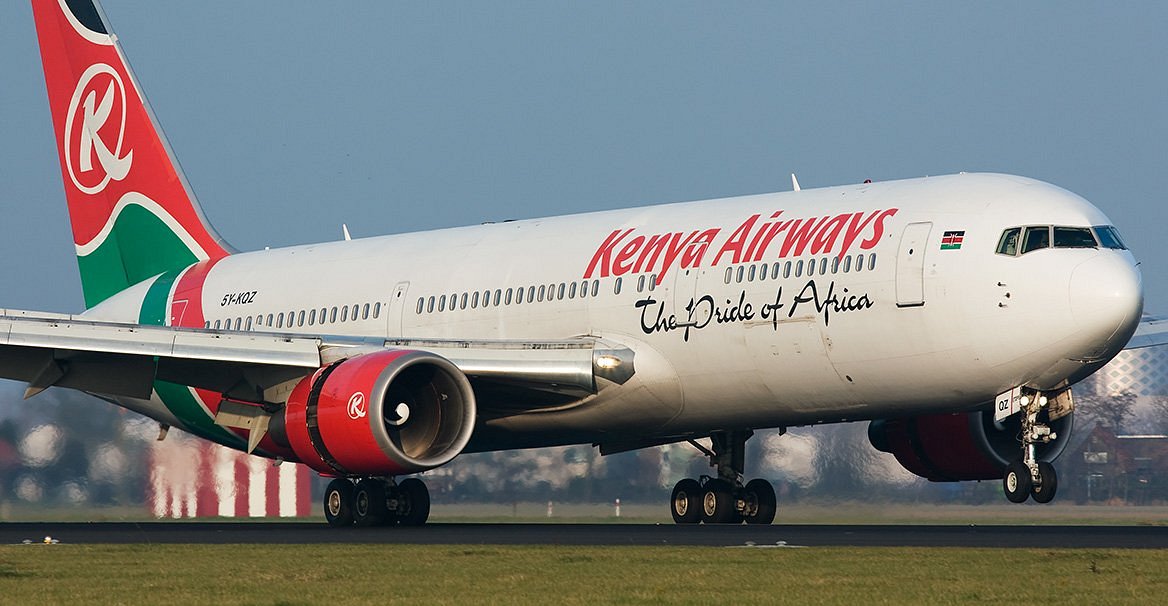 A Kenya Airways plane. (Photo: KQ)
A Kenya Airways flight safely returned to Nairobi after aborted landing attempts in Kigali, Rwanda due to bad weather. (Photo: KQ)
As the BBC observed in a June analysis, it is often cheaper to fly to another continent than to travel within Africa. The broadcaster notes that a direct flight from Berlin to Istanbul, a journey of less than three hours, typically costs around $150 (Sh19,395).
By contrast, travelling a similar distance between Kinshasa in the Democratic Republic of the Congo (DRC) and Lagos in Nigeria can cost between $500 (Sh64,697) and $850 (109,000), often involving at least one stopover and taking as long as 20 hours.
The implications extend beyond tourism. High airfares increase the cost of doing business, discourage investment, constrain labour mobility and limit the very commercial exchanges that visa liberalisation is intended to promote.
The contrast with Southeast Asia is striking. The Asia-Pacific aviation market has become one of the world’s most dynamic, driven by rapid infrastructure investment, a growing middle class and the expansion of low-cost carriers.
Budget airlines such as Malaysia’s AirAsia and Vietnam’s VietJet account for nearly 40% of global low-cost passenger traffic, transforming regional travel by offering inexpensive flights across multiple destinations.
The difference is evident in travellers’ experiences. Last year, this writer travelled between Jakarta, Singapore and Kuala Lumpur for less than KSh30,000, a journey that would have cost considerably more had the same distances been travelled within Africa.
As more African countries dismantle visa requirements, attention is increasingly turning to the next challenge: making the continent physically connected.
Open borders are an important milestone. But until African skies become cheaper, more competitive and better connected, many of the economic benefits of visa-free travel will remain beyond the reach of ordinary Africans.
















































Comments
Sign in with Google to comment, reply, and like comments.
Continue with Google