Kenya’s industrialisation blueprint falls short as manufacturing stagnates - Review
Kenya’s 2012–2030 National Industrialisation Policy is missing key targets, with manufacturing’s GDP share falling and financing tools stalling, the Institute of Economic Affairs warns in a new assessment.
Kenya’s flagship industrialisation blueprint, the National Industrialisation Policy (2012–2030), is falling short of its central promise to transform the country into a globally competitive manufacturing hub.
This, according to an assessment by the economic think-tank, the Institute of Economic Affairs (IEA).
More To Read
- Kenya’s manufacturing growth slows despite increased borrowing
- KAM demands regulatory reforms to boost Kenya’s manufacturing competitiveness
- Payment of pending bills breathes new life into construction, manufacturing sectors
- Government invests Sh90 billion in affordable housing projects backed by Sh120 billion levy collection
- COMESA eyes a united response to US trade tariffs impacting member states
Its findings reckon that despite the policy’s far-reaching ambitions, its implementation has lagged behind its targets, resulting in only modest gains in productivity, value addition and industrial expansion over the past 13 years.
Enacted in 2012, the policy was structured to significantly strengthen Kenya’s domestic industrial base by expanding local production, enhancing productivity and accelerating value addition across priority sectors.
Manufacturing output
It aims for a 20 per cent improvement in manufacturing output by promoting technological upgrades, processing of agricultural and mineral products, and development of globally competitive niche products that could position Kenya as a specialised player in the global market.
A critical target is to ensure locally manufactured goods intended for export contain at least 60 per cent local content, reducing reliance on imported inputs and building domestic capabilities.
Regionally, the policy seeks to raise Kenya’s share of products within the East African Community and COMESA markets from about seven to 15 per cent.
This is tied to a targeted 10 per cent increase in Foreign Direct Investment (FDI) inflows into the industrial sector, as a way of boosting capital, technology transfer and competitiveness.
Domestic industrial capacity
Another key objective is deepening domestic industrial capacity through a 25 per cent increase in the production of industrial components, spare parts and machine tools.
“This is to reduce import dependency and position local firms to support more complex manufacturing activities,” reads the policy paper.
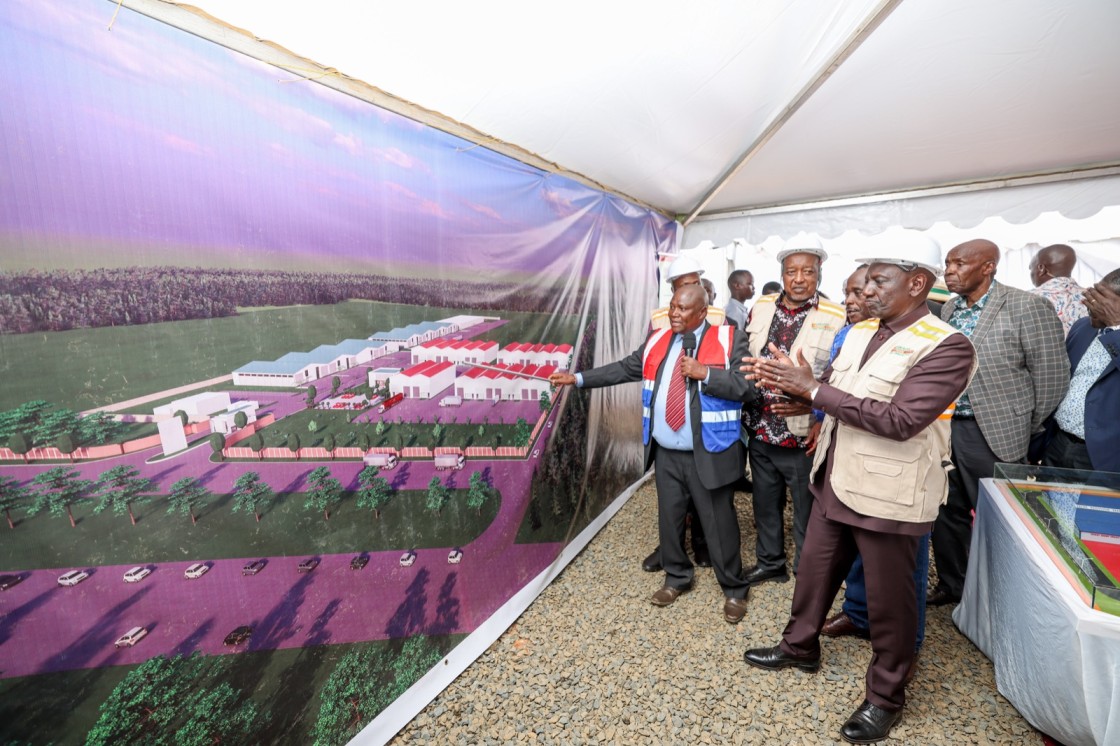
Additionally, the policy outlines major infrastructural and institutional commitments, including the establishment of at least two Special Economic Zones (SEZs) and five SME industrial parks to encourage industrial clustering, attract anchor investors and stimulate high-value production.
To address the long-standing shortage of affordable long-term financing for industrial ventures, the policy proposed setting up a Sh10 billion Industrial Development Fund to support capital-intensive manufacturing enterprises.
Beyond financing and infrastructure, the policy intends to expand the role of MSMEs in manufacturing by increasing their contribution to total MSME output by 20 per cent.
Nevertheless, the policy aims to disperse industry across the country by ensuring at least 50 per cent of new industries are located outside the main urban centres: Nairobi, Mombasa, Kisumu, Nakuru and Eldoret.
This is to promote balanced regional development.
However, despite these broad objectives, analysts from IEA say the policy has delivered mixed and largely underwhelming results so far.
They highlight slow, uneven and frequently disrupted implementation across the policy’s pillars.
Strongest evidence of underperformance
Manufacturing performance over the period offers the strongest evidence of the policy’s underperformance.
Its sector output as a share of GDP has dropped steadily from 9.5 per cent in 2012 to 7.3 per cent in 2024, according to the analysis, far below the policy’s target of achieving double-digit manufacturing growth.
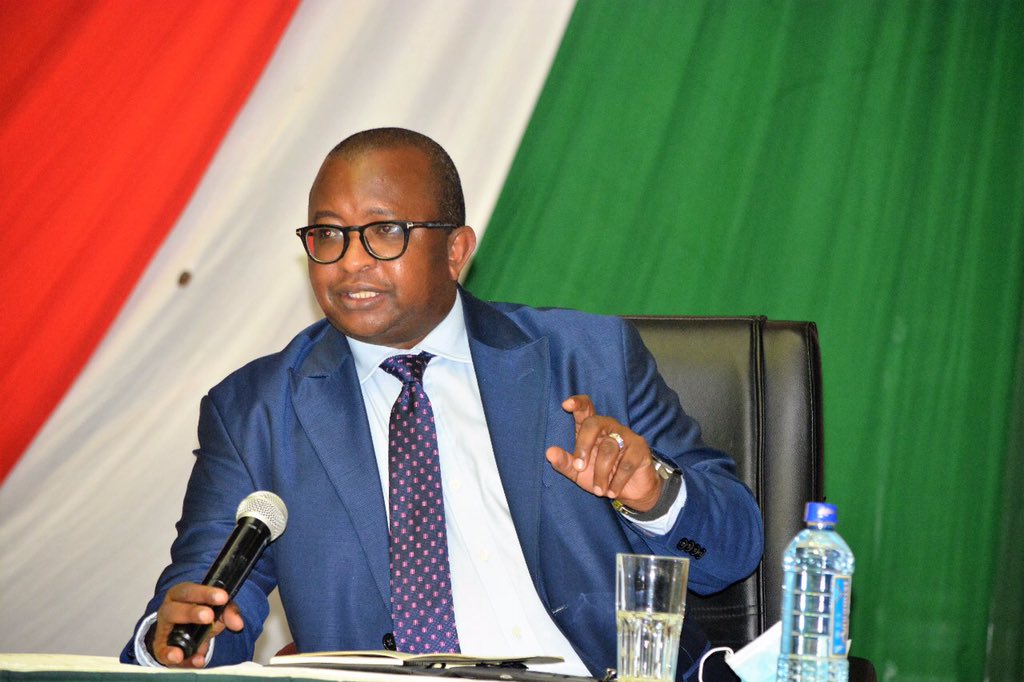
According to the IEA CEO Kwame Owino, this stagnation reflects premature de-industrialisation, with Kenya’s economic structure shifting increasingly toward services, while traditional manufacturing strongholds such as textiles, leather and agro-processing struggle to expand.
Financing
On financing, one of the policy’s flagship interventions, the Industrial Development Fund, has never been fully operationalised, leaving manufacturers dependent on short-term, high-cost commercial loans that are unsuitable for industrial growth.
Value addition and technological upgrading have also lagged behind expectations.
The IEA analysis indicates that Kenya’s industrial landscape remains dominated by low-complexity manufacturing, including food, beverages, textiles and light wood processing, which accounts for 59.5 per cent of output.
Medium-complexity segments such as chemicals and basic metals represent about 32.4 per cent.
High-complexity activities like machinery, automotive components and electrical equipment form a mere 8.1 per cent, despite being critical to productivity growth and global competitiveness.
Some progress
Still, the review notes some progress.
The findings show Kenya has made measurable advances in establishing SEZs and SME parks, key tools for industrial clustering and investment attraction.
Looking ahead, IEA argues that Kenya’s next phase of industrial policy must depart from broad, aspirational planning and instead adopt a more focused, performance-based approach centred on capability building, export discipline and technological upgrading.
The think tank further emphasises the need for clear sunset clauses, rule-based support mechanisms and stronger linkages between training institutions and industry.
With five years left before the policy horizon closes in 2030, IEA warns that Kenya must sharpen its strategic focus, strengthen coordination and recommit to industrial capability building if it is to revive momentum and move closer to becoming a regional industrial powerhouse.
“The next phase must focus on capabilities and scale, export orientation, and productivity,” Owino said.
Top Stories Today