KNCCI opposes proposed Business Council, cites overlap and lack of clarity
The Kenya National Chamber of Commerce and Industry (KNCCI) says the legislation fails to clarify funding and operational responsibilities for the proposed Business Council of Kenya.
Business owners have rejected a Bill seeking to create a statutory body for Business Membership Organisations (BMOs), arguing it ignores existing structures and risks fragmenting private sector representation.
The Kenya National Chamber of Commerce and Industry (KNCCI) says the legislation fails to clarify funding and operational responsibilities for the proposed Business Council of Kenya (BCK), raising concerns over sustainability.
More To Read
- Private sector warns against government plan to control business advocacy under new Bill
- Business operators protest excessive permits and taxes, demand unified permit system
- Organisations oppose State move to impose new levy on cereal exports
- KNCCI criticises proposed Sh2 million penalty for eTIMS non-compliance
- China's demand for camel milk avails Sh5bn market opportunity for Kenyan farmers
KNCCI officials said the government should instead recognise the Chamber as the statutory body for BMOs, as indicated in an earlier letter from President William Ruto.
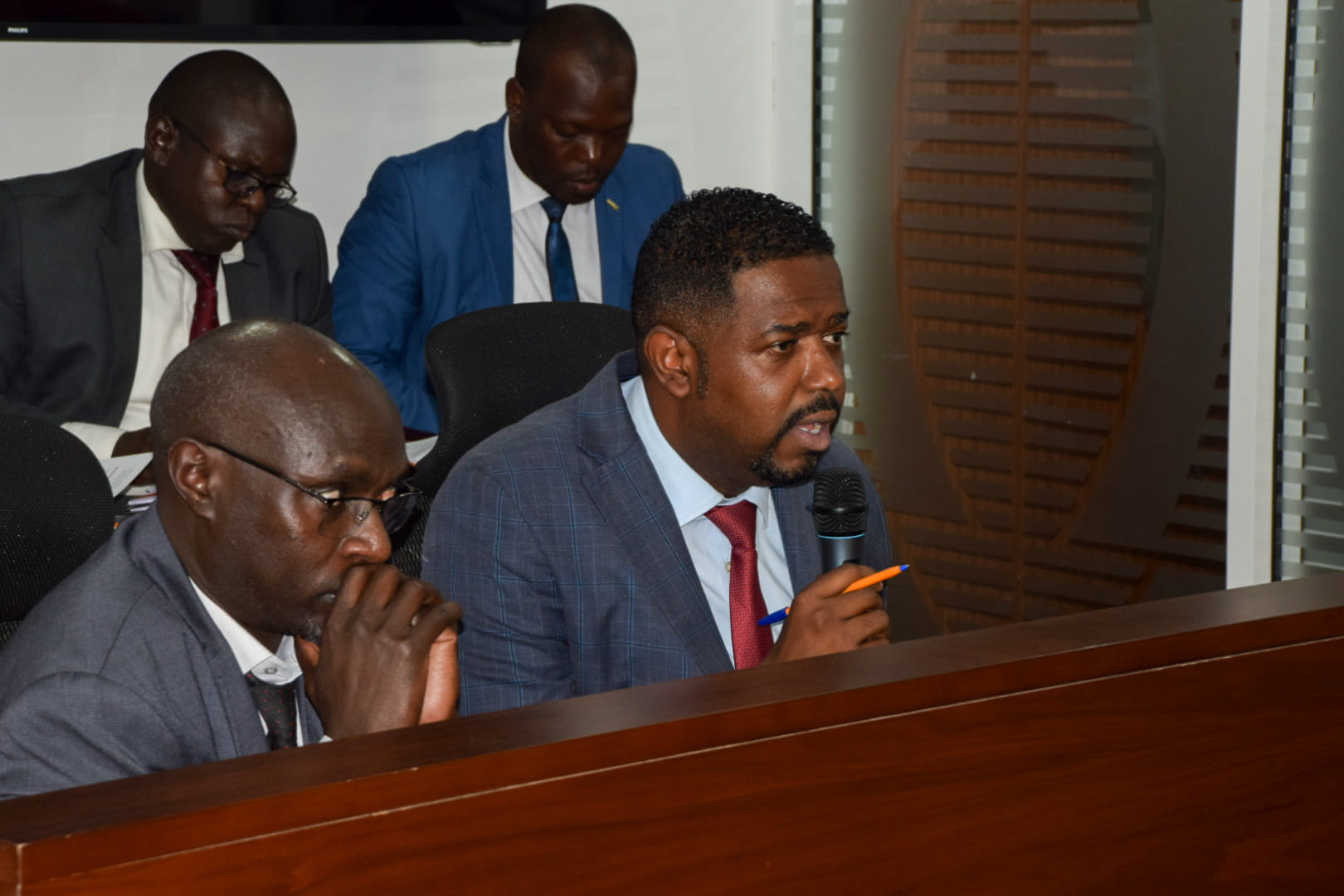
KNCCI Coast region director Shakir Swaleh and lower Eastern director Mutavi Kithu urged the Ministry of Investment, Trade and Industry (MITI) to allow BMOs to discuss the draft Public-Private Engagement Bill, 2025, and submit recommendations before any further action.
Shakir argued that KNCCI, with membership spanning all 47 counties, was better placed to serve as the statutory body. He also raised concerns over the limited public participation, claiming that consultations were conducted in only five counties, including Mombasa, while Nairobi and other regions were skipped.
“KNCCI has membership up to the grassroots level and ought to have been involved fully in the public participation process. We have rejected the Bill and sent it back to the sender. We are asking all the BMOs to stand with us,” Shakir said.
Kithu said the president had directed that the Bill be formulated collaboratively with KNCCI and MITI, but the Chamber was only informed about the draft when it was presented to the counties. He added that the Bill is unclear on who will fund the proposed BCK.
“The president had clearly indicated the statutory body would be funded by KNCCI for its operation, but this Bill is not clear on who will fund BCK,” Kithu said.
In response, Investment Promotion Principal Secretary Abubakar Hassan said the policy and Bill were developed to strengthen, not diminish, the role of private sector actors in national development.
“The policy and Bill provide a structured, predictable and transparent framework for collaboration between the government and private sector organisations across all sectors of the economy,” Abubakar said.
He noted that Kenya’s current public–private engagement landscape is fragmented, with multiple BMOs representing different industries, counties, and thematic interests, which has slowed policy reform. He added that the Public–Private Engagement Policy aims to create a coordinated mechanism for dialogue, improving coherence while safeguarding BMOs’ independence.
“Its goal is to foster a transparent and inclusive environment where private sector concerns are consolidated, prioritised and addressed through evidence-based engagement. The policy supports the growth and empowerment of BMOs by enhancing their capacity to participate effectively in national policy formulation processes,” Abubakar said.
He clarified that the BCK will not replace or absorb existing BMOs but will serve as a platform through which they collectively articulate priority issues requiring government attention.
“Under the Bill, BMOs retain their autonomy, membership structures, leadership and advocacy mandates,” he said.
Top Stories Today