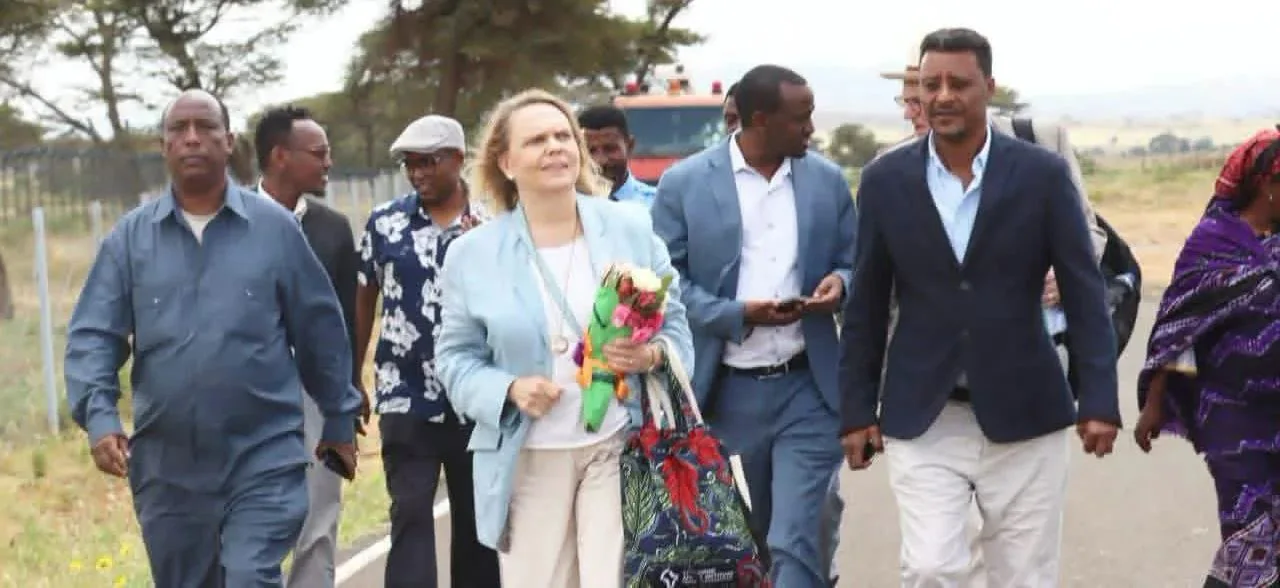
The European Union (EU) is seeking to expand cooperation with Ethiopian institutions in veterinary education, livestock value chain development, climate resilience, and natural resource management following a visit by EU Ambassador to Ethiopia, Sofie From‑Emmesberger, to Borana University and the Borana Zone in the Oromia Region.
According to the EU delegation, the visit focused on reviewing ongoing cooperation and exploring new areas of partnership that support development, research, and community livelihoods in the region. The discussions also examined ways to strengthen links between Ethiopian institutions and universities and research organisations in Europe through academic collaboration and joint research initiatives.
As part of the mission, Ambassador From‑Emmesberger visited an EU‑funded veterinary clinic in Elwaye Woreda, where EU‑supported programmes are helping improve animal health services for pastoralist communities.
The clinic is part of broader efforts to strengthen veterinary care and support livestock production, which remains an important source of income and food security for many families in the area.
Officials said improving access to veterinary services is expected to contribute to healthier livestock, better productivity, and stronger value chains, while also helping communities cope with challenges affecting pastoral livelihoods.
The delegation also toured Borana National Park, where local officials presented information on the area’s biodiversity and ongoing efforts to promote eco‑tourism as part of local development.
During the visit, discussions focused on the role of natural resource management in protecting ecosystems while supporting economic opportunities for communities that depend on the environment for their livelihoods.
From Emmesberger’s itinerary further included a visit to the Borana Gada Centre, where officials explained the Gada system, the traditional governance structure of the Borana community. The discussions highlighted the role the system continues to play in community leadership, conflict resolution, and the management of social and cultural affairs.
According to the delegation, the visit also created an opportunity for discussions on expanding cooperation in veterinary education and research, livestock value chain development, climate resilience, and natural resource management. The talks also explored strengthening academic partnerships between Ethiopian institutions and universities and research organisations across Europe in areas of mutual interest.
The EU said closer cooperation in these sectors could support knowledge exchange, research collaboration, and the development of skills needed to address challenges facing agriculture, livestock production, environmental conservation, and climate adaptation.
The delegation said the mission reflected the EU’s intention to continue working with Ethiopian institutions and local communities on programmes that contribute to development and economic opportunities while supporting long‑term resilience.
“The mission reaffirmed the EU’s commitment to working alongside Ethiopian institutions and communities to advance inclusive, sustainable development and resilient livelihoods,” the delegation said.
The visit comes as the EU continues to support development programmes in Ethiopia across sectors, including education, agriculture, environmental conservation, and research, through partnerships with government institutions, universities, and local communities.







































Comments
Sign in with Google to comment, reply, and like comments.
Continue with Google