Uganda rights groups sound alarm over military crackdown ahead of presidential poll
The remarks follow a weekend of tension in Gulu, where opposition leader and presidential candidate Bobi Wine and his team came under attack during a campaign mobilisation event.
Uganda human rights groups have raised alarm over an escalating military interference in the country’s political process, ahead of the upcoming presidential vote, warning that violent crackdowns on opposition activities are undermining democracy.
The remarks follow a weekend of tension in Gulu, where opposition leader and presidential candidate Bobi Wine and his team came under attack during a campaign mobilisation event. Videos and images shared online showed chaotic confrontations involving security operatives and civilians.
In a statement, Human Rights Defenders Uganda (HRDU) expressed concern over what it described as a “pattern of illegal and deadly military interference targeting Uganda’s democratic process.”
The organisation highlighted that the majority of Ugandans are demanding an end to corruption, unemployment, electoral fraud, repression and human rights abuses. HRDU said the involvement of senior military officials in political campaigns, coupled with the use of lethal force against civilians, undermines both democracy and regional security.
“We are closely monitoring the illegal and deadly military interference targeting Uganda’s democratic process,” reads the statement.
“The overwhelming majority of Ugandans are calling for an end to endemic corruption, unemployment, electoral fraud, repression and human rights abuses. Senior military officials publicly campaigning for the status quo, and using lethal force against peace and stability, seeking citizens undermine democracy and regional security.”
Wine condemned the attacks, noting that even police officers assigned to his campaign were beaten during the incident. He thanked residents and his security team for shielding him during what he called a brutal assault.
“I am sincerely grateful to the ordinary residents of Gulu as well as our security team for withstanding this savage brutality to protect us. Those criminals even beat up the police officers attached to our campaign,” he said.
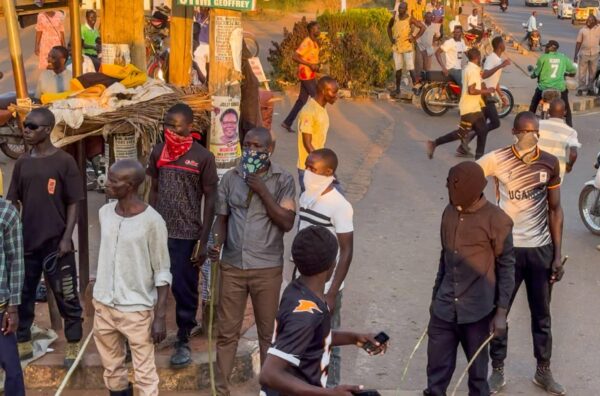 A group of armed youths in Gulu, where opposition leader and presidential candidate Bobi Wine and his team came under attack during a campaign mobilisation event. (Photo: X/Bobi Wine)
The opposition leader praised journalists who continued filming despite being attacked, noting that their presence prevented the situation from worsening.
“I am very grateful to the media who, despite being attacked themselves, kept their cameras on. Perhaps if their cameras were not on, it could have been worse. Uganda will be free,” he said.
Footage captured in Gulu showed Wine surrounded by heavily armed officers who blocked him from accessing a venue where he had been cleared to address supporters, a pattern that has seen multiple opposition gatherings dispersed forcefully.
Scenes from the campaign trail also showed police assaulting Wine’s supporters, including renowned music producer and activist Sir Dan Magic, a prominent figure among artists backing Wine’s presidential bid. Dan, who has previously accused security operatives of targeting him, was again seen injured after a confrontation with officers.
Despite the blockade, Wine eventually managed to address the crowd in Gulu, using the platform to challenge the incumbent’s development record.
“Museveni says he is protecting his gains. I want to ask you, the people of Gulu, what gains do you have to protect?” he posed.
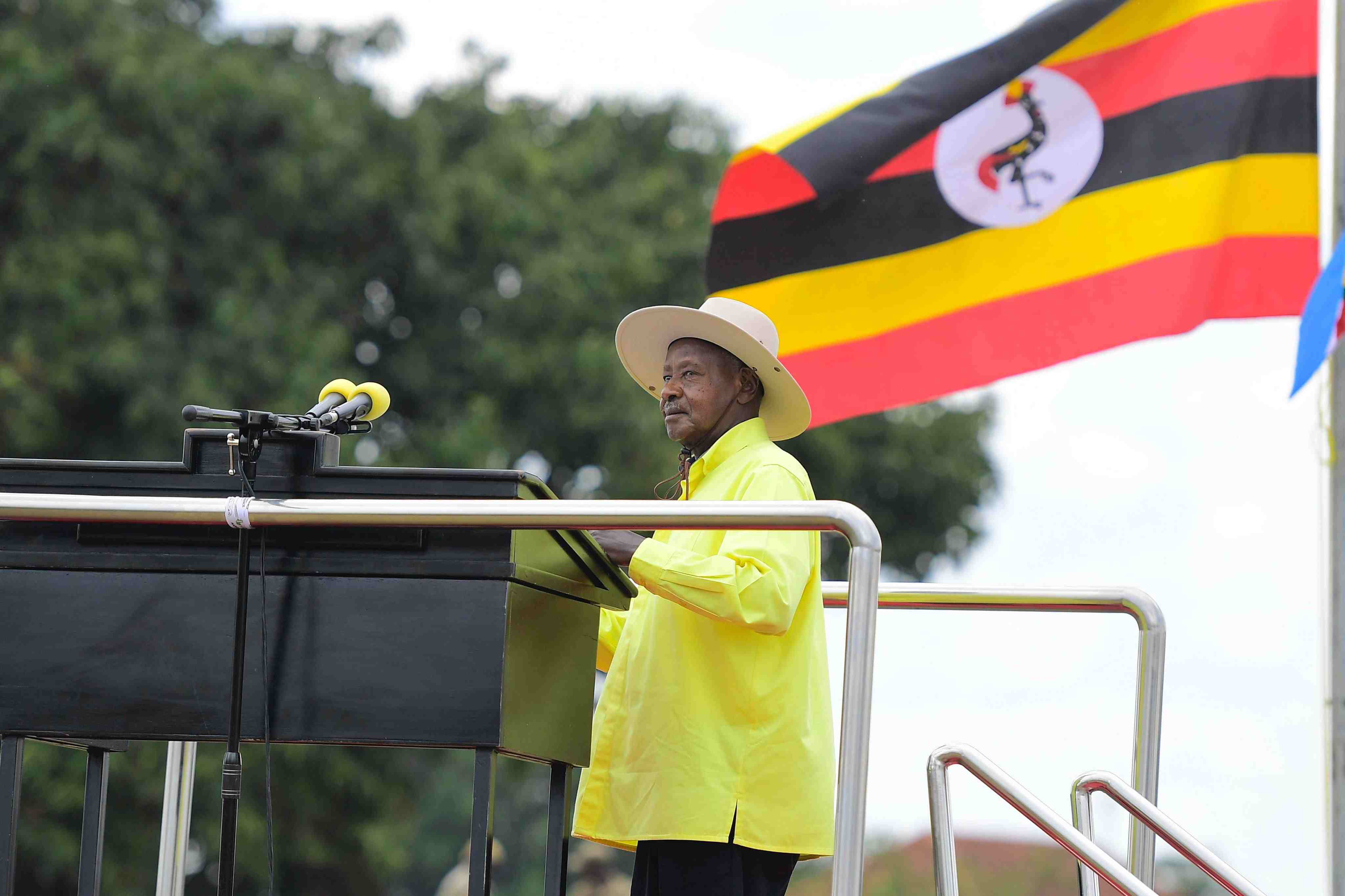
Meanwhile, President Yoweri Museveni continued his campaign trail in Kabartole, Fort Portal City and Kitagwenda, highlighting his achievements in agriculture, infrastructure and community development. His rallies proceeded under heavy protection from security agencies under his command.
Last week, Museveni reignited debate over digital freedoms after suggesting that Uganda’s internet infrastructure should be government-owned rather than operated by private companies.
“The internet should be owned by the government, not the private sector. The private sector makes the internet expensive. We should use the government one,” he said.
Human rights groups and opposition leaders warn that Uganda’s civic space continues to shrink, citing the 2017 constitutional amendment that removed presidential age limits, legislation they argue effectively allows Museveni to extend his rule indefinitely.
Should he secure another term in 2026, Museveni would become Africa’s longest-serving leader, marking 44 years in power—surpassing Cameroon’s Paul Biya and even eclipsing former Libyan leader Muammar Gaddafi.
HRDU has called on authorities to end the violence and safeguard democratic space, while Bobi Wine has vowed to press on with his campaign despite what he calls state-sponsored intimidation.
Top Stories Today