How police and civilians responded to the Bondi Beach terror attack in Australia
A terror attack at a Hanukkah festival on Sydney’s Bondi Beach killed 16 people and injured at least 40. Police, civilians and tighter security measures now define the response.
The deadly attack at Bondi Beach in Sydney, Australia, on Sunday, December 14, has so far claimed the lives of 16 people, including a 10-year-old girl, and left at least 40 others injured.
Victims ranged from children to the elderly, underscoring the indiscriminate nature of the violence. One of the attackers was among those killed, while his 24-year-old son remains in critical condition and is expected to face criminal charges.
More To Read
- Ghana’s security strategy has kept terror attacks at bay: What other countries can learn from its approach
- Ugandan security forces kill suspected female suicide bomber at Kampala market
- US teacher put on leave after calling Palestinian child an extremist
- Five injured in afternoon Mandera attack
- One killed as suspected Al-Shabaab militants torch two vehicles in Lamu
- Report reveals rise in terror-related deaths despite decrease in attacks
The attack has devastated Sydney’s Jewish community and drawn global attention and condemnation, highlighting the far-reaching consequences of violence driven by hate. Here is what is known so far about the incident.
How the attack happened
The shooting occurred during a Hanukkah festival at Archer Park, a Jewish event that typically attracts more than 1,000 people, including families and children. Police were alerted at about 6:47 pm local time following reports of gunfire.
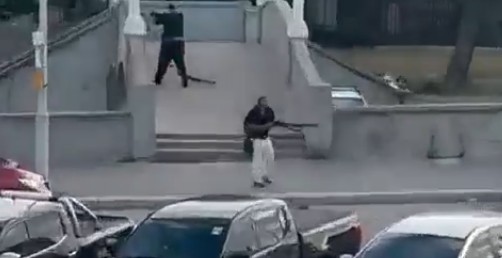
Videos from the scene show two gunmen firing from a small bridge overlooking the beach as terrified crowds scrambled for safety. Authorities later classified the incident as a terrorist attack with antisemitic motives.
Eyewitnesses described chaotic scenes, with attendees fleeing across the beach as police evacuated the area and engaged the suspects. Officers also discovered two improvised explosive devices, which were safely detonated.
A hero amid the violence
Among those caught up in the attack was Ahmed al Ahmed, a 43-year-old former police officer, who emerged as a central figure. Videos show him wrestling a rifle from one of the gunmen, preventing further loss of life. Ahmed was shot twice during the struggle but survived.
Dubbed the "hero of Bondi Beach", he has been widely praised for his bravery, including by US President Donald Trump. His quick thinking and courage are credited with averting additional fatalities.
Who were the gunmen?
Authorities have identified the attackers as Sajid Akram, 50, and his son, Naveed Akram, 24. Sajid was killed at the scene, while Naveed remains critically injured in the hospital. Australian police have confirmed that there are no other suspects.
Investigators revealed that Naveed had previously been monitored by Australia’s Security Intelligence Organisation due to links with individuals later convicted of planning terror attacks. Sajid, meanwhile, had lived in Australia since 1998.
While investigations into the motive are ongoing, authorities say the attack deliberately targeted the Jewish community during a religious celebration.
Government response
Prime Minister Anthony Albanese described the incident as a "devastating terrorist attack", warning that Bondi Beach will be "forever tarnished" by antisemitism.
The Australian government is reviewing gun laws, including limits on the number of firearms an individual may own, stricter licensing checks and regular licence reviews. Security has also been increased at Jewish sites and events across Australia.
Global reactions
The attack sparked international outrage, with Jewish organisations, human rights groups and foreign governments condemning the violence.
According to security experts, the targeting of a religious festival underscores the growing threat of antisemitism worldwide, even in countries long regarded as safe.
Messages of solidarity have poured in from around the world, reflecting shared grief and condemnation of attacks on communities because of their faith.
Top Stories Today